I’ve collected over 30 lists of “Most Important People”, “Most Important Historical Figures”, “Most Influential People” or “People Who Changed the World” and combined them into one meta-list. The results are below – every person on at least three of the original source lists, organized chronologically by date of birth. Each entry includes: (1) name; (2) birth and death dates; (3) country; and (4) a biographical sketch/timeline. Each entry also includes the number of original source lists the person is on. To see the list organized by rank (that is, with the people on the most lists at the top), go here.
MENES (Narmer?) (c. 3200-3030 BCE) Ancient Egypt. Military, political and religious leader. Egyptian Pharaoh. Legendary founder of first dynasty of a united Egypt. United Upper and Lower Egypt. Some historians believe that the Menes is the same person as Narmer (c. 3100 BCE), an early pharaoh who is represented as unifier of Egypt on the Narmer Palette. (on 3 lists)


Left: The cartouche (royal name hieroglyph) of Menes on the Abydos King List on the wall of the temple of Pharaoh Seti I (c. 1290-1279 BCE). Right: one side of the Palette of Narmer.
IMHOTEP (c. 2650-2600 BCE) Ancient Egypt. Royal official. Possibly also architect, engineer, and physician. Served as chancellor and high priest of Ra under Pharoah Djoser (reigned c. 2686 – c. 2611 BCE). Possibly designed the Step Pyramid of Djoser – the first known pyramid. He may also have been responsible for the first known use of stone columns to support a building. He was deified after his death as a god of medicine and healing. (on 6 lists)

Bronze statue of Imhotep in the Louvre (c. 330 BCE).
KHUFU (Khnum Khufu; Cheops) (2609-2584 BCE) Ancient Egypt. Military, political and religious leader. Second Pharaoh of the 4th Dynasty of the Old Kingdom (2589-2566 BCE). Sent expeditions to find turquoise and copper. Sent expeditions to Byblos to trade copper tools and weapons for Lebanon cedar wood. Commissioned the Great Pyramid at Giza as his tomb. The Great Sphinx of Giza may be part of his funerary complex; the face of the sphinx may have been carved to represent his face. (on 5 lists)

Ivory figurine of Khufu, possibly contemporary. Now in Cairo Museum.
ABRAHAM (unknown dates; said to have been born between 2013-1813 BCE) Middle East/Mesopotamia/Canaan. Legendary patriarch of the Abrahamic religions (including Judaism, Christianity, and Islam). Most scholars do not believe he was an actual historical figure. His story, which probably had a substantial oral prehistory, is told in the Book of Genesis (11:27 to 25:11), which was likely written in the 5th Century BCE. According to the story, God instructed Abraham (then called Abram) to leave his home and travel to Canaan, a land that God promised to Abram and his progeny, a people whom God blessed. Stories of Abraham’s life include his visit to Egypt and presentation of his wife Sarah to the Pharaoh; God speaking through a burning bush; the destruction of Sodom and Gomorrah, the birth of Ishmael to Abraham by his slave Hagar, and later, the birth of Isaac to Sarah in her old age (presaged by the visit of three men/angels), and the testing of Abraham’s faith by asking him to sacrifice Isaac, only to have the deed interrupted by an angel. For Jews, Abraham is the founding father who began the covenantal relationship between God and the Jewish people; for Christians, he is the spiritual progenitor of all believers; in Islam, he is one in a line of prophets that leads from Adam to Muhammad. (on 7 lists)

Caravaggio’s Sacrifice of Isaac (1603), depicting Abraham in story from Book of Genesis.
HAMMURABI (c. 1810-1750 BCE) Babylon (now Iraq). Military and political leader. King of Babylon (sixth Amorite king of the Old Babylonian Empire) (1792-1750 BCE). Inherited throne of city-state of Babylon upon the death of his father Sin-Muballit (c. 1792 BCE). Turned back invasion by the Elamites. Conquered kingdom of Larsa (c. 1763 BCE). Conquered kingdoms of Eshnunna and Mari. Defeated Ishme-Dagan I of Assyria. Eventually established control over all of Mesopotamia. Established the Code of Hammurabi (c. 1772 BCE), a legal code of 282 laws that: prescribed specific punishments for crimes; established the presumption of innocence; emphasized physical punishment of the perpetrator over compensating the victim; limited retribution by the wronged party. (on 5 lists)

Bas relief of Hammurabi receiving the law code from the god Shamash (c. 1750 BCE).
HATSHEPSUT (c. 1505/1495 – 1458 BCE) Ancient Egypt. Political and religious leader. The sixth pharaoh of the Eighteenth Dynasty, she was the second woman known to have ruled in her own right in Ancient Egypt. Great Royal Wife of Pharaoh Thutmose II until his death in c. 1479 BCE. Regent for two-year-old Thutmose III beginning in 1479 BCE. Assumed position of pharaoh by c. 1472, at which time she became senior co-regent to Thutmose III’s junior co-regent, and maintained that position until her death in 1458 BCE. Reestablished trade networks; oversaw mission to the Land of Punt. Commissioned hundreds of construction projects, including restoration of the Precinct of Mut in the Temple of Karnak, erection of the Temple of Pakhet at Beni Hasan, the Chapelle Rouge, the Speos Artemidos, and her own mortuary temple at Deir el-Bahari. (on 3 lists)

A statue of Hatshepsut dating to c. 1479-1458 BCE, which is now in the Metropolitan Museum of Art in New York.
AMENHOTEP III (14th Century BCE). Ancient Egypt. Military, political and religious leader. Ninth pharaoh of 18th Dynasty (c. 1386/1388/1391-1349/1350/1351 BCE) in the New Kingdom. Reigned during period of unprecedented prosperity, artistic splendor, and international power. Worshipped as a deity during his lifetime. Ordered construction of an artificial lake at Djakaru. Led victorious campaign against a rebellion in Kush. Ordered construction of the palace of Malkata. Adopted royal epithet Aten-Tjehen (Dazzling Sun Disk), which elevated the god Aten. Sent expedition to establish Egyptian control over Cyprus. Left behind the most surviving statues of any Egyptian pharaoh (250). (on 4 lists)

A statue of Amenhotep III, c. 1370, now located in the British Museum in London.
RAMESSES THE GREAT (Ramesses II; Ozymandias) (c. 1303-1213 BCE) Ancient Egypt. Political, religious, and military leader. Long-reigning pharaoh of 19th Dynasty in the New Kingdom (reigned 1279-1213 BCE). Led Egyptian armies to many victories and greatly expanded Egyptian territory. Built many cities, temples and monuments. Favored the god Amun over other deities. Worshipped as a deity during his lifetime. Established city of Pi-Ramesses and made it his new capital. Defeated the Sherden sea pirates. Led Egypt against the Hittite Empire in several campaigns, including the Battle of Kadesh (1274 BCE), with mixed results. Conquered Canaan and Syria. Concluded peace treaty with the Hittites during the Hittite Civil War (c. 1259 BCE). Exercised military power over Nubia and possibly Libya. Remodeled existing temples to honor himself. Expanded gold mining operations in Akuyati. Undertook the building of the temple complex at Abu Simbel in Nubia (inaugurated in 1255 BCE) and the Ramesseum, a mortuary temple. (on 7 lists)

One of the four external seated statues of Ramesses II at Abu Simbel (c. 1279-1213 BCE).
MOSES (unknown dates, said to have lived c. 13th Century BCE) Egypt/Judea. Legendary religious leader and prophet of the Abrahamic religions (including Judaism, Christianity, and Islam). Most scholars do not believe he was an actual historical figure, although some believe that his legend is based on a Moses-like figure who may have existed in the 13th Century BCE. He is traditionally held to be the author of the Torah, the first five books of the Hebrew Bible. His story, which probably had a substantial oral prehistory, is told in the Book of Exodus, which was likely compiled from several written sources in the 6th or 5th Century BCE. According to the story in Exodus, Moses was the son of an Israelite living in slavery in Egypt who was raised as part of the royal family. After receiving a message from God, Moses led the Israelites out of Egypt and into the desert, where they wandered for 40 years. During that time, Moses received the Ten Commandments from God. He died before the Israelites reached the land promised to them by God. (on 10 lists)

Rembrandt’s Moses with the Ten Commandments (1659).
HOMER (unknown dates; said to have lived in the 8th Century BCE) Ancient Greece. Legendary author of the epic poems The Iliad and The Odyssey. Homer is the name given to the authors of the two most important Ancient Greek epics. Many legends were written about Homer in classical antiquity; according to some of these legends, he was a blind bard from Ionia; others said he was descended from one of the Muses, but scholars now believe he is legendary and did not exist. Scholars believe that the poems were works of separate unknown authors and were written down (relying heavily on older oral traditions) in the Archaic Period, between 800 and 600 BCE (with the Iliad first, then the Odyssey). At least one scholar believes that the poems continued to evolve even after the initial writings and may not have reached their final forms until c. 150 BCE. The Iliad and Odyssey are set in an idealized archaic past that may be related to the Bronze Age Mycenean era of Ancient Greek history (c. 1750-1050 BCE). The poems are composed in unrhymed dactylic hexameters in a literary style only used in poetry. The language includes features of multiple dialects (with an emphasis on Ionic Greek) and multiple time periods. Many elements – such as epithets, Homeric formulae, simile, type scenes, ring composition, and repetition – indicate the origin of the poems in an oral tradition. Both books, but especially the Iliad, were used as school texts in ancient Greek and Hellenistic cultures. They are among the earliest subjects of literary criticism and analysis. (on 14 lists)

Statue of Homer outside Bavarian Museum in Munich.
ZOROASTER (Zarathushtra Spitama) (probably lived between c. 1500 and 500 BCE; traditional date of birth c. 624-599 BCE; traditional death date c. 547-522 BCE) Greater Persia (now Afghanistan, Iran, Turkmenistan, or Azerbaijan). Philosopher, religious figure, poet, preacher, and writer. Founder of Zoroastrianism (Mazdayasna). Cosmic dualism. Free will. Ethical responsibility. Benevolent supreme being, Ahura Mazda, opposed to destructive spirit, Angra Mainyu. Struggle between aša (truth) and druj (deception). Aligning with aša through good thoughts, words, and deeds. Said to have: trained as a priest from a young age; experienced a divine revelation at about age 30; gained royal patronage under King Vishtaspa; and founded a religious community. His writings include: The Gathas, The Avesta. (on 7 lists)

Zoroaster (with globe) in detail from Raphael’s The School of Athens (1509).
SAPPHO (610-570 BCE) Island of Lesbos, Ancient Greece (now Greece)/Sicily, Ancient Greece (now Italy). Prolific lyric poet. Referred to as “The Tenth Muse” as early as the 3rd Century BCE. One of the Nine Lyric Poets recognized by Hellenistic Greeks. Most of her work is lost; only 650 lines of an estimated 10,000 survive. Themes include: love, family, and religion. Her works are known for their clarity of language, vivid images, and immediacy. They were written to be sung to musical accompaniment, either by a soloist or chorus. She is known as a symbol of love and desire between women. The words “sapphic” and “lesbian” refer to her and her home island. Surviving poems (most of them incomplete) include: Ode to Aphrodite; Ode to Atthis; With His Venom (Fragment 53); Fragment 16; Fragment 31; Fragment 42; Fragment 58; Fragment 155. Exiled with her family to Sicily c. 600 BCE for political reasons, according to one source. According to legend, she committed suicide due to an unrequited love (c. 570 BCE). (on 5 lists)

Bust of Sappho in Musei Capitolini, Rome. Roman copy of a 5th Century Greek original.
CYRUS THE GREAT (Cyrus II of Persia) (600-530 BCE) Kingdom of Anshan/Persia (now Iran). Military and political leader. Founder of Achaemenid Empire in Persia. Established multi-state empire with some regional autonomy under satraps that lasted for centuries. Created organized army. Established empire-wide postal system. Known for policy of tolerance of local customs and religions in conquered lands. Succeed to the throne of Anshan (559 BCE). Mutinied against Median overlords, defeating Media and uniting Anshan and Parsa into Persian Empire (553-550 BCE). Conquered Sogdia (546-539 BCE). Conquered the Lydian Empire (c. 547-546 BCE). Reached the Indus River and began collecting tribute from vassal states in western India (543 BCE?). Persian armies conquered Asia Minor (c. 542 BCE). Captured Elam (540 BCE). Conquered the Neo-Babylonian Empire (539 BCE). Reported to have freed the Jewish people from bondage in Babylon (c. 539 BCE). Probably killed in battle (c. 530 BCE). (on 7 lists)

A bust of Cyrus the Great.
LAOZI (Lao Tzu) (traditionally said to be born in the 6th Century BCE and to have died in the 5th Century BCE) China. Legendary philosopher and writer. Traditionally credited as the founder of Taoism. Key concepts include: the Tao (source and ideal of all existence); wu wei (non-action); and ziran (harmony with the Tao). Most scholars now believe that the text attributed to him – the Tao Te Ching (also called the Laozi)– is a compilation of writings by multiple authors written between 475 BCE and 221 BCE. Varying and contradictory accounts of Laozi’s life are contained in the Records of the Grand Historian (c. 125-75 BCE), by Sima Qian, and the Zhuangzi (c. 476-221 BCE). (on 8 lists)

Stone sculpture of Laozi at the foot of Mount Qingyuan from the Song Dynasty (960-1279).
PYTHAGORAS (c. 570-495 BCE) Ancient Greece (island of Samos) (now Greece). Mathematician and philosopher. Founder of Pythagoreanism (religious movement) characterized by religious ritual, asceticism, sharing of all belongings in common, physical exercise, and therapeutic dancing. Said to be the first man to call himself a philosopher (“lover of wisdom”). Many scholars believe that some of the accomplishments credited to him likely originated earlier or were made by his colleagues or successors. Little is known of his life, but most scholars agree that he traveled to the Greek colony of Croton in southern Italy c. 530 BCE to found a school (“the semicircle”). Known for: the Pythagorean theorem (attrib.); Theory of Proportions (attrib.); Communalism; Metempsychosis; musica universalis (music of the spheres); five regular solids. Proposed that the Earth was a sphere (attrib.). (on 7 lists)

Bust of Pythagoras from Musei Capitolini, Rome. Marble Roman copy of a 5th Century BCE Greek bronze original.
THE BUDDHA (born Siddhartha Gautama; also known as Gautama Buddha; Śākyamuni, and Tathāgata) (c. 563/480-483/400 BCE) Lumbini, Shakya Republic (now Nepal)/Malla Republics (now India). Philosopher and religious leader. Founder of Buddhism. Principles of his teachings include: the Middle Way; dhyana; impermanence; dependent origination; liberating insight; moksha, the āyatana and the five shandhas, the Four Noble Truths; and the Noble Eightfold Path. There is little historical evidence about the Buddha’s life. The oldest documents relating to his life are contained in the Pāli suttas (including the Mahāparinibbāṇa Sutta), some portions of which date to 350–320 BCE, less than 100 years after his death. Most scholars agree that the Buddha lived, taught, and founded a monastic order during the Mahajanapada period, specifically during the reign of Bimbisara, ruler of Magadha (reigned c. 543-492 BCE or 457-405 BCE) and died during the reign of Bimbisara’s successor Ajatashatru (reigned c. 492-460 BCE or c. 405-373 BCE). According to Buddhist tradition, Siddhartha Gautama was born to royal parents in Lumbini, in the Shakya Republic, but renounced his luxurious life to become a wandering mendicant and ascetic. After many years, he reached nirvana (the extinguishing of the passions, and the release from dukkha (‘suffering’) and rebirths in saṃsāra). He then continued his wandering, teaching the doctrines of Buddhism (his first sermon is said to have taken place at the Deer Park in Sarnath), and building a monastic order (sangha). When he died at the age of 80, he reached parinirvana (final release from conditioned existence). The Buddha is not known to have left any writings. Certain Buddhist texts are said to contain sayings of the Buddha, including the Sutta Pitkata, particularly the Dhammapada (29-30 BCE). (on 18 lists)

A statue of the Buddha preaching the law, from Sarnath, India (4th Century CE).
DARIUS THE GREAT (Darius I) (558-486 BCE) Persia (now Iran). Military and political leader. King of Persian Achaemenid Empire and Pharoah of Egypt (522-486 BCE). Expanded Persian Empire to its greatest size through military conquests. Suppressed widespread revolts and prevailed in Achaemenid Civil War (522-520 BCE). Conquered lands in Central Asia and the Indus Valley (516-515 BCE). Scythian campaign (513 BCE). Ionian Revolt (499-493 BCE). First Persian invasion of Greece, ending in defeat at the Battle of Marathon (492-490 BCE). Organized the empire into administrative provinces overseen by satraps. Ordered use of new uniform monetary system (Achaemenid coinage). Made Aramaic and Old Persian co-official languages. Improved roads. Introduced standard weights and measures. Undertook extensive construction projects, including at Susa and Persepolis. Oversaw creation of the Darius Canal connecting the Nile to the Red Sea. (on 3 lists)

CONFUCIUS (Kǒngzǐ) (551-479 BCE) China. Philosopher. Founder of Confucianism, the dominant ethical and philosophical ideology of China for much of its history. Espoused the Silver Rule (“do not do unto others what you do not want done to yourself”). Confucianism emphasized personal and governmental morality, harmonious social relationships, righteousness, kindness, sincerity, and a ruler’s responsibilities to lead by virtue. Pioneered private education based on the Six Arts curriculum. Lived during Spring and Autumn period (c. 771-476 BCE). Early employment may have included: government positions; bookkeeping; caretaker of sheep and horses. Appointed governor of a town (501 BCE). Became Minister of Crime in Lu state. Supported dismantling the fortified city walls of the powerful Ji, Meng, and Shu families. Ordered attack on rebels led by Gongshan Furao. Departed his homeland (state of Lu) without resigning (497 BCE). Expounded his beliefs in the principality states of northeast and central China. Returned home at the age of 68, where he is said to have taught many students the Six Arts and wrote or edited the Five Classics. Acted as advisor to government officials. After his death, his disciples organized his teachings into The Analects (large portions written c. 475-221 BCE; reached final form, c. 206 BCE-9 CE). (on 21 lists)

Tang Dynasty painting of Confucius by Wu Daozi (c. 618-907).
SUN TZU (Sunzi; Sun Wu (?)) (c. 544-496 BCE [traditional], c. 450-380 BCE (?)) China. Military general, strategist and philosopher. Traditional author of the military treatise The Art of War (c. 500-450 BCE). Doctrines include: know when to fight and not to fight; timing is essential; know yourself and your enemy; the best victories come through means other than warfare; success breeds success; and prolonged warfare does not benefit nations. Quotes: “All warfare is based on deception.” “In the midst of chaos, there is opportunity.” Lived during Eastern Zhou period (770-256 BCE). (on 3 lists)

Statue of Sun Tzu in Yurihama, Tottori, Japan.
PERICLES (c. 495-429 BCE) Athens, Ancient Greece. Military and political leader. Financially supported performance of The Persians, by Aeschylus, at the Greater Dionysia festival (472 BCE). Unsuccessfully led prosecution of Cimon (463 BCE). As part of the democratic party, participated in reforms (c. 461 BCE). De facto ruler of Athenian city-state (c. 461-429 BCE). Fostered Athenian democracy. Promoted arts and literature. Created new colonies. Developed the Delian League into the Athenian Empire. Attacked Sicyon and Acarnania in First Peloponnesian War; unsuccessfully tried to conquer Oeniadea (454 BCE). Probably ordered attacks on Persians in Egypt (c. 456-454 BCE) and Cyprus (c. 451-450 BCE). Proposed Congress Decree of all Greek states (449 BCE). Used funds from Delian League treasury to fund Acropolis building project (including Propylaea and Parthenon) (c. 449 BCE). Led Athenian army against Delphi and reinstated oracular rights of Phocis (c. 448-447 BCE). Expelled barbarians from Thracian peninsula of Gallipoli (447 BCE). Suppressed rebellion in Euboea (c. 446-445 BCE). Pericles and the democrats defeated conservative leader Thucydides (444-442 BCE). Defeated the Samians and quelled their revolt (c. 440 BCE). Led Athens in early years of Second Peloponnesian War, including the invasion of Megara (431 BCE). Deprived of generalship and fined due to effects of epidemic (430 BCE). Reappointed as general (429 BCE). Succumbed to the Plague of Athens before the war’s end (429 BCE). (on 4 lists)

Bust of Pericles in the Museo Pio Clementino, Vatican City. It is a Roman-made marble copy of a Greek original by Cresilas dating from around 430 BCE.
HERODOTUS (c. 484-c. 425 BCE) Ancient Greece: Halicarnassus (now Bodrum, Turkey)/Athens/Thurii (now Calabria, Italy). Historian and scholar. “Father of History.” First writer to treat historical subjects using systematic investigation. Wrote a detailed account of the Greco-Persian wars, including extensive background information, in The Histories (c. 440 BCE). Traveled extensively through the ancient world. (on 3 lists)

Portrait of Herodotus, marble, Roman copy of an early 4th Century BCE Greek original. Now in the National Museum of Rome.
EURIPIDES (c. 480–406 BCE) Island of Salamis/Athens, Ancient Greece. Prolific Athenian author of over 90 tragic plays, of which 18 or 19 have survived intact or mostly so. His innovations include: representing traditional, mythical heroes as ordinary people in extraordinary circumstances; representing women in Greek society with perceptiveness and sympathy; using irony to foreshadow events and amuse the audience. First participated in the Athenian dramatic festival (City Dionysia) (455 BCE). Won first prize in City Dionysia (441). Final Athenian dramatic competition (408 BCE). The extant plays include: Alcestis (438 BCE); Medea (c. 431 BCE); Hippolytus (c. 428 BCE); Hecuba (c. 424 BCE); The Trojan Women (415 BCE); The Bacchae (405 BCE); and Iphigenia in Aulis (405 BCE). (on 4 lists)

Bust of Euripides in the Museo Pio Clementino. It is a Roman marble copy of a 4th Century BCE Greek original.
SOCRATES (c. 470-399 BCE) Athens, Ancient Greece. Skeptical philosopher known mostly through the writings of his students Plato and Xenophon. “All I know is that I know nothing.” Rationalism. Persistent critical reflection. Socratic method. Because Socrates left no writings and because the accounts of his students and contemporaries vary widely, scholars are skeptical that we can know anything certain about his life or philosophy. He may have fought in the Peloponnesian War (431-404 BCE). Alleged to have refused to obey an order to join in the arrest of Leon the Salaminian (c. 404 BCE). His trial and death sentence for impiety and corrupting the minds of the youth are described in Plato’s Apology (written c. 399-390 BCE). (on 16 lists)

Bust of Socrates in the Louvre, Paris. Probably a 1st Century CE Roman marble copy of Greek bronze original by Lysippos.
HIPPOCRATES (Hippocrates of Kos; Hippocrates II) (c. 460-c. 370 BCE) Island of Kos, Ancient Greece (now Greece). Physician and philosopher. “Father of medicine.” He or his Hippocratic school are credited with: systematic study of clinical medicine; use of prognosis; use of clinical observation; systematic categorization of diseases; belief that diseases have natural, not supernatural causes; the healing power of nature; concepts of crisis and critical days; contributions to medical ethics (including Hippocratic Oath); professionalism, discipline, and rigorous practice. Writings attributed to him, his school, and followers are collected in the Hippocratic Corpus (c. 450 BCE-200 CE), which contains approximately 60 works, including: The Hippocratic Oath; The Book of Prognostics; On Regimen in Acute Diseases; Aphorisms; On Airs, Waters and Places; Instruments of Reduction; and On The Sacred Disease. (on 5 lists)

A Roman marble copy (c. 150 CE) of an older Greek bust of Hippocrates.
PLATO (428-347 BCE) Athens/Syracuse, Ancient Greece (now Greece). Philosopher and writer. Originated Platonism. Innovator of literary dialogue and dialectic forms. Doctrines included: idealism; theory of forms (including Form of the Good); the allegory of the cave; the philosopher-king. First encountered Socrates in his youth. Declined opportunity to join the Thirty Tyrants (404 BCE). Present at trial and death of Socrates (399 BCE). Studied with Cratylus. Left Athens; studied with Euclid of Megara (c. 396 BCE). Returned to Athens; served in Corinthian War (c. 395-387 BCE). Studied mathematics. Studied with Archytas and the Pythagoreans in southern Italy (c. 386). Visited Syracuse (c. 385 BCE). Founded the Academy in Athens (385 BCE). Taught at the Academy and wrote many of his works (c. 383 BCE–c. 366 BCE). Returned to Syracuse; tutored Dionysius II (c. 366). Returned to Athens. Returned to Syracuse; kept against his will by Dionysius (361-360 BCE). Returned to Athens (c. 360 BCE). Possibly wrote Seventh Letter (attribution in question) (c. 353-352 BCE). Important works include: Apology (c. 399-390 BCE); Crito (c. 399-390 BCE); Euthyphro (c. 399-390 BCE); Meno (c. 388-367 BCE); Phaedo (c. 388-367 BCE); Symposium (c. 388-367 BCE); The Republic (c. 388-367 BCE); Theaetetus (c. 388-367 BCE); Parmenides (c. 388-367 BCE); The Laws (unfinished, c. 360-347 BCE); Timaeus (c. 360-347 BCE). (on 20 lists)

Bust of Plato in the Centrale Montemartini, Vatican City. Roman copy of a Greek original by Silanion from 428 BCE.
ARISTOTLE (384-322 BCE) Ancient Greece (Chalkidiki) (now Greece)/Macedonian Empire. Philosopher and scientist. Created comprehensive system of Western philosophy. Early theory and observation in all fields of science and medicine. Doctrines include: realism; the golden mean; the four causes; substance/essence, and scala naturae. Objected to democracy. Credited with earliest systematic study of logic. Moved to Athens; studied at Plato’s Academy (c. 366-c. 347 BCE). Moved to Assos, Asia Minor, where he conducted biological research (c. 347-343 BCE). Became tutor to Alexander (the Great), son of Philip II of Macedon (343 BCE). Returned to Athens (336 BCE). Founded the Peripatetic School in the Lyceum, Athens (335 BCE). Following Alexander’s death, fled Athens; moved to Chalcis, Euboea (322 BCE). Works (all dated 335-323 BCE) include: Nicomachean Ethics; Poetics; Metaphysics; Politics; Physics; Rhetoric; History of Animals; Generation of Animals; Movement of Animals; Parts of Animals; and On the Soul (De Anima). (on 23 lists)

Bust of Aristotle in National Museum of Rome. Roman marble copy of Greek bronze original by Lysippos from 330 BCE. The alabaster mantle is a more recent addition.
MENCIUS (Mengzi) (372–289 BC) China. Philosopher. Itinerant sage during the Warring States period. Official and scholar, Jixia Academy (319-312 BCE). Reportedly appointed as a high official by King Hui of Liang. One of the principal interpreters of Confucianism. “The Second Sage.” Believed that humans are innately good and that society’s influence creates bad moral character. Defended the right of subjects to overthrow harsh rulers who ignore the needs of the people. The four beginnings. Synthesized elements of Taoism into Confucianism. Wrote Book of Mencius (c. 309-289 BCE), one of the Four Books of Confucianism. (on 3 lists)
A posthumous portrait of Mencius.
ALEXANDER THE GREAT (Alexander III of Macedon) (356-323 BCE) Macedonia (now Greece)/Persia (now Iran, Iraq). Military general and political leader. Considered to be one of history’s greatest and most successful military commanders. Built vast empire in Europe and Asia through military conquest and diplomacy. Tutored by Aristotle (c. 343-340 BCE). Regent and heir apparent of Macedonia (340-336 BCE). Sent to subdue revolts in Thrace (c. 339 BCE). Marched on Thermopylae with his father; also conquered Elatea and Amphissa (338 BCE). Philip and Alexander defeated Athens and Thebes at Battle of Chaeronea (338 BCE). After Philip’s remarriage, fled to Illyria, but eventually returned after a mediation (337 BCE). Upon the assassination of his father, became King of Macedon (336-323 BCE). Consolidated power; suppressed rebellions (c. 336 BCE). Hegemon of the Hellenic League; Autokrator of Greece (336-323 BCE). Suppressed Thracian, Illyrian, and Taulantii uprisings (335 BCE). Razed Thebes after rebellion there (335 BCE). Invaded Persia; Battle of the Granicus; siege of Halicarnassus; cut through Gordian knot in Gordium (334 BCE). Defeated Darius III at Battle of Issus (333 BCE). Captured Tyre after a siege (332 BCE). After successful siege of Gaza, conquered Egypt (332 BCE). Pharaoh of Egypt (332-323 BCE). Founded city of Alexandria, Egypt (331 BCE). Defeated Darius III again at Battle of Guagamela in Assyria; captured Babylon (331 BCE). Advanced to Susa, won the Battle of the Persian Gate, entered Persepolis and stayed for five months (330 BCE). Pursued Darius, who was killed by his own men (330 BCE). King of Persia; adopted some Persian customs and dress (330-323 BCE). Pursued Bessus through Afghanistan, Tajikistan, and Iran, founding cities along the way (330-329 BCE). Defeated the Scythians at the Battle of Jaxartes (329 BCE). Began invasion of Indian subcontinent; absorbed Gandhara (327 BCE) Conquered much of northwestern India (now Pakistan) (327-326 BCE). Siege of Aornos (326 BCE). Defeated Porus and the Pauravas at the Battle of Hydaspes (326 BCE). His troops mutinied (c. 326 BCE). Wounded in successful conquest of the Mailli clans in Punjab (326-625 BCE). Returned to Persia via the desert, losing many men (325-324 BCE). Amid criticism, held mass marriage of Macedonians and Persians; persecuted desecrators of tomb of Cyrus the Great (324 BCE). Died in his Babylonian palace at age 32; some believe he was assassinated (323 BCE). (on 24 lists)
Portrait of Alexander the Great from floor mosaic found in Pompeii, Italy, dating from 100 BCE. Now in Naples National Archaeological Museum.
EUCLID (Euclid of Alexandria) flourished c. 300 BCE) Alexandria, Ancient Greece? (now Egypt); Athens, Ancient Greece? Mathematician. Developed principles of what is now known as Euclidean geometry. Axiomatic system. Number theory. Solid geometry. Geometric algebra. Perspective. Spherical astronomy. Little is known of his life. Writings include: The Elements; Optics, Data, Phaenomena (all c. 300 BCE). (on 6 lists)

Statue of Euclid at Oxford University Museum of Natural History, UK. Created by Joseph Durham between 1835 and 1877.
ASHOKA THE GREAT (Ashoka Maurya; probably also Priyadasi) (born c. 305-295 BCE; died c. 232 BCE) Maurya Empire (now parts of India, Pakistan, Bangladesh, Afghanistan). Military and political leader. Emperor of Maurya empire on Indian subcontinent. Encouraged spread of Buddhism. May have introduced stone architecture to India. Many contradictory legends exist about him and his rule, with little historical data to support them. His inscriptions include: abolition of the death penalty, planting of trees, construction of resthouses; restrictions on killing animals; provision of medical facilities; encouragement of obedience to parents, frugality, and generosity to priests and ascetics; provisions for the welfare of the poor and aged; religious tolerance; and renunciation of war. As prince, possibly sent to suppress a rebellion in Takshashila. As prince, probably appointed Viceroy of Avantirastra. Ascended the throne, possibly after a violent succession dispute (probably c. 269-265 BCE). Probably converted to Buddhism during his reign. Successfully fought Kalinga War (ended c. 261 BCE). Constructed many Buddhist stupas and viharas throughout the empire (incl. Sanchi, Dhamet Stupa, Mahabodhi Temple, Barabar Caves, Sariputta Stupa, Dharmarajika Stupa). Erected pillars (with elaborate capitals) and rocks with inscribed edicts to propagate dharma. Possibly organized a Third Buddhist Council at Pāṭaliputra. May have sent Buddhist missionaries to foreign lands. (on 10 lists)

A relief sculpture of Ashoka the Great (left) found at Gulbarga stupa in southern India and dating from 100-200 CE.
ARCHIMEDES (c. 287-212 BCE) Syracuse/Sicily, Ancient Greece (now Italy). Philosopher, mathematician, scientist, engineer, astronomer, and inventor. One of the first to apply mathematics to physical phenomena. Developed hydrostatics, statics and the lever principle. Widespread use of the center of gravity concept. Invented siege engines, the screw pump (Archimedes screw), and compound pulleys. Archimedes’ principle (law of buoyancy). The mathematical precursors to calculus, including infinitesimals and the method of exhaustion. The planetarium (attrib.). The war catapult. Claw of Archimedes. Proved many geometrical theorems, including area of a circle, surface area and volume of a sphere, area of an ellipse, area under a parabola, area of a spiral. Archimedean solids. Derived an approximation of pi. Defined and investigated the Archimedean spiral. Devising an exponent system for expressing large numbers. Measured apparent diameter of the Sun and size of the universe. Little is known of his life and many of the stories told are probably apocryphal. During his life, he was known for his inventions, especially his war machines, which were used in the defense of Syracuse during the Second Punic War (214 BCE). His mathematical and scientific work only became widely known after his death. His extant writings include: On the Equilibrium of Planes; On the Measurement of a Circle; On Spirals; On the Sphere and the Cylinder; On Floating Bodies; Cattle Problem; The Quadrature of the Parabola; The Sand Reckoner; Ostomachion; and The Method of Mechanical Theorems. (on 14 lists)

A painting of Archimedes by Domenico Fetti, from 1620.
QIN SHI HUANG (born as Ying Zheng or Zhao Zheng) (259-210 BCE) China. Military and political leader. First emperor of unified China. Created empire and expanded its territory. Undertook major economic and political reforms and building projects, including: abolishing the feudal system and organizing the empire into administrative units; making appointments based on merit; standardizing weights and measures; developing network of roads and canals (including Lingqu Canal); standardizing the Chinese writing system; and building a Great Wall along the northern frontier. Eliminated the Hundred Schools of Thought (including Confucianism) and replaced it with Legalism; persecuted scholars. Succeeded his father as King of Qin at age 13 (246 BCE). Lü Buwei ruled as regent prime minister (246-235 BCE). Attempted coup thwarted (238 BCE). Assumed full power (235 BCE). Conquered state of Han (230 BCE). Conquered state of Zhao (228 BCE). Escaped assassination attempt (227 BCE). Conquered state of Wei (225 BCE). Conquered state of Chu (223 BCE). Conquered states of Yan and Dai (222 BCE). Conquered state of Qi, ending Warring States Period (221 BCE). Proclaimed himself emperor of Qin (221 BCE). Ordered military campaigns against the Xiongnu nomads (215 BCE). Defeated the Yue tribes (214 BCE). Buried with the Terracotta Army (210 BCE). (on 9 lists)

A portrait of Qin Shi Huang.
JULIUS CAESAR (Gaius Julius Caesar) (100-44 BCE) Ancient Rome (now Italy). Political and military leader. Established dynasty that ruled for the next century. Instrumental in Rome’s change from republic to empire. Appointed high priest of Jupiter (84 BCE). Won the civic crown for service at the Siege of Mytilene (81 BCE). Elected a military tribune (71 BCE). Elected Pontifex Maximus (63 BCE). Served as governor of Farther Spain (61-60 CE). Formed First Triumvirate with Crassus and Pompey (60 BCE). Consul of the Roman Republic (59-58, 48-47, 46-45, 44 BCE). Led Roman Army in the Gallic Wars (58-50 BCE). Invaded Britain (55 BCE; 54 BCE). Built bridges across the Rhine (55 BCE; 53 BCE). Battle of Alesia (52 BCE). Began publication of Commentarii de Bello Gallico (Commentaries on the Gallic War) (52-51 BCE). Conquered Gaul and brought it under Roman rule (51 BCE). Defied the Senate and crossed the Rubicon with his army, beginning civil war (49 BCE). Dictator of the Roman Republic (49-44 BCE). Defeated Pompey at Battle of Pharsalus to win civil war (48 BCE). Supported Cleopatra in Egyptian civil war (47 BCE). Adopted Julian Calendar (45 BCE). Named his grandnephew, Gaius Octavius (Octavian, later Augustus) as his heir (45 BCE). Named dictator for life (February, 44 BCE). Assassinated on the Ides of March, 44 BCE. (on 20 lists)

Bust of Julius Caesar in the National Archaeological Museum of Naples. It is a 110 CE copy of a 50 BCE original.
VIRGIL (Publius Vergilius Maro) (70-19 BCE) Cisalpine Gaul, Roman Republic (now Italy)/Roman Empire (now Italy). Poet. Gaius Maecenas, a political advisor to Octavian, became his patron (prob. before 37 BCE). Works: Eclogues (pastoral poetry, 39-38 BCE); Georgics (didactic poetry, 37-29 BCE); and The Aeneid (epic poetry, 29-19 BCE). The Aeneid, an epic poem that follows Trojan soldier Aeneas from the end of the Trojan War to his arrival in Italy, was considered the national epic of the Roman Empire. (on 4 lists)

A bust of a young Virgil from 45 BCE.
CLEOPATRA (Cleopatra VII Thea Philopator) (c. 69-30 BCE) Ancient Egypt. Monarch. Last Pharoah of the Ptolemaic Dynasty and final Hellenistic leader of Egypt before it became a province of the Roman Empire. Used relationships with Roman leaders Julius Caesar and Mark Antony to solidify her grip on the throne and strengthen the Egyptian empire. First Hellenistic Greek monarch of Egypt to learn the Egyptian language. Made regent to her father, Ptolemy XII (52 BCE). Became co-ruler with her brother Ptolemy XIII, but soon acted as sole queen (51 BCE). Ptolemy XIII and regent Pothinus attempted to depose Cleopatra (48 BCE). Fled to Syria, raised army and returned to begin civil war (c. 48 BCE). Pompey fled to Egypt, was murdered by order of Ptolemy XIII; Julius Caesar arrived in Egypt in pursuit of Pompey (48 BCE). Pothinus and Ptolemy XIII besieged Caesar and Cleopatra in her palace in Alexandria. The Egyptian army was routed by Roman forces in the Battle of the Nile; Ptolemy XIII fled and drowned (47 BCE). Caesar invested Cleopatra and her younger brother Ptolemy XIV Philopator as co-rulers. Visited Rome; stayed at Caesar’s villa (46, 44 BCE). Following death of Caesar and Ptolemy XIV, named Caesarion (son with Julius Caesar) as co-ruler Ptolemy XV (c. 44 BCE). Sided with Roman Second Triumvriate (Octavian, Mark Antony, and Marcus Aemilius Lepidus) in Roman civil war (c. 43-42 BCE). Began romantic and military alliance with Mark Antony (41 BCE). Issued (with Mark Antony) the Donations of Alexandria, distributing lands among Cleopatra’s children (34 BCE). Octavian convinced the Roman Senate to declare war on Egypt (War of Actium) (c. 32 BCE). Octavian defeated Mark Antony and Cleopatra in the Battle of Actium (31 BCE). Octavian’s forces invaded Egypt and defeated Mark Antony (30 BCE). Mark Antony committed suicide; Cleopatra then likely committed suicide (30 BCE). (on 15 lists)

A 1663 depiction of Cleopatra committing suicide with an asp, by Cesare Gennari.
AUGUSTUS (born Gaius Octavius, known as Octavian) (63 BCE-14 CE) Roman Republic/Roman Empire (now Italy). Military and political leader. First Roman Emperor. His reign initiated the Pax Romana. Elected as pontiff, with support of Julius Caesar (47 BCE). Named primary heir by Julius Caesar (45 BCE). Joined Julius Caesar in Spanish campaign against Gnaeus Pompeius Magnus the Younger in Hispania (45 BCE). Following assassination of Julius Caesar, accepted Caesar’s will and took name Gaius Julius Caesar (44 BCE). Assembled army and marched to Rome (44 BCE). Made senator (43 BCE). Fought against Mark Antony at siege of Mutina (43 BCE). Marched on Rome and was made consul (43 BCE). Presided over trial of Julius Caesar’s assassins, who were convicted and exiled in absentia (43 BCE). Formed Second Triumvirate with Mark Antony and Marcus Lepidus (43 BCE). Proscriptions of the Second Triumvirate ordered purges of political enemies and confiscation of their property (43 BCE). Defeated assassins in the Battles of Philippi (42 BCE). Took name ‘Imperator Caesar” (c. 38 BCE). Defeated Lucius Antonius in siege of Perusia (40 BCE). Exiled Lepidus (36 BCE). His naval commander, Marcus Agrippa, defeated Mark Antony and Cleopatra at the Battle of Actium (31 BCE). Became pharaoh of Egypt (30 BCE). Elected co-consul, with Agrippa (28 CE). First Settlement with the Senate: granted responsibility for ‘chaotic’ provinces and their armies for 10 years; named princeps (‘first citizen’), augustus (‘the revered’) and princeps senatus (‘leader of the Senate’) (27 BCE). Took name “Imperator Caesar Augustus” (27 BCE). Established Praetorian Guard (27 BCE). From this date, exercised autocratic power while maintaining illusion that Rome was a republic. Ruled empire from Tarraco, Roman Spain, during military campaigns (26-24 BCE). Appointed Calpurnius Piso as co-consul (23 BCE). Resigned as co-consul (23 BCE). In Second Settlement, granted powers of a tribune and censor; made sole imperium in the City of Rome (23 BCE). During his reign, the Roman Empire annexed Egypt, Dalmatia, Pannonia, Noricum, and Raetia and completed the conquest of Hispania. Negotiated peace treaties with Kingdom of Kush (c. 22 BCE) and Parthian Empire (c. 20 BCE). Created cursus publicus official courier system (c. 20 BCE). Reformed taxation and currency. Developed road network, repaired bridges, built aqueducts and temples. Assumed title of pontifex maximus (‘supreme pontiff’) (12 BCE). Named pater patriae (‘father of the country’) by the Senate (2 BCE). Established Vigiles Urbani (combined police force/fire brigade) (6 CE). Published Res Gestae Divi Augusti (The Deeds of the Divine Augustus) (14 CE). (on 16 lists)

A statue of Augustus from the 1st Century CE, known as the Augustus of Prima Porta. It is now in the Chiaramonti Museum, Vatican City.
JESUS (also referred to as Jesus of Nazareth and Jesus Christ) (c. 4 BCE-c. 30 CE) Province of Judea, Roman Empire (now Israel/Palestine). Itinerant Jewish preacher and religious leader. Central figure of Christianity. His story is told in The New Testament (Gospels of Matthew, Mark, Luke and John), which were likely written decades after his death by writers who were not witnesses to the events they wrote about. He is also referenced in the letters of Paul the Apostle, who spoke with individuals who witnessed the events of Jesus’ life, and other ancient texts. Most scholars believe that Jesus was a historical figure, but they debate whether the stories told in the gospels contain reliable historical facts about his life. Although some elements of the story are disputed, many sources agree that: Jesus was brought up in the Jewish religious tradition; spoke Aramaic; lived in Galilee and Judea; had a brother named James; was baptized by John the Baptist; became a preacher; often preached in parables; preached of love and forgiveness; spoke of the coming of the Kingdom of God; gathered a group of disciples around him; went to Jerusalem; caused a controversy at the Temple; came to the attention of Jewish authorities; was brought before the Romans on charges of treason; and was crucified by the Romans. Some sources also state that Jesus rose from the dead and was seen by some of his followers after his resurrection. (on 24 lists)

Mosaic of Jesus Christ from the Hagia Sophia in Istanbul, from the late 13th Century.
PETER THE APOSTLE (born Shimon bar Yonah) (c. 1 BCE – 64 or 68 CE). Judea, Roman Empire (now Israel/Palestine)/Rome? (now Italy). Religious figure. One of the Twelve Apostles of Jesus. Leader of the early Christian church. Reportedly established Christian church in Antioch. Reportedly became first bishop of Rome. Reported to have been crucified in Rome under Emperor Nero (c. 64-68 CE). A saint in the Catholic Church. (on 3 lists)

Rembrandt’s 1660 painting, The Denial of St. Peter, which is located in the Rijksmuseum in Amsterdam.
PAUL THE APOSTLE (born Saul of Tarsus) (c. 5-64/65 CE) Cilicia, Roman Empire (now Turkey)/Rome, Roman Empire (now Italy). Early Christian leader and missionary. Founded several Christian communities. His letters (c. 48-62 CE) are among the earliest extant Christian documents. His story is told in the Acts of the Apostles (written c. 80-90 CE) and in his letters. He may have been born a Roman citizen into a Jewish family between 5 BCE and 5 CE. Sent to Jerusalem to be educated in the school of Gamaliel. Worked as tent maker. Persecuted Christians. Converted to Christianity (c. 31-36 CE). Baptized by Ananias of Damascus. Went to Jerusalem and met James and Simon Peter (c. 35-36 CE). Returned to Jerusalem (c. 45-46 CE). Brought to Antioch by Barnabas (c. 45-46 CE). First missionary journey (c. 46-49 CE). Council of Jerusalem (c. 49 CE). Second missionary journey (c. 49 CE). Founded Church of Corinth (c. 50-52 CE). Third missionary journey. Lived in Ephesus. Traveled to Greece (c. 56-57 CE). Fifth visit to Jerusalem, where he was imprisoned (57 CE). Sailed to Rome to appeal to Caesar (c. 59 CE). Arrived in Rome (60 CE). Under house arrest, awaiting trial (60-62 CE). Died in Rome, possibly executed (c. 64-68 CE). Most scholars agree that the following letters are authentic: Galatians (c. 48 CE); First Thessalonians (c. 49–51 CE); First Corinthians (c. 53–54 CE); Second Corinthians (c. 55–56 CE); Romans (c. 55–57 CE); Philippians (c. 57–59 CE or c. 62 CE); and Philemon (c. 57–59 CE or c. 62 CE.). Authorship of the following three letters is disputed: Second Thessalonians; Colossians; and Ephesians. Other letters attributed to Paul are generally considered to be written by someone other than Paul in 62 CE or later. A marble sarcophagus was discovered beneath the altar at the Basilica of St. Paul Outside the Walls containing bone fragments that date to the 1st or 2nd Century CE inscribed with words translating to “Paul Apostle Martyr” (2002). Vatican archaeologists declared this to be the tomb of Paul the Apostle (2006). (on 13 lists)

A portrait of Paul the Apostle by Bartolomeo Montagna, from 1482. It is now in the Museo Poldi Pezzoli in Milan.
BOUDICA (Boadicea) (died c. 60/61 CE) Roman Britain (Britannia) (now UK: England). Queen of Celtic tribe, the Iceni. Wife of Prasutagus, king of the Iceni. Although Prasutagus’s will left his kingdom to his daughters and the Roman emperor, the Romans instead annexed his kingdom, took his property, flogged Boudica, and raped her daughters. Boudica then led the Iceni and other tribes in rebellion against Roman occupation. The rebels destroyed the Roman settlements of Camulodunum (Colchester), Londinium (London), and Verulamium, killing an estimated 70,000-80,000 people. They defeated the Roman Legio IX Hispana under Quintus Petilius Cerialis. The rebel force was eventually defeated by an army led by Roman Governor Gaius Suetonius Paulinus. According to legend, Boudica committed suicide to avoid capture by the Romans. (on 4 lists)

Boadicea Haranguing the Britons, from 1793. Original engraving by John Opie; print by William Sharp.
NERO (Nero Claudius Caesar Augustus Germanicus) (37-68 CE) Roman Empire (now Italy). Political leader. Last Roman emperor of the Julio-Claudian dynasty (54-68 CE). Ordered construction of amphitheaters and promoted athletic games and contests; made public appearances as actor, poet, musician, and charioteer. Arranged for murder of his mother, Agrippina (59 CE). Accused by some of starting Great Fire of Rome (64 CE). Events of his reign included: Roman-Parthian War (58-63 CE); unsuccessful revolt of Boudica in Britain (60 or 61 CE); temporary annexation of the Bosporan Kingdom (63-68 CE); beginning of First Jewish-Roman War (66 CE). Committed suicide after fleeing Rome during Vindex-Galba revolt (68 CE). (on 3 lists)

A marble bust of Nero, now in the Capitoline Museums in Rome.
CAI LUN (Ts’ai Lun; Jingzhong) (c. 50-121 CE) China. Politician and artisan. A eunuch who served in the court of Emperor He of Han, he is traditionally regarded as the inventor of paper. Although there is evidence that paper existed much earlier (3rd Century BCE), he was responsible for the first significant improvement and standardization of the composition of paper and the papermaking process. Chamberlain for Emperor Ming (c. 75 CE). Under Emperor He, appointed as political counselor and overseer of production of instruments and weapons (c. 88 CE). Made responsible for production of ceremonial weapons (c. 92 CE). He added pulp (tree bark, hemp waste, old rags, and fishnets) to the paper-making process (105 CE); his new paper was a great improvement and brought him wealth and fame. Appointed to oversee a new edition of the Five Classics (110 CE). Received title of marquis and made lord of Longting village (114 CE). Committed suicide in 121 CE after being implicated in a plot to kill one of the emperor’s imperial consorts. Lived during the Eastern Han dynasty (25-220 CE). (on 5 lists)

Eighteenth Century print depicting Cai Lun.
MARCUS AURELIUS (Marcus Aurelius Antoninus Augustus) (121–180 CE) Roman Empire (now Italy). Roman Emperor and philosopher. Emperor of Roman Empire (161-180 CE). Last emperor of the Pax Romana. Conquered the Parthian Empire and subdued a rebellion in the Kingdom of Armenia (161-166 CE). Defeated Germanic peoples in the Marcomannic Wars (166-180 CE). Proponent of Stoicism. Wrote Meditations (161-180 CE) (on 4 lists)

Bust of Marcus Aurelius from the Glyptothek in Munich, probably from the 2nd Century CE.
CONSTANTINE THE GREAT (Constantine I; born Flavius Constantinus) (272-337 CE) Roman Empire: Moesia Superior (now Serbia)/Rome (now Italy)/Trier (now Germany)/ Constantinople (now Turkey). Military and political leader. Roman Emperor. Probably converted to Christianity. Fought with Roman Army against the Persians (297 CE). Fought in Mesopotamia (298-299 CE). Joined his father Constantius to fight in Britannia (305 CE). Proclaimed emperor by his army after his father’s death (306 CE). Galerius granted him title of “Caesar,” not “augustus” (emperor). (c. 306 CE). Maxentius seized title of emperor (306 CE). Fought back invasion of Franks into Gaul (306-307 CE). Galerius sent Severus to fight Maxentius, but Severus’s troops defected and Severus was imprisoned (307 CE). Constantine married Maximian’s daughter Fausta, was promoted to augustus and pledged to support Maxentius (307 CE). Demoted to Caesar at council in Carnuntum (308). Maxentius rebelled against Constantine (310 CE). Defeated Maxentius at Battle of Turin and Battle of Milvian Bridge (312 CE). Reintroduced the solidus coin (312 CE). With Licinius, issued Edict of Milan making Christianity and other religions legal (313 CE). Defeated Licinius in Battle of Cibalae (316 CE) and Battle of Mardia (317 CE). Ordered construction Old St. Peter’s Basilica in Rome (c. 318-322 CE). Civil War: Defeated Licinius conclusively at battles of Adrianople, the Hellespont, and Chrysopolis and became sole ruler of the Roman Empire (324 CE). Founded new capital city of New Rome/Constantinople at Byzantium (324 CE). Convened First Council of Nicaea (325 CE). Ordered murders of his son Crispus and wife Fausta (326 CE). Commissioned Church of the Nativity in Bethlehem (327 CE). Dedication of Constantinople (330 CE). Ordered construction of the Church of the Holy Sepulchre in Jerusalem (consecrated 335 CE). Probably baptized as a Christian on his deathbed (337 CE). Several Eastern Christian Churches venerate Constantine as a saint. (on 12 lists)

A bust of Constantine the Great from the 4th Century CE. It is now in the Museo Chiaramonti, Vatican City.
AUGUSTINE OF HIPPO (354-430 CE) Numidia Cirtensis, Roman Empire (now Algeria)/Rome, Roman Empire (now Italy). Christian cleric, theologian and author. Divine grace. Original sin. Just war theory. Existence of evil. Free will and divine omniscience. Filoque doctrine. Grammar teacher (373-374 CE). Established rhetoric school in Carthage (375 CE). Established rhetoric school in Rome (383 CE). Appointed rhetoric professor, imperial court at Milan (384 CE). Met Ambrose of Milan (384 CE?). Converted to Christianity from Manichaeism (386 CE). Baptized as a Catholic by Ambrose (387 CE). Wrote On the Holiness of the Catholic Church (388 CE). Ordained a priest (391 CE). Made bishop of Hippo (395 CE). Writings include: Confessions (autobiography, c. 397-398 CE); On Christian Doctrine (religion, Books I-III published 397; Book IV published 426 CE); On the Trinity (religion, c. 417 CE). The City of God (religious philosophy, 426 CE). Recognized as a saint in the Roman Catholic Church, the Eastern Orthodox Church, the Lutheran churches, and the Anglican Communion. Named as Doctor of the Church by Pope Boniface VIII (1298). (on 7 lists)

Portrait of St. Augustine by Peter Paul Rubens, from 1636-1638. It is now in the National Gallery of Prague.
ATTILA THE HUN (born between 390 and 410 CE; died 453 CE) Hunnic Empire (central Europe, including what is now Hungary). Political and military leader of Hunnic Empire. Led many invasions against Western and Eastern Roman Empires. With his brother Bleda, rose to leadership of the Hun tribes (434 CE). Invaded the Balkans (441 CE). Destroyed a Roman army outside Constantinople; Emperor Theodosius admitted defeat (c. 443 CE). Upon the death of Bleda, became sole Hun ruler (c. 445 CE). Defeated Roman army at Battle of the Utus, but failed to take Constantinople (447 CE). Invaded Gaul (451 CE). Suffered strategic defeat by the Visigoths and Romans at the Battle of the Catalaunian Plains (451 CE). Invaded Italy and plundered the north (452 CE). Met with emissaries of Emperor Valentinian III (including Pope Leo I) in Mincio, who negotiated his withdrawal from Italy (452 CE). Withdrew to his palace across the Danube, where he died (453 CE). (on 8 lists)
 The Feast of Attila, an 1870 painting by Mór Than. Now in the Hungarian National Gallery.
MUHAMMAD (c. 570-632 CE) Arabia (now Saudi Arabia). Religious, political and military leader. Founder of Islam, a monotheistic religion. According to Islamic doctrine, he was a prophet of the true religion who was sent to follow other prophets, including Adam, Abraham, Moses and Jesus. Preached that “God is One” and the right way of life (dīn) is complete submission ((Islām) to God (Allāh). “Seal of the Prophets.” By the time of his death, he had united Arabia into a single Muslim political entity. Reported being visited by the Angel Gabriel and receiving a revelation from God; reported continued revelations for 23 years (c. 610 CE). Began preaching publicly (613 CE). Muhammad did not read or write; his revelations were transmitted orally; some were recorded on tablets, bones and date palm fronds (c. 613-632). He and his followers suffered persecution from polytheists (c. 613-622 CE). Led hegira (hijra) from Mecca to Medina (622 CE). United Medina tribes under Constitution of Medina (622 CE). Intermittent fighting with Meccan tribes (622-629 CE). Battle of Badr (624 CE). Battle of Uhud (625 CE). Battle of the Trench (627 CE). With an army of 10,000 Muslim converts, marched on Mecca and conquered it in the name of Islam (629 CE). Farewell Pilgrimage to Mecca (632 CE). After his death, his revelations were written down in book form to create the Qur’an (c. 632-634 CE). (on 19 lists)

The name of Muhammad written in Arabic calligraphy.
CHARLEMAGNE (Charles I; Carolus Magnus) (born c. 747-748; died 814 CE) Frankish Kingdom (now France, Germany, Italy, Belgium, Netherlands, Luxembourg, Switzerland, Austria, Slovenia, Croatia, and the Czech Republic). Military and political leader. “Father of Europe.” King of the Franks, King of the Lombards, and first Holy Roman Emperor. United most of Western and Central Europe. The Carolingian Renaissance began under his reign. Began issuing charters in his own name (760 CE). Joined his father in suppression of rebellion in Aquitaine (761 CE). King of the Franks (jointly with brother Carloman until 771 CE) (768-814 CE). Saxon Wars (772-804 CE). Invaded Lombardy (773 CE). After conquering Lombardy, became King of the Lombards (774-814 CE). Massacre of Verden against the Saxons (782 CE). Invaded Bavaria (787 CE). Defeated Byzantine army sent to take Lombardy from the Franks (c. 788-789 CE). Avar Wars (788-803 CE). Summoned council in Regensburg to address theological disputes; council eventually produced Opus Caroli regis contra synodum (Libri Carolini) (792 CE). Ordered building of palace at Aachen (including Palatine Chapel) (c. 790s). Initiated diplomatic contact with Abbasid caliphate (790s). Crowned Emperor of the Romans (Holy Roman Emperor) by Pope Leo III (800 CE). Emperor, Carolingian Empire (800-814 CE). Issued Capitulare missorum generale and Capitularia missorum specialia (802 CE). Issued charter Divisio Regnorum (806 CE). Conflict with the Danes (808-811 CE). Summoned council at Aachen, which issued the Handbook of 809 (809 CE). At assembly in Aachen, crowned his son Louis as co-emperor and Bernard, son of Pepin of Italy, as king (813 CE). (on 10 lists)

A depiction of Charlemagne and his illegitimate son, Pippin the Hunchback. This is a 10th Century copy of an early 9th Century original.
ALFRED THE GREAT (849-899 CE) Kingdom of Wessex (now UK: England). Military and political leader. Fought on behalf of his brother Aethelred, king of the Anglo-Saxon kingdom of West Saxony (Wessex), against the Great Heathen Army of Danes (868-871 CE). Upon the death of Aethelred, became king of Wessex in 871 CE. Continued to fight the Danes, forcing or paying the Vikings to withdraw in late 871 CE. A new series of Danish invasions began in 876, leading to the fall of much of Anglo-Saxon England by early 878 CE. Alfred defeated the Danes under Guthrum at the Battle of Edington in May 878. Under the Treaty of Alfred and Guthrum (879 or 880 CE), Alfred forced the Danes to retreat to the Danelaw (consisting of East Anglia and part of Mercia), and required Guthrum to convert to Christianity. Reoccupied and restored the city of London (886-889 CE). Recognized as King of all the Anglo-Saxons in England (c. 886 CE). Restructured Anglo-Saxon defenses, creating a standing, mobile field army, a network of fortified garrisons (burhs), and a small fleet of ships, supported by a new system of taxation and conscription (886-892 CE). Successfully fought off further Danish attacks (892-897 CE). (on 3 lists)

A silver penny with the image of Alfred the Great, dating to 875-880 CE.
MURASAKI SHIKIBU (Lady Murasaki) (born c. 973-978; died c. 1014-1031 CE) Japan. Novelist and poet. Pen name of author of The Tale of Genji (c. 1000-1012), considered by some to be the first novel and one of the first important works in the Japanese language. After the death of her husband, she probably became a lady-in-waiting to Empress Shōshi at the Japanese Imperial Court during the Heian period (c. 1005/1006-1010/1011). Her true name may have been Fujiwara no Kaoruko. “The Lady of the Chronicles.” Acquired fluency in reading and writing Chinese at a young age, unusual for a woman at the time. Said to have taught Chinese to Empress Shōshi. After the death of Emperor Ichijō, she probably accompanied Shōshi to a Fujiwara mansion in Biwa. Also wrote The Diary of Lady Murasaki (c. 1008-1010) and Poetic Memoirs, a volume of poetry. (on 4 lists)

A portrait of Murasaki Shikibu writing at her desk, by Suzuki Harunobu about 1767. This Edo period woodblock in the ukiyo-e style is now at the Museum of Fine Arts, Boston.
WILLIAM THE CONQUEROR (c. 1028-1087) Duchy of Normandy (now France)/England (now UK: England). Military and political leader. Led Norman invasion of Anglo-Saxon England and became first Norman king of England. Duke of Normandy (1035-1087). Anarchy in the duchy due to his youth and illegitimacy (1035-1047). His opponents launched a rebellion (1046). With King Henry, defeated rebels at the Battle of Val-ès-Dunes (1047). Appointed his half-brother Odo as Bishop of Bayeux (1049 or 1050). Forced rival Guy of Burgundy into exile (1050). William may have been promised the English throne by Edward the Confessor (disputed) (1051). His supporters defeated invasion of rebels and King Henry at the Battle of Mortemer (1054). Appointed Maurilius as Archbishop of Rouen (1055). Defeated another invasion at the Battle of Vacaville (1057). Invaded County of Dreux (1058). Siege of Thibert (1058-1060). Invaded and secured control of County of Maine (1062-1064). Military campaign in Brittany (1064). Harold Godwinson may have sworn to uphold William’s claim to the English throne (disputed). (1064). Death of Edward the Confessor (1066). Harold Godwinson named king of England (1066). Invaded England with Franco-Norman army; led forces to victory over the Anglo-Saxons (under King Harold Godwinson) at the Battle of Hastings (1066). King of England (1066-1087). His reign included: suppressing numerous rebellions in both England and Normandy; fighting off the threat of Danish invasions; a widespread campaign of castle building; providing English land for Norman nobility; and installing Normans in key church positions. Suppressed revolt at Exeter (1067). Suppressed revolt of Edwin and Morar (1068). Suppressed revolt of Edgar the Aetheling and King Sweyn (1069). The ‘Harrying of the North’ campaign (1069-1070). Founded Battle Abbey (1070). Defeated rebels Hereward the Wake and Morar (1071). Invaded Scotland; defeated Malcolm; signed the Treaty of Abernethy (1072). Fought off invasion of Maine and seized Le Mans (1073). The Revolt of the Earls suppressed (1075-1076). Defeated in the Battle of Dol by King Philip (1076). Rebellion by William’s son Robert (1077-1080). Defeated at the siege of Gerbera (1079). Suppressed Scottish rebellion (1080). Ordered compilation of the Domesday Book (1085). Died while leading a military campaign in northern France (1087). (on 11 lists)

A depiction of William the Conqueror in battle, lifting his helmet to show he was still alive, part of the Bayeaux Tapestry, from the late 11th Century.
POPE URBAN II (born Odo of Châtillon or Otho de Lagery) (c. 1042-1099) France/Rome, Papal States (now Italy/Vatican City). Roman Catholic religious leader. Grand Prior, Cluny Abbey (c. 1070-1074). Cardinal-Bishop of Ostia (1078-1088). Cardinal-Bishop of Velletri (1080-1088). Legate in Germany (1084-1085). Supreme Pontiff and Roman Catholic Bishop of Rome (1088-1099). Set up Roman Curia to assist with running the Church (c. 1089). Opposed antipope Clement III. At Council of Clermont, called for the First Crusade (1095). Promised pardon of all past sins to anyone who went to the Holy Land (now Israel/Palestine) to wrest it from the control of the Muslim Seljuk Turks. The call for the crusade came after Urban received a plea for help from the Byzantine Emperor Alexios I Komnenos. Reforms enacted at church councils in Piacenza (1095) and Rome (1099). Failed in attempts to reconcile Roman church with Eastern Orthodox churches. Supported Anselm of Canterbury; negotiated resolution to Anselm’s conflict with William II. Declared a Roman Catholic saint (1881). (on 5 lists)

Statue of Pope Urban II in Clermont-Ferrand, France by Henri Gourgouillon, in 1898.
ELEANOR OF AQUITAINE (c. 1124–1204). Duchy of Aquitaine (now France)/France/England (now UK: England). Monarch. Duchess of Aquitaine (1137-1204). Became Queen of France (1137-1152) as the wife of King Louis VII. Became Queen of England (1154-1189) as the wife of King Henry II. Accompanied Louis VII to Antioch on the Second Crusade (1147-1149). Failure to produce a male heir resulted in the annulment of her marriage by the Pope (1152). Married Henry, Duke of Normandy (1152), who became King Henry II in 1154. Separated from Henry; stayed in Poitiers (1168-1173). Implicated in failed Revolt of 1173-1174 against Henry by his sons Young Henry, Richard, and Geoffrey and subsequently imprisoned by Henry (1173-1189). After Henry’s death, acted as regent during much of the reign of her son Richard I. Successfully campaigned for her younger son John to succeed Richard upon his death. (on 3 lists)

Eleanor of Aquitaine’s tomb effigy, in Fontevraud Abbey, France.
SALADIN (Salah ad-Din Yusuf ibn Ayyub) (1138–1193) Mesopotamia (now Iraq)/Syria/Egypt. Political and military leader. First Sultan of Egypt and Syria and the founder of the Ayyubid dynasty. Led Arabs to victories over the Crusaders. Sent with his uncle to Fatimid Egypt by the Zengid ruler Nur ad-Din (1164). Battle of al-Babein (1167). Appointed vizier of Fatimid Egypt (1169). Siege of Damietta (1169). Besieged Darum (1170). Realigned Egypt with the Abbasid Caliphate (1171). Conquered Damascus (1174). Conquered Hama and Homs (1175). Defeated the Zengids at the Battle of the Horns of Hama (1175). Proclaimed Sultan of Egypt and Syria (1175). Ordered building of the Cairo Citadel (1176). Battle of Montgisard (1177). Siege of Jacob’s Ford (1179). Completed conquest of Syria (1182). Defeated the Crusaders at the Battle of Battin; captured Jerusalem (1187). Captured Gaza (1187). Battle of Arsuf (1191). Battle of Jaffa (1192). (on 9 lists)

Saladin the Victorious, a 19th Century engraving by Gustave Doré.
GENGHIS KHAN (born Temüjin) (born c. 1155-1167; died 1227) Mongolia. Political and military leader. Founder and first khan of Mongol Empire; considered founding father of Mongolian nation. Responsible for the deaths of millions in a series of wars. Killed his older brother Behter as a teen. Formed alliance with Jamukha and Toghrul. Defeated by Jamukha (c. 1187). May have become slave of the Jurchen Jin dynasty (c. 1187-1196). Reemerged and began gaining power (1196). Allied with Toghrul (1196-1203). Defeated the Tayichiud (c. 1201). Defeated the Tatars (1202). Attacked by Toghrul; defeated at Battle of Qalaqaljid Sands (1203). Baljuna Covenant (1203). Defeated Toghrul (c. 1203-1204). Defeated the Naiman tribe at Battle of Chakirmaut; executed Jamukha (1204). Became sole leader of Mongolian steppe (1204). Began raids into Western Xia (1205). Adopted title “Genghis Khan” at kurultai (large assembly) (1206). Began series of administrative reforms; reduced tribalism; established policy of religious tolerance (1206). Expanded keshig (bodyguard) (1206). Sent force to subjugate the Hoi-yin Irgen (1207). His armies defeated the Naiman-Merkit alliance on the River Irtysh (1208). Led invasion of Western Xia (1209). Western Xia campaign ended with peace treaty and payment of tribute in exchange for Mongol withdrawal (1210). Uyghurs left Qara Khitai and pledged themselves to him (1211). Campaign against the Jin Dynasty (c. 1211-1215). Battle of Yehuling (1211). Wounded during siege of Xijing (1212). Peace treaty with Jin Dynasty (1214). After Jin capital moved south, Mongols attacked again, capturing large territories (1215). Ordered campaign against Qara Khitai, which was annexed (1216-1218). Invaded Khwarazmian Empire (1219). Captured Otrar, Bukhara, and Samarkand (1220). Invasion of Khorasan by the Mongols; destruction of Nishapur, Merv, and Herat (1220-1221). Battle of Parwan (1221). Battle of the Indus (1221). Halted Central Asian campaigns (1221). Returned to Mongolia (1225). Launched campaign to subdue rebellion in Western Xia (1226). Siege of Lingwu (1226). Died in Western Xia from injuries suffered in fall from his horse (1227). (on 19 lists)

Genghis Khan, as depicted in a 14th Century album of Yuan emperors, which is now in the National Palace Museum of Taipei.
KUBLAI KHAN (Emperor Shizu of Yuan; Setsen Khan) (1215–1294) Mongolia/China. Mongol military and political leader; poet. Grandson of Genghis Khan. Appointed viceroy of northern China (c. 1251). Led attack and conquest of Yunnan (1253-1256). During viceroyalty, boosted agricultural output and increased social welfare spending. Called conference of Daoists and Buddhists to resolve disputes (1258); forcibly converted 237 Daoist temples to Buddhism. Placed in charge of Eastern Army; participated in conquest of Wuchang (1258). Defeated his younger brother Ariq Böke in the Toluid Civil War (1260-1264), leading to the division of the Mongol Empire. Great Khan of the Mongol Empire (1260-1994). Issued paper money (1260). Launched invasions of Korea (1260, 1273), Japan (1274, 1281), Vietnam (1258, 1285), Sakhalin (1264), Burma (1277, 1283, 1287), Champa (1282), Cambodia (1283), and Java (1293). Founder and first emperor of the Yuan dynasty in China (1271-1294). He proclaimed the dynastic name “Great Yuan” in 1271. Expanded Yuan rule over most of present-day China, Mongolia, Korea, and southern Siberia. Song imperial family surrendered to the Yuan (1276); conquest of the Song dynasty completed at the Battle of Yamen (1279). Suppressed Nayan’s Rebellion (1287-1289). (on 4 lists)

Kublai Khan, as depicted in a 14th Century album of Yuan emperors, which is now in the National Palace Museum of Taipei. He is shown here about 30 years younger than he was at his death.
THOMAS AQUINAS (Tommaso d’Aquino) (1225-1274) Kingdom of Sicily (now Italy)/France. Catholic priest, theologian, philosopher, and composer. “Doctor Angelicus” and “Doctor Communis.” Natural theology. Scholasticism. Thomism. Metaphysical intellectualism. Medieval realism. Omnipotence paradox. Quinque viae. Analogia entis. Attempted to synthesize Aristotelian philosophy with Christianity. Became Dominican friar (1244). Student, University of Paris (1245-1248). Theology professor, Cologne (1248-1252). Professor, University of Paris (1252-1259). General preacher, Naples (1260). Conventual lector, Orvieto (1261-1265). Papal theologian and studium teacher, Rome (1265-1268). Regent master, University of Paris (1269-1272). Returned to Naples (1272). Died en route to the Second Council of Lyon (1274). Written works include: On Being and Essence (1252-1256); Disputed Questions on Truth (1256–1259); Summa contra Gentiles (c. 1259-1265); Catena Aurea (The Golden Chain) (1263-1268); Summa Theologica (unfinished, 1265-1273). Canonized by the Roman Catholic Church (1323). Proclaimed Doctor of the Church (1567). (on 6 lists)

Thomas Aquinas, as depicted by Gentile da Fabriano in a 1400 painting, now in the Pinacoteca di Brera, in Milan.
MARCO POLO (c. 1254-1324) Republic of Venice (now Italy)/China. Merchant, explorer, and writer. Improved trade between Europe and the Far East. Spread knowledge of Asia to the West. His account provided Europeans with a picture of the East’s geography and ethnic customs, and included the first Western record of porcelain, gunpowder, paper money, and some Asian plants and exotic animals. Left Venice to travel to Asia with his father Niccolò Polo, and his uncle, Maffeo Polo (1271). Sailed to Acre, where they visited Archdeacon Tedaldo Visconti (later Pope Gregory X). Pope Gregory X entrusted the Polos with letters for Kublai Khan and sent two Dominican priests as legates. Traveled the Silk Road; arrived at Kublai Khan’s palace at Shangdu (then Cathay), China (c. 1275). Kublai Khan appointed Marco to serve as his foreign emissary. Traveled extensively inside China, Southeast Asia, and India for 17 years as foreign emissary. Kublai Khan allows the Polos to return to Europe on condition that they accompany Mongol princess Kochin to Persia (1291). The Polos returned to Venice as very wealthy men (1295). Armed a galley to join the war between the Republic of Venice and the Republic of Genoa (c. 1295?). Captured by the Genoans and imprisoned (1296 or 1298). Dictated a detailed account of his travels to a fellow inmate, Rustichello da Pisa (c. 1298-1299). Released from captivity and returned to Venice, where he became a wealthy merchant (1299). Spoke with Pietro d’Abano about his astronomical observations (including a 1293 comet) and exotic animals, which d’Abano later incorporated into his book Conciliator Differentiarum, quae inter Philosophos et Medicos Versantur (1303, revised 1310). Rustichello da Pisa published The Book of the Marvels of the World, also known as The Travels of Marco Polo (c. 1300). The book was a popular success and was translated into many languages. Note: Some have questioned the authenticity of some or all of the book and some accuse Rustichello (a professional writer of romances) of adding fictional and fantastic elements. (on 15 lists)

Portrait of Marco Polo, possibly from the 16th Century.
DANTE ALIGHIERI (probably born Durante di Alighiero degli Alighieri) (c. 1265-1321) Republic of Florence (now Italy)/Various Italian city-states (now Italy). Poet, writer, and philosopher. “Father of the Italian language.” Author of The Divine Comedy. Proponent of Italian vernacular literature. First to use terza rima rhyme scheme. Member, Dolce stil nuovo literary movement. Fought with Guelph cavalry at the Battle of Campolindo (1289). Jointed the Physicians’ and Apothecaries’ Guild (c. 1295). Held various offices in Florence (1295-1302). Sent to Rome on diplomatic mission (1301-1302). Condemned to exile for alleged corruption (1302). Writings include: The New Life (1295); De vulgari eloquentia (“On eloquence in the vernacular”) (unfinished, c. 1302-1305); Convivio (unfinished, c. 1304-1307); The Divine Comedy (including Inferno, Purgatorio, and Paradiso) (c. 1308-1321); and Monarchia (c. 1312-1313). (on 8 lists)

A portrait of Dante Aligheri by Andrea del Castagno in about 1450. It is a mural at the Uffizi Gallery, Florence.
TIMUR (also known as Tamerlane) (1320s–1405) Chagatai Khanate (now Uzbekistan)/Timurid Empire (now Kazakhstan, Uzbekistan). Military leader and political ruler. Last of the major nomadic conquerors of the Eurasian steppe. First ruler of the Timurid Dynasty. Founder and Amir, Timurid Empire (1370-1405). His reign led to the Timurid Renaissance. Military victories. Rise to power over Chagatai khans. Consolidated and expanded power. Conquest of Persia (1383-1399). Tokhtamysh-Timur War (1386-1395). Conquest of the Delhi Sultanate and sack of Delhi (1398). Began wars with Ottoman Empire and Egypt (1399). Invaded Armenia and Georgia (1400). Sacked Aleppo and Damascus in Syria. Captured Bagdad (1401). Defeated Ottoman Sultan Bayezid in Battle of Ankara (1402). Took Smyrna (1402). Attained titles of Amir and Sahib Quran, but excluded from titles of khan and caliph by his birth. (on 3 lists)

A statue of Timur in Samarkand, Uzbekistan.
GEOFFREY CHAUCER (c.1343-1400) England (now UK: England). Writer and poet. Also, a civil servant, courtier, philosopher and astronomer. Author of The Canterbury Tales. Proponent of the use of vernacular English in literature. Early user of regional dialect for humorous effect. Used continental accentual-syllabic meter; invented the rhyme royal; was one of the first English poets to use the five-stress line. Traveled to France with the English army during the Hundred Years’ War (1359). Captured by the French during the siege of Reims; ransomed and released (1360). Member of Edward III’s court (as valet de chambre, yeoman or esquire) (1367). Traveled extensively on behalf of Edward III and Richard II during the 1370s. Comptroller of the Customs for the port of London (1374-1386). Attended the Wonderful Parliament as knight of the shire for Kent (1386). Clerk of the king’s works (1389-1391). Deputy Forester, Petherton Park, Somerset (1391-1394). Translated Le Roman de la Rose (as The Romaunt of the Rose) and The Consolation of Philosophy (as Boece) into English. Written works include: The Book of the Duchess (c. 1368-1372); The House of Fame (c. 1374-1385); Parliament of Fowls (c. 1381-1383); Troilus and Criseyde (c. 1382-1388); The Legend of Good Women (c. 1386-1388); Treatise on the Astrolabe (1391); The Canterbury Tales (c. 1400). Buried in Poet’s Corner, Westminster Abbey. (on 5 lists)

A portrait of Geoffrey Chaucer by Thomas Hoccleve in his 1412 book, Regiment of Princes.
JOHANNES GUTENBERG (Johannes Gensfleisch zur Laden zum Gutenberg) (c. 1395-1468) Free City of Mainz, Holy Roman Empire (now Germany). Inventor, craftsman, printer, and publisher. Invented the printing press and movable type printing in the West. The spread of the printing press led to an information revolution and widespread distribution of literature throughout Europe, affecting the Renaissance, the Reformation, and the humanist movement. Although movable type printing had been invented in East Asia many years earlier, the technology did not spread West. His inventions include: movable-type printing; the screw press printing press; a process for mass-producing movable type; the use of oil-based ink for printing books; adjustable molds; and mechanical movable type. His first printing press was operating by 1450. Printed indulgences for the Catholic Church (c. 1454-1455). May have printed editions of a schoolbook on Latin grammar (c. 1451-1452 or 1455). Printed The Gutenberg Bible (work began 1452, completed c. 1454-1455). Operated printing shop in Bamberg (c. 1459). Given title Hofmann (gentleman of the court) by Archbishop Adolph von Nassau for his achievements (1465). (on 18 lists)

A portrait of Johannes Gutenberg made shortly after his death in 1468.
JOAN OF ARC (Jeanne d’Arc) (c. 1412-1431) France. Military leader and religious figure. Patron saint of France. Led France to victories during Hundred Years War. Claimed to have received visions from angels and saints (c. 1425-1428). Claimed to have visions telling her to leave her home to help the Dauphin Charles (1428). Went to Vaucouleurs three times and petitioned garrison commander Robert de Baudricourt to provide her with an escort to Chinon to meet with the Dauphin (c. 1428-1429). Wearing men’s clothes, traveled to Chinon with an escort of soldiers and a letter of reference from Lord Baudricourt; arrived in Chignon and met with Charles (1429). After passing several tests, she was fitted with armor, a sword, and a banner she designed and sent as part of a relief army to the besieged city of Orléans (1429). There, aided by Étienne de Vignolles (“La Hire”) and Jean Poton de Xaintrailles, she led the army to victory and suffered an arrow wound. Insisted that the victorious French forces advance promptly toward Reims to crown the Dauphin. With John II, Duke of Alençon, participated in the taking of Jargeau, Meung-sur-Loire, and Beaugency from the English. Planned attack on and participated in negotiations of surrender of Troyes. Given place of honor beside the Dauphin when he was crowned as King Charles VII at Reims Cathedral (July 17, 1429). Participated in the unsuccessful siege of Paris (where she was wounded again) and the failed siege of La Charité. Sent to attack the territory of Perrinet Gressart; participated in the successful siege of Saint-Pierre-le-Moûtier. Participated in an unsuccessful attempt to take La-Charité-sur-Loire. Ennobled by Charles VII. Captured at the Siege of Compiègne by the Burgundians; handed over to the English (1430). Tried for heresy by a court of pro-English clergymen (1431). Burned at the stake for heresy (1431). Heresy verdict overturned by inquisitorial court (1456). Canonized as a saint in the Roman Catholic Church (1920). (on 17 lists)

A portrait of Joan of Arc taken from a 1505 illustrated manuscript.
ISABELLA OF SPAIN (Isabella I of Castile) (1451-1504) Crown of Castile/Kingdom of León/Kingdom of Aragon/Spanish Empire (now Spain). Monarch of Spain with Ferdinand II of Aragon. Persecuted Jews and Muslims. Sponsored voyages of Columbus. Married second cousin Ferdinand of Aragon after receiving dispensation from Pope Sixtus IV (1469). Queen of Castile and León (1474-1504). War of the Castilian Succession (1475-1479). Battle of Toro (1476). Established La Santa Hermandad police force (1476). Queen consort of Aragon (1479-1504). Reformed the Royal Council (1480). Appointed first inquisitors of the Spanish Inquisition (1480). Granada War begun (1482). Capture of Granada; end of Reconquista (1492). Treaty of Granada, which preserved rights of Muslims (1492). Issued Alhambra Decree, ordering Jews to convert or leave (1492). Financed Christopher Columbus’s voyages (1492-1494). Treaty of Tordesillas (1494). With Ferdinand, designated “Catholic Monarchs” by Pope Alexander VI (1494). Violated Treaty of Granada and ordered Muslims to convert or leave (1502). (on 9 lists)

A 1520 portrait of Isabella of Spain.
CHRISTOPHER COLUMBUS (1451-1506) Republic of Genoa (now Italy) /Portugal /Spain/ Spanish America (now various countries). Explorer, navigator and conqueror. Led four Spanish-sponsored round-trip voyages between Spain and the Americas. First European to reach the West Indies, leading to lasting contact between Europe and the Americas. Began conquest of America on behalf of the Spanish Empire and established first Spanish colonies in the New World. Accused of rape, torture, killing and enslavement of indigenous people. Became business agent for wealthy Genoan families (1473). Took part in armed convoy to northern Europe (1476). Shipwrecked on the coast of Lagos, Portugal (1476). Based in Lisbon, Portugal (c. 1477-1485). Sent on sugar buying trip to Madeira (1478). First raised the idea of a plan to reach the East Indies by sailing west (1481). Traded along the coast of West Africa (1482-1485). King John II of Portugal twice rejected his Atlantic crossing proposal (1484, 1488). Left Portugal for Castile (1485). Spain rejected proposal but gave him an allowance (1486). Spanish court gave him a second allowance and ordered cities and towns to provide him with food and lodging at no cost (1489). Finally obtained support of King Ferdinand and Queen Isabella of Spain to make Atlantic voyage; Capitulations of Santa Fe (1492). Left Spain with three ships (Santa María, Pinta and Niña); reached the Bahamas; took native people prisoner; explored Cuba and Hispaniola; founded La Navidad (in present-day Haiti) (1492). Governor of the Indies (1492-1499). Returned to Spain (1493). Published letter on first voyage (attribution in question) (1493). Left Spain on second voyage; arrived in the Windward Islands (1493). Explored Dominica, Guadeloupe, Puerto Rico, Cuba, and Jamaica; established settlement (La Isabela) (1493-1494). Waged war on local people; natives were beaten, raped, and tortured (1494-1495). Enslaved about 1,500 native people and sent about 500 to Spain (1495). Returned to Spain (1496). Left Spain on third voyage; explored Trinidad and Venezuela (1498). Returned to Hispaniola; suppressed rebellion of Spanish settlers (1498). Sought assistance of Spain in governing; accused of brutality (1499). Arrested; removed from governorship; returned to Spain; imprisoned and later released (1500). Exonerated by the Spanish monarchs but did not resume post as governor. Left Spain on his fourth voyage; explored Martinique, Honduras, Nicaragua, Costa Rica, and Panama (1502). Established garrison in Panama; on return to Hispaniola, storm damage forced beaching in Jamaica; stranded on Jamaica for six months (1503-1504). Returned to Spain (1504). Writings: Book of Privileges (1502); Book of Prophecies (1505). In his last days, he petitioned the Crown of Castile to live up to its promises in the Capitulations of Santa Fe, to no avail. To his death, he never fully renounced his belief that he had sailed to the Far East. (on 23 lists)

Posthumous portrait of Christopher Columbus by Sebastiano del Piombo in 1519, now at the Metropolitan Museum of Art, New York.
LEONARDO DA VINCI (Leonardo di ser Piero da Vinci) (1452-1519) Republic of Florence/Milan/Rome (now Italy)/France. Artist, engineer, mathematician, anatomist, botanist, geologist and cartographer. Widely regarded as a genius who epitomized the Renaissance humanist idea; his paintings (in the High Renaissance artistic style) contributed significantly to the development of European art. Known for his use of sfumato and aerial perspective techniques in painting. Studied human anatomy and fossils. Designed a parachute; a helicopter; an armored vehicle; an adding machine; a double-hulled ship; automated bobbin winder; and a wire-strength testing machine. Joined the studio of Andrea del Verrocchio as garzone (studio boy), Florence (c. 1466). Qualified as a master in the Guild of St. Luke (1472). Sent by Lorenzo de’ Medici as ambassador to Ludovico il Moro of Milan (1482). Moved to Milan to work for Duke Ludovico Sforza (1482). Traveled to Hungary (1485). Served as consultant for the cathedral of Pavia (1490). Fled Milan for Venice; employed as military architect and engineer (1500). Returned to Florence (1500). Entered service of Cesare Borgia as military architect and engineer; traveled through Italy (1502). Returned to Florence; rejoined the Guild of St. Luke (1503). Member of committee to determine placement of Michelangelo’s David (1504). Returned to Milan at request of the French governor; took on Count Francesco Melzi as student (1506). Moved to Rome; lived in the Belvedere Courtyard in the Apostolic Palace; received a monthly allowance (1513-1516). Moved to France; entered the service of Francis I (1516). Artworks (paintings unless otherwise noted) include: The Adoration of the Magi (1481-1482); Virgin of the Rocks (I) (1483-1486); Lady with an Ermine (c. 1490); The Vitruvian Man (drawing, 1490). Salvador Mundi (attribution in question) (c. 1490-1510); The Last Supper (1495-1498); Mona Lisa (1503-1505); Virgin of the Rocks (II) (1495-1508); and The Virgin and Child with St. Anne (c. 1508-1510); Studies of the Fetus in the Womb (drawings, c. 1511). Writings: Notebooks. Many of his notebooks were published posthumously, beginning in the late 16th Century, including the Codex Atlanticus (written 1478-1519). (on 26 lists)

A portrait of Leonardo da Vinci by Francesco Melzi, from after 1510. It is located in the Royal Library at Windsor, UK.
VASCO DA GAMA (c. 1460-1524) Portugal. Explorer, navigator, and nobleman. Found direct sea route from Europe to India. Joined Order of Santiago (1480). Sent by King John II to seize French ships at Setúbal and the Algarve. Left on first voyage to Asia in command of four ships (1497). Landed on African coast (1497). Landed at Mozambique (1498). Landed at Mombasa (1498). Landed at Malindi (1498). Landed at Kozhikode, India (1498). Returned to Lisbon (1499). Rewarded by King Manuel I (1499). Commanded Fourth Indian Armada (1502). Looted and burned ship of Muslim pilgrims (1502). Battle of Calicut (1503). Returned to Portugal (1503). Left Order of Santiago; joined Order of Christ (1507). Created Count of Viguerie (1519). Appointed Governor of India (Viceroy) (1524). Third voyage to India (1524). Died of malaria on Christmas Eve, 1524. (on 12 lists)

A portrait of Vasco da Gama from a 1565 manuscript.
NICCOLÒ MACHIAVELLI (Niccolò di Bernardo dei Machiavelli) (1469-1527) Republic of Florence (now Italy). Historian, politician, diplomat, author, and philosopher. Author of The Prince. Renaissance humanism. Political realism. Classical republicanism. Appointed to the second chancery, Florence (1498). Appointed secretary of the Dieci di Libertà e Pace (c. 1499?). Dispatched to Rome for papal conclave (1503). Recruited and created Florentine militia (c. 1506). Commanded militia in defeat of Pisa (1509). Imprisoned and tortured on false charges following defeat of Florence by the Medicis (1512). Commissioned by the Medicis to write a history of Florence (Florentine Histories) (c. 1520; book completed 1526). Nonfiction written works include: On the method of dealing with the Rebellious Peoples of Valdichiana (written 1503). The Art of War (written 1519-1520, published 1521). Discourses on Livy (written c. 1515-1517, published posthumously, 1531). The Prince (written c. 1513, published posthumously, 1532); A Description of the methods adopted by the Duke Valentino when murdering Vitellozzo Vitelli, Oliverotto da Fermo, the Signor Pagolo, and the Duke di Gravina Orsini (written c. 1503, 1511-1512, or 1517, published posthumously, 1532). Plays include: The Mandrake (1524); Clizia (1525). Poems include: The Golden Ass (unfinished, 1517). (on 9 lists)

Posthumous portrait of Niccolò Machiavelli by Santi di Tito between 1550 and 1600. It can be found in the Palazzo Vecchio in Florence, Italy.
FRANCISCO PIZARRO (1471–1541) Crown of Castile (now Spain)/New Castile (now Peru). Spanish explorer and conquistador. Accompanied Vasco Núñez de Balboa in crossing the Isthmus of Panama and viewing the Pacific Ocean (1513). Mayor, Panama City (1519-1523). Led three expeditions from Panama to western South America (1524, 1526, 1531-1532). Obtained Capitulation of Toledo from Queen Isabella, authorizing him to proceed with the conquest of Peru and naming him governor of New Castile (1529). Founded San Miguel de la Nueva Castilla (now Piura), the first Spanish settlement in Peru (1532). On third expedition, captured Incan emperor Atahualpa in the Battle of Cajamarca (1532) and conquered Incan empire, claiming the lands for Spain. Executed Atahualpa (1533). Founded the city of Lima (1535). Governor and Captain General of New Castile (1529-1541). Assassinated by supporters of his rival Diego de Almagro II (1541). (on 4 lists)

This 1835 portrait of Francisco Pizarro by Amable-Paul Coutan may be based on contemporary drawings. It is now located in the Palace of Versailles.
NICOLAUS COPERNICUS (1473-1543) Royal Prussia, Kingdom of Poland (now Poland). Astronomer, mathematician, physician, scholar, governor, diplomat, and economist. Developed heliocentric model of the solar system. Copernicus’ Law. Copernican principle. Studied at the University of Kraków (1491-1495). Became Warmia Cathedral chapter canon (appointed 1495; took office, 1497). Studied at University of Bologna; became assistant to astronomer Domenico Maria Novara da Ferrara (1496-1501). Spent jubilee year in Rome; gave public lectures on astronomy (1500). Studied at University of Padua (1501-1503). Granted degree of Doctor of Canon Law (1503). Returned to Warmia (1503). Obtained sinecure at Collegiate Church of the Holy Cross and St. Bartholomew, Wrocław (1503). Secretary and physician to his maternal uncle, Lucas Watzenrode the Younger, Prince-Bishop of Warmia (1503-1510/1512). Published Latin translation of Greek language poems by 7th Century Byzantine historian Theophylact Simocatta (c. 1509). Moved to Frombork (1510 or 1512). Participated in the signing of the Second Treaty of Piotrków Trybunalski (1512). Appointed administrator of chapter’s economic enterprises (1512, 1530). Wrote outline of his heliocentric theory (Nicolai Copernici de hypothesibus motuum coelestium a se constitutis commentariolus) (before 1514). Discovered variability of Earth’s eccentricity and movement of the solar apogee (1515). Drafted manuscript, Locations of Deserted Fiefs (c. 1516-1521). Set down a quantity theory of money (1517). Wrote Monetae cudendae ratio, which set out an early form of Gresham’s law (1526). Copernicus’ heliocentric system presented to Pope Clement VII and others in Rome by Johann Albrecht Widmannstetter (1533). De revolutionibus orbium coelestium (On the Revolutions of the Heavenly Spheres) was substantially complete but Copernicus was reluctant to publish (1536). Copernicus’s student Georg Joachim Rheticus published De libris revolutionum Copernici narratio prima, an abstract of the heliocentric theory (1540). Summoned to Königsberg by Duke Albert to treat his counselor (1541). Agreed to publish On the Revolutions of the Celestial Spheres (1542, published 1543). (on 16 lists)

A 1580 posthumous portrait of Nicolaus Copernicus. It is located in the Town Hall of Toruń, Poland.
MICHELANGELO BUONARROTI (Michelangelo di Lodovico Buonarroti Simoni) (1475-1564) Republic of Florence (now Italy)/Rome, Papal States (now Italy). Renaissance sculptor, painter, architect, and poet. Master of High Renaissance artistic style. Later, became a pioneer of the Mannerist style. Wrote more than 300 sonnets and madrigals, including 60 love poems addressed to men. Exerted an unparalleled influence on the development of Western art. Apprenticed to Domenico Ghirlandaio (1488). Entered the Medici court (1489). Attended the Platonic Academy, Florence (1490-1492). Returned home after death of Lorenzo de’ Medici (1492). Studied anatomy by dissecting cadavers (c. 1493). Entered the Medici court again; upon expelling of the Medici, went to Venice, then Bologna (1494). Returned to Florence and the Medici (1495). Moved to Rome (1496). Returned to Florence (1499). Created statue of David for Florence Cathedral (1501-1504). Commissioned to paint the Battle of Cascina in the Palazzo Vecchi, Florence; work never completed (1504). Returned to Rome; commissioned by Pope Julius II to build his tomb (1505). Worked on Sistine Chapel ceiling frescoes (1508-1512). Worked on design for façade of San Lorenzo Basilica in Florence; project canceled (1518-1520). Worked on fortifications of Republic of Florence during siege (1528-1529). After Medicis returned to power, Pope Clement (a Medici) sentenced Michelangelo to death (1530). After being pardoned, left Florence for Rome (1534). Worked on Sistine Chapel altar wall frescoes (The Last Judgment) (1534-1541). Completed much-reduced version of Tomb of Pope Julius II in San Pietro in Vincoli (1545). Appointed architect of St. Peter’s Basilica (1546). Completed frescoes in the Cappella Paolina in the Vatican (1550). Other artworks include: Battle of the Centaurs (relief, 1491-1492); Madonna of the Stairs (relief, 1491-1492); Bacchus (sculpture, 1496-1497); Pietà (sculpture, 1498-1499); The Rebellious and Dying Slaves (sculptures, 1513-1516); Medici Chapel (Sagrestia Nuova) (architecture & sculpture, 1520-1534); Piazza del Campidoglio (architecture, 1536-1546); Laurentian Library (architecture, 1525-1571). (on 19 lists)

Portrait of Michelangelo by Jacopino del Conte from 1535. It is now in the Metropolitan Museum of Art, New York.
FERDINAND MAGELLAN (Fernão de Magalhães) (1480-1521) Portugal. Explorer. First European to cross the Pacific. Led first expedition to circumnavigate the globe. Killed in a battle with Philippine Islanders. Enlisted in Portuguese fleet; traveled to India (1505). Wounded in Battle of Cannanore (1506). Participated in Battle of Diu (1509). Sailed to Malacca (1509). Participated in conquest of Malacca (1511). Returned to Portugal (1512 or 1513). Fought and wounded in Morocco (1513). After planned trip to the Spice Islands by a western route was rejected by King of Portugal, relocated to Spain, where proposal was accepted by Charles I of Spain (c. 1517-1518). Named captain general and Commander of the Order of Santiago (1518). Left Spain with fleet of five ships and c. 270 men (1519). Thwarted mutiny attempt (1520). Discovered Strait of Magellan (1520). The ship San Antonio deserted the expedition (1520, returned to Spain 1521). Named the Pacific Ocean; first European to cross the Pacific (1520-1521). Made landfall at Guam, then traveled to the Philippines (1521). Converted native peoples to Christianity (1521). Killed in battle with natives of the island of Mactan (1521). The ship Victoria, under Captain Juan Sebastián Elcano, returned to Spain, completing circumnavigation route (1522). (on 10 lists)

A portrait of Ferdinand Magellan from the 16th or 17th Century. It may be found in the Mariner’s Museum Collection, Newport News, Virginia.
BABUR (Zahir-ud-din Muhammad Babur) (1483–1530) Timurid Empire (now Uzbekistan)/Mughal Empire (now India, Pakistan, Afghanistan). Military and political leader. National hero in Uzbekistan and Kyrgyzstan. First emperor of Mughal dynasty (1526-1530); founder of Mughal Empire. Governor of Fergana, Timurid Empire (1494-1496). Took and lost Samarkand twice (1496-1505). Conquered Kabul (1504). Ruler of Kabul (1504-1530). Defeated Ibraham Lodi of the Lodi Dynasty in the First Battle of Panipat (1526). Defeated the Rajput Confederacy in the battles of Khanwa and Chanderi (1527). Wrote Baburnama, a book of memoirs, in the Chagatai language; it was translated into Classical Persian in 1589-1590. (on 3 lists)

This c. 1630 illustration of Babur by an unknown artist is now in the Victoria and Albert Museum in London.
MARTIN LUTHER (1483-1546) County of Mansfeld, Holy Roman Empire (now Germany). Priest, monk, theologian, scholar, and composer. Leader of Protestant Reformation against the Roman Catholic Church. Founder of Lutheranism. Rejected the authority of the Pope, the practice of indulgences, and the doctrine of priestly celibacy. Doctrine of justification: salvation was based on grace and faith and cannot be earned by human actions. Opposed sacerdotalism. Taught that the Bible was the only source of divinely revealed knowledge. Entered St. Augustine’s Monastery, Erfurt (1505). Ordained as a priest (1507). Began teaching theology, University of Wittenberg (1508). Awarded Doctor of Theology (1512). Became chair of theology, University of Wittenberg (1512). Made provincial vicar of Saxony and Thuringia (1515). Sent Disputation on the Power and Efficacy of Indulgences (the “Ninety-Five Theses”) to bishop Albrecht von Brandenburg (1517). Questioned by papal legate Cardinal Cajetan at Augsburg (1518). Disputation at Leipzig (1519). Papal bull Exsurge Domine (Pope Leo X demanded that Luther renounce his writings) (1520). Papal bull Decet Romanum Pontificem (Pope Leo X excommunicated Luther) (1521). Appeared before Diet of Worms; condemned as an outlaw by Holy Roman Emperor Charles V (Edict of Worms) (1521). Stayed at Warburg Castle, Eisenach (1521-1522). Translated the Bible into German (1522 [New Testament]; 1534 [Old Testament]). Gave “Invocavit Sermons” (1522). Married former nun Katharina von Bora (1523). Wrote a German Mass (1526). Wrote the Large Catechism and Small Catechism (1529). Marburg Colloquy (1529). Other writings include: To the Christian Nobility of the German Nation (1520); On the Babylonian Captivity of the Church (1520); On the Freedom of a Christian (1520); Why the Pope and his Recent Book are Burned (1520); Assertions Concerning All Articles (1520); On the Abrogation of the Private Mass (1521); On Confession, Whether the Pope has the Power to Require It (1521); The Judgment of Martin Luther on Monastic Vows (1521); A Sincere Admonition by Martin Luther to All Christians to Guard Against Insurrection and Rebellion (1522); Against the Murderous, Thieving Hordes of Peasants (1525); On the Bondage of the Will (1525); Whether Soldiers can be in a State of Grace (1526); On War against the Turk (1529); Smalcald Articles (1537); On the Councils and the Church (1539); On the Jews and Their Lies (1543); On the Holy Name and the Lineage of Christ (1543). Composed hymns, including: “Aus tiefer Not schrei ich zu dir” (“From depths of woe I cry to You“) (1523); “Christ lag in Todesbanden” (“Christ lay in death’s bondage”) (1524); “Wir glauben all an einen Gott” (“We All Believe in One True God”) (1524); “Eine fester Burg ist unser Gott” (“A Mighty Fortress Is Our God”) (1527-1529); “Vim Himmel hoch, da Komm ich her” (“From Heaven Above to Earth I Come”) (1534); and “Christ unser Herr zum Jordan kam” (“To Jordan came the Christ our Lord”) (1541). (on 20 lists)

A portrait of Martin Luther by Lucas Cranach the Elder from around 1530. It is located in the Uffizi Gallery, Florence.
HERNÁN CORTÉS (Hernando Cortés; Hernán Cortés de Monroy y Pizarro Altamirano) (1485-1547) Crown of Castile (now Spain)/New Spain (now Mexico). Spanish conquistador. Notary, Town of Azua de Compostela (1504). Municipal magistrate, Santiago, Cuba (c. 1514-1518?). Named captain-general, Mexico expedition (1518). Conquered the Aztec Empire with the help of rival indigenous groups, culminating in the Siege of Tenochtitlán (1519-1521). Established a Spanish colony (New Spain) in what is now Mexico and served as its first governor (1521-1524, 1526). Expedition to Honduras (1524-1526). Royal grant of arms (1525). Received order of Santiago (1528). Appointed Marquess of the Valley of Oaxaca (1529). Discovered the Baja California peninsula (1536). Participated in Algiers expedition (1541). (on 6 lists)

A portrait of Hernando (also known as Hernán) Cortés, possibly from the 16th Century.
HENRY VIII (1491-1547) England (now UK: England). English monarch. Second Tudor king of England (1509-1547). Asserted divine right of kings. Invested heavily in the English navy. Refusal of Pope to annul his marriage to Catherine of Aragon led to the separation of the Church of England from Roman Catholicism. Crowned king (1509). Joined Holy League (1511). Invaded France (1513). Treaty of London (1518). Met Francis I of France at the Field of the Cloth of Gold (1520). Signed Treaty of the More (1525). Appointed himself Supreme Head of the Church of England (1531). Oversaw union of England and Wales (1535, 1542). Excommunicated by Pope Paul III (1538). Execution of Thomas Cromwell (1540). Sanctioned destruction of saints’ shrines (1540). Ordered dissolution of England’s monasteries (1542). Battle of Solway Moss (1542). First English monarch to rule as King of Ireland (1542). Attacked France (1544). Treaty of Camp (1546). Married six times: Catherine of Aragon (1509-1533) (divorced/annulled); Anne Boleyn (1533-1536) (beheaded); Jane Seymour (1536-1537) (died); Anne of Cleves (1540-1540) (divorced/annulled); Catherine Howard (1540-1541) (beheaded); Catherine Parr (1543-1547). (on 9 lists)

A portrait of Henry VIII painted by the workshop of Hans Holbein the Younger between 1537 and 1547. It is located in the Walker Art Gallery, Liverpool, UK.
SULEIMAN THE MAGNIFICENT (Suleiman I; Kanunî Sultan Süleyman) (1494-1566) Trabzon, Ottoman Empire (now Turkey). Military and political leader, poet, and goldsmith. 10th Ottoman Sultan (1520-1566). “The Lawgiver.” Greatly enlarged and strengthened Ottoman Empire through military conquest. Under his rule, the Ottoman fleet controlled the Mediterranean Sea, the Red Sea, and the Persian Gulf. Instituted major legislative reforms; issued comprehensive legal code. Supported artistic, literary and architectural achievements (Ottoman “Golden Age”). Acceded to the throne upon the death of his father (1520). Conquered Belgrade (1521). Conquered Rhodes (1522). Defeated Louis II of Hungary at the Battle of Mohács (1526). Defeated by European forces at the Siege of Vienna (1529). Treaty of Constantinople (1533). Married Hürrem Sultan, who helped usher in the “Sultanate of Women” (1534). Campaign against Persia, with mixed results (1533-1535). Ottomans defeated by the Holy League under Charles V at Tunis (1535). Franco-Ottoman alliance (1536). Ottomans captured Aden in Yemen (1538). Ottoman-Portuguese conflicts began (1538). Campaigns against Hungary (1541-1544). Took Esztergom (1543). Commissioned Şehzade Mosque (Mimar Sinan, architect) (1543). Foundation laid for Süleymaniye Mosque (Mimar Sinan, architect) (1550). Established Ottoman Tripolitania (northern Libya) (1551). Repelled at Eger Castle (1552). Formally denounced blood libels against Jews (c. 1553). Peace of Amasya defined border between Ottoman Empire and Persia (1555). Ottoman-Ethiopian War began (1557). Battle of Djerba (Ottoman victory) (1560). Ottoman defeat at the Great Siege of Malta (1565). Ottoman expeditions to Aceh (1566). Died after arriving at the siege of Szigetvár, Hungary (1566). (on 5 lists)

A copy of a portrait of Suleiman the Magnificent from about 1530-1540 (original is attributed to Titian).
JOHN CALVIN (born Jehan Cauvin) (1509-1564) France/Republic of Geneva (now Switzerland)/Free City of Strasbourg, Holy Roman Empire (now France). Theologian, pastor and religious reformer. Important figure in the Protestant Reformation, he broke from the Roman Catholic church in 1530. Founder of Calvinism, a religious doctrine that emphasized: justification by faith alone; knowledge of God through study of scripture; predestination of human souls; absolute sovereignty of God in salvation of the human soul; rejection of images of God; denial of the Pope’s authority; the trinitarian nature of God; and rejection of the doctrine of transubstantiation. Wrote Institutes of the Christian Religion (1st ed, 1536; 2nd ed. 1539). With William Farel, reorganized church in Geneva (1536-1537). Expelled from Geneva in 1537; returned in 1541. Minister in Strasbourg (1538-1541). Commentary on Romans (1540). Drafted Catéchisme de l’Eglise de Genève (Catechism of the Church of Geneva) (1542). Preached over 2000 sermons in Geneva. Signed Consensus Tigurinus, a concordat between the Zurich and Geneva churches (1549). Participated in burning at the stake of Michael Servetus for heresy (1553). Opened institutes for education of children (1559). (on 4 lists)

This anonymous portrait of John Calvin, from about 1550, is located in the Museum Catharijneconvent in Utrecht, Netherlands.
ANDREAS VESALIUS (born Adries van Wesel) (1514-1564) Hapsburg Netherlands (now Belgium)/Republic of Venice (now Italy). Anatomist, physician and author. “Father of modern human anatomy.” Chair of surgery and anatomy at the University of Padua (1537-c. 1543). Imperial physician to the Court of Holy Roman Emperor Charles V (c. 1543-1556). Emphasized the importance of dissection of human bodies for proper anatomical study. Made numerous discoveries about human anatomy. First person to describe mechanical ventilation. Corrected many of Galen’s errors about human anatomy. Writings include: Tabulae anatomicai sex (1538) (with illustrations by Vesalius) and De humani corporis fabrica (On the Fabric of the Human Body) (1st edition, 1543) (seven volumes). The latter book, known as the Fabrica of Vesalius, was highly influential and marked the establishment of anatomy as a modern descriptive science. (on 3 lists)

This portrait of Andreas Vesalius was included as an illustration in his 1543 book about the human body.
CATHERINE DE’ MEDICI (1519–1589) Republic of Florence (now Italy)/France. Noblewoman and French monarch. Daughter of Lorenzo de’ Medici, duke of Urbino, and his wife, Madeleine de la Tour d’Auvergne, the countess of Boulogne, Catherine married Henry, Duke of Orleans, in 1533. When Henry became King Henry II of France in 1547, Catherine became Queen Consort of France until his death in 1559. She exerted considerable influence on domestic and foreign policy as Queen Mother during reigns of her sons Francis II (1559-1560) (accession at age 15), Charles IX (1560-1574) (accession at age 10) and (to a lesser extent) Henry III (1574-1589) (accession at age 22). Ruled France as regent for her son Charles IX (1560-1563). Reigned during the Wars of Religion (1562-1598), a period of almost constant civil and religious war between Catholics and Protestants in France. Signed the Edict of Amboise (1563), which temporarily restored peace and granted religious freedom to the Huguenots (French Protestants). Nevertheless, persecution of Huguenots continued, including the St. Bartholomew’s Day massacre (1572), which began shortly after the wedding celebration of Catherine’s daughter Marguerite de Valois to Henry, King of Navarre, a Protestant, and which Catherine and Charles IX may have ordered. (on 5 lists)

A portrait of Catherine de’ Medici from between 1547 and 1559. It is located in the Uffizi Gallery, Florence.
IVAN THE TERRIBLE (Ivan IV Vasilyevich) (1530-1584) Russia. Grand Prince of Moscow and all Russia (1533-1547). First Tsar and Grand Prince of all Russia (1547-1584). Established Zemsky Sobor assembly (1549). Revised legal code. Established first Russian standing army (the streltsy) (c. 1545-1550). Conquered khanates of Kazan (1552) and Astrakhan (1556). Triggered Livonian War (1558-1583). Organized first political police (the oprichniki) to purge the Russian nobility (1565-1572). Massacre of Novgorod (1570). Burning of Moscow by the Tatars (1571). Began conquest of Siberia. Probably murdered his eldest son and heir, Ivan Ivanovich (1581). (on 3 lists)

A 16th Century woodcut of Ivan the Terrible by Erhard Schön.
ELIZABETH I (1533-1603) England (now UK: England). Monarch. Protestant Queen of England (1558-1603). The “Virgin Queen.” Final Tudor monarch. Expanded British power. Defeated Spanish Armada. Video et Taceo (‘I see and keep silent’). The Elizabethan era. Declared illegitimate after beheading of her mother, Anne Boleyn (1536). Restored to the line of succession to the English crown (1543). Probably sexually molested by her stepmother’s husband, Thomas Seymour (c. 1547). Imprisoned after suspected in plot against Catholic Queen Mary (1554). Became queen of England and Ireland upon death of Queen Mary (1558). Elizabethan Religious Settlement; made Supreme Governor of the Church of England (1558). Adoption of new Book of Common Prayer (1559). Coronation ceremony (1559). Sent troops to Scotland to aid Protestant rebels; Treaty of Edinburgh (1560). English troops occupied Le Havre (1562-1563). Imprisoned Mary, Queen of Scots (1568). Defeated Catholic Rising of the North and executed leaders (1569). Excommunicated by Pope Pius V, who released her subjects from allegiance to her (1570). Knighted Francis Drake after his circumnavigation of the globe (c. 1580). Suppressed revolt in Munster, Ireland (1582). Following Treaty of Nonsuch, sent troops to aid Dutch rebels against Philip II of Spain, starting Anglo-Spanish War (1585). Sir Walter Raleigh established English colony on Roanoke Island in America (1585). Executed Mary, Queen of Scots following trial for treason (involvement in Babington Plot of 1586) (1587). English Navy defeated the Spanish Armada (1588). Speech to the troops at Tilbury (1588). Spain repelled the English Armada (1589). Sent troops to France to aid Protestant Henry IV (1589). Sir Walter Raleigh returned to Roanoke but colony had vanished (1590). Nine Years’ War in Ireland (1593-1603). Battle of Kinsale (1602). Sent troops to help France fight off the Spanish (1594). Second English Armada captured Cádiz (1596). Joined Triple Alliance (England, France, and United Netherlands) (1596). Sent troops to France to fight off the Spanish (1597). Granted charter to East India Company (1600). Golden Speech (1601). (on 19 lists)

Portrait of Elizabeth I from 1575, known as The Darnley Portrait. It is located in the National Portrait Gallery, London.
AKBAR THE GREAT (Akbar I; born Abu’l-Fath Jalal-ud-din Muhammad Akbar) (1542–1605) Rajputana (now Pakistan)/Mughal Empire (now parts of India, Pakistan, Bangladesh, and Afghanistan). Political and military leader. 3rd Timurid Emperor of Mughal Empire (1556-1605). Greatly enlarged and strengthened Mughal Empire through military conquests, diplomacy and arranged marriages. During his reign, the empire tripled in size and wealth and included most of what is today Pakistan, Bangladesh, Afghanistan and northern and central India. Introduced centralized governmental administration. Espoused religious tolerance and multiculturalism. Promoted expansion of commerce and the arts. Created a library of over 24,000 volumes. Acceded to the throne in 1556, but Bairam Khan ruled as regent until 1560. Defeated Hemu in the Second Battle of Panipat (1556). Defeated Afghan leader Baz Bahadur at the Battle of Sarangpur (1560). Successful sieges of Chittorgarh and Ranthambore Fort (1568). Founded the city of Fatehpur Sikri (1569) and moved his capital there. Annexed Gujarat (1572). Battle of Tukaroi (1575). Battle of Haldighati (1576). Moved capital to Lahore (1585). Surrender of Yaqub Shah in Kashmir (1589). Reconquest of Kandahar (1595). Moved his capital back to Agra (1599). Took Ahmednagar Fort (1600) and Asirgharh Fort (1601). Promulgated the syncretic theology of Din-i Ilahi (1582-1605). (on 8 lists)

A 16th Century portrait of Akbar the Great.
MIGUEL DE CERVANTES (Miguel de Cervantes Saavedra) (1547-1616) Spain. Novelist, poet and playwright. Author of Don Quixote. Left Spain and moved to Rome (1569). Enlisted in Spanish Navy (1570). Wounded in Battle of Lepanto (1571). Captured by Barbary Pirates and imprisoned in Algiers (1575-1580). Appointed as a government purchasing agent (1587). Appointed as tax collector (1592). Writings include: La Galatea (novel, 1585); Don Quixote (novel, Part 1: 1605, Part 2: 1615); Exemplary Novels (short stories, 1613); Journey to Parnassus (poem, 1614); Eight Comedies and Eight New Interludes, Never Before Performed (plays, 1615) and The Travails of Persiles and Sigismunda (novel, published posthumously, 1617). (on 4 lists)

A 1600 portrait purported to be Miguel de Cervantes, possibly by Juan de Jauregui. It is located at the Real Academia de la Historia in Madrid.
FRANCIS BACON (1st Viscount St. Alban) (1561-1626) England (now UK: England). Philosopher, statesman, scientist, and writer. “Father of empiricism.” One of the founders of the scientific method. Inductive reasoning. Observation of nature. Idols of the mind. “Knowledge itself is power.” Admitted as an outer barrister (1582). Member of Parliament for various constituencies (1581-1617). Elected a Reader (1587). Appointed to the Clerkship of the Star Chamber (1589). Confidential advisor to 2nd Earl of Essex (1591). Legal counsel to Queen Elizabeth I (1597). Knighted by King James I (1603). Proposed system for classification of books (1605). Solicitor General (1607). Engaged in efforts to establish British colonies in North America (1609-1610). Attorney General, England and Wales (1613-1617). Lord High Chancellor of England (1617-1621). Made Baron Verulam (1618). Charged with corruption and removed from office (1621). Writings include: Essays (1st ed., 1597); The Advancement and Proficience of Learning Divine and Human (science, 1605); Essays (2nd ed., 1612); Novum Organum (philosophy, 1620); and New Atlantis (novel, 1626). (on 7 lists)

A 1617 portrait of Francis Bacon by Frans Pourbus the Younger. It is located in the Palace on the Water, Warsaw.
WILLIAM SHAKESPEARE (1564-1616) England (now UK: England). Playwright, poet and actor. “The Bard of Avon.” Widely regarded as the greatest writer in the English language and the world’s pre-eminent dramatist. There are few authoritative sources for the facts of his life, which are much disputed. Became actor, writer, and part-owner of Lord Chamberlains’ Men, London (“the company”) (c. 1585-1592). First publication of his plays in quarto editions (1594). Bought large house in Stratford (1597). His name first appeared on the title page of editions of his plays (1598). The company built the Globe Theater (1599). The company received a royal patent from James I and became the King’s Men (1603). The company purchased the Blackfriars Theater (1608). Retired to Stratford (c. 1613). Plays include: Two Gentlemen of Verona (1589-1591); The Taming of the Shrew (1590-1591); Richard III (1592-1593); A Comedy of Errors (1594); Love’s Labor’s Lost (1594-1595); Romeo and Juliet (1595); A Midsummer Night’s Dream (1595); Richard II (1595); The Merchant of Venice (1596-1597); Henry IV, Part I (1596-1597); The Merry Wives of Windsor (1597); Henry IV, Part II (1597-1598); Much Ado about Nothing (1598-1599); Henry V (1599); Julius Caesar (1599); As You Like It (1599-1600); Hamlet (1599-1601); Twelfth Night (1601); Othello (1603-1604); Measure for Measure (1603-1604); All’s Well That Ends Well (1604-1605); King Lear (1605-1606); Macbeth (1606); Antony and Cleopatra (1606); Coriolanus (1608); The Winter’s Tale (1609-1611); and The Tempest (1610-1611). Poetry: Sonnets (1609). (on 26 lists)

A 1610 portrait of a man many believe to be William Shakespeare, probably painted by John Taylor. It is located in the National Portrait Gallery, London.
GALILEO GALILEI (1564-1642) Duchy of Florence/Grand Duchy of Tuscany (now Italy). Physicist, mathematician, astronomer, philosopher and engineer. Promoted scientific experimentation and the scientific method. Recognized that mathematics is the language of science. Championed Copernicus’s heliocentric model and confirmed it through astronomical observations. Derived the laws of falling bodies. Improved the telescope. Invented a thermoscope, military compasses, and a hydrostatic balance. Observed and described the moons of Jupiter, sunspots, and the phases of Venus. Studied medicine, then mathematics and natural philosophy at University of Pisa (1580-c. 1586). Wrote book on the design of his hydrostatic balance (1586). Became art instructor at the Accademia delle Arti del Disegno, Florence (1588). Appointed chair of mathematics, University of Pisa (1589). Moved to Padua; taught geometry, mechanics, and astronomy at University of Padua (1592-1610). Obtained a patent for a horse-powered water pump (1594). Identified Kepler’s Supernova as a distant star (1604). Demonstrated improved telescope to Venetian lawmakers (1609). Published Sidereus Nuncius (Starry Messenger), with discoveries about the Moon, the Milky Way, constellations, the phases of Venus, and the moons of Jupiter (1610). Published The Assayer, which defended the scientific method (1623). Defended heliocentric model in letter to Benedetto Castelli (1613). His writings were submitted to the Roman Inquisition (1615). Debated heliocentrism with Francesco Ingoli; Roman Catholic Church declared heliocentrism as heresy; ordered to abandon his opinion (1616). Published Dialogue Concerning the Two Chief World Systems, with authorization from the Inquisition and permission from the Pope; the book was interpreted as advocacy for heliocentrism (1632). Summoned to Rome and put on trial; found to be “suspect of heresy” and forced to recant; sentenced to house arrest (1633). Published Two New Sciences, on kinematics and strength of materials (1638). (on 24 lists)

Portrait of Galileo Galilei by Justus Sustermans, from 1636. It is located in the National Maritime Museum, London.
JOHANNES KEPLER (1571–1630) Free Imperial City of Weil der Stadt, Holy Roman Empire (now Germany)/Graz, Inner Austria, Hapsburg Empire (now Austria)/Prague, Hapsburg Empire (now Czech Republic); Linz, Upper Austria, Hapsburg Empire (now Austria). Astronomer, mathematician, educator, and astrologer. Key figure in the Scientific Revolution. Mathematics professor (Graz, Linz). Assistant to Tycho Brahe. Imperial mathematician to three Holy Roman Emperors (Rudolf II, Matthias, and Ferdinand II). Derived the three laws of planetary motion. Compiled the Rudolphine Tables, which include a star catalogue and planetary tables (1627). Invented an improved refracting telescope, the Keplerian telescope. Postulated the Kepler conjecture. Writings include: Mysterium Cosmographicum (1596); New Astronomy (1609); The Harmony of the World (1619); and Epitome Astronomiae Copernicanae (1617-1621). Wrote early science fiction novel Somnium (1608, published posthumously 1634). (on 3 lists)

A 1610 portrait of Johannes Kepler by an unknown artist.
WILLIAM HARVEY (1578-1657) England (now UK: England). Physician. Made important contributions to anatomy and physiology. First to completely describe human circulatory system and properties of blood. Elected a Fellow of the Royal College of Physicians (1607). Appointed physician in charge at St. Bartholomew’s Hospital (1609). Served as Lumleian lecturer on anatomy (1616-1623). Appointed as physician to King James I (1618) and King Charles I (1632). Writings include: De Motu Cordis (1628) and On Animal Generation (1651). (on 5 lists)

Portrait of William Harvey from 1627, attributed to Daniel Mytens. It is located in the National Portrait Gallery.
THOMAS HOBBES (1588-1679) England (now UK: England). Political philosopher, scientist, mathematician, and scholar. Known for: materialism; empiricism; social contract theory; classical realism; determinism; ethical egoism. Declared that life in state of nature was “nasty, brutish, and short.” Accused of atheism and profaneness following publication of Leviathan in 1651. Banned by Parliament from publishing books in England on subjects relating to human conduct (1666). Translated Thucydides’ History of the Peloponnesian War into English (1629). Translated the Iliad and Odyssey into English (1675). Writings include: The Elements of Law, Natural and Politic (written 1640, published 1650); De Cive (1642); Tractatus opticus (1644); Leviathan (1651); De Corpore (1655); The Questions Concerning Liberty, Necessity and Chance (1656); Behemoth (1668, pub. 1681). (on 4 lists)

A 17th Century portrait of Thomas Hobbes by John Michael Wright. It is located in the National Portrait Gallery, London.
RENÉ DESCARTES (1596-1650) France/Dutch Republic. Philosopher, mathematician, philosopher of science, and writer. “Father of modern philosophy.” “Cogito, ergo sum” (“I think, therefore I am”). Key figure in the Scientific Revolution. The scientific method. Analytic geometry. Calculus. The law of refraction. Cartesians. Rationalism. Cartesian (mind-body) dualism. Mathematical method. Method of normals. Cartesian coordinate system. Foundationalism. Dream argument. Conservation of momentum. Wax argument. Mercenary, Protestant Dutch States Army; studied military engineering (1618). Mercenary for Duke Maximilian of Bavaria, present at Battle of the White Mountain (1619-1620). Lived in France (1620-1627). Moved to the Dutch Republic (1628). Studied at University of Franeker (1629). Studied at Leiden University (1630). Fled to the Hague, then Egmond-Binnen, after condemnation of his philosophy by University of Utrecht (1643). Joined the court of Queen Christina of Sweden (1649). Writings include: Compendium of Music (written 1618, published 1650); The World (1629-1633, pub. 1662, 1664); Discourse on the Method (1637); La Diop Trique (1637); La Géométrie (1637); Discourse on the Method of Rightly Conducting One’s Reason and of Seeking Truth in the Sciences (1637); Meditations on First Philosophy (1641); Principles of Philosophy (1644); The Passions of the Soul (1649). (on 11 lists)

A late 17th Century copy of Franz Hals’ 1649 portrait of René Descartes. It is located in the Louvre, Paris.
OLIVER CROMWELL (1599-1658) England (now UK: England). Military and political leader. After playing key role in winning English civil war, helped overthrow and execute king Charles I. Became Lord Protector of Puritan Commonwealth. Member of Parliament (1628-1629, 1640-1653). Joined Parliamentarian army (1642). Participated in Battle of Gainsborough (1643). Appointed governor, Isle of Ely (1643). Appointed commander, New Model Army (1645). Participated in Battle of Naseby and Battle of Langport (1645). Led New Model Army in Second English Civil War (1648). Appointed to Council of State (1649). Led conquest of Ireland, including Siege of Drogheda, Siege of Wexford, and Siege of Kilkenny (1649-1650). Commonwealth of England declared (1649). Led New Model Army in Anglo-Scottish War (1650-1652). Invasion of Scotland, including Battle of Dunbar and Battle of Worcester (1650-1651). Act for the Settlement of Ireland (1652). Instrument of Government passed, creating the Protectorate (1653). Became Lord Protector, Commonwealth of England, Scotland and Ireland (1653-1658). Launched Western Design armada, which captured Jamaica (1654-1655). Treaty of Paris with France (1657). Humble Petition and Advice (1657). (on 10 lists)

A 1656 portrait of Oliver Cromwell by Samuel Cooper. It is located in the National Portrait Gallery, London.
CHARLES I (1600-1649) Scotland (now UK: Scotland)/England (now UK: England). Stuart monarch. King of England, Scotland, and Ireland (1625-1649). The Bishops’ Wars (1639-1640). Conflicts with Parliament over issues of divine right of kings, religion, and taxation. Dissolved Parliament and imprisoned nine parliamentary leaders (1629). Ruled without Parliament (“Personal Rule”) (1629-1640). Summoned Short Parliament (1640). Summoned Long Parliament (1640). Irish Rebellion (1641). Fought the armies of the English and Scottish parliaments in the English Civil War (1642-1645). Defeated by the Parliamentarian New Model Army and handed over to the Long Parliament in London (1645-1646). Refused demands for a constitutional monarchy. Tried, convicted and executed for high treason (1649). (on 3 lists)
Charles I at the Hunt, a 1635 painting by Anthony van Dyck, is now located in the Louvre, Paris.
REMBRANDT (Rembrandt Harmenszoon van Rijn) (1606-1669) Dutch Republic (now the Netherlands). Dutch Golden Age painter and printmaker. Innovative and prolific master of the visual arts; created artworks in a wide variety of styles and subject matters. With Jan Lievens, opened studio in Leiden (1625). Began accepting students (1627). Began to receive commissions from the court of The Hague (1629). Moved to Amsterdam (1631). Became member of the painters’ guild (1634). Declared bankruptcy (1656). Paintings include: The Anatomy Lesson of Dr. Nicolaes Tulp (1632); The Night Watch (1642); The Supper at Emmaus (1648); Aristotle with a Bust of Homer (1653-1654); Jacob Blessing the Children of Joseph (1656); The Betrayal of Peter (The Denial of St. Peter) (1660); The Syndics of the Cloth-Makers Guild (The Staalmeesters) (1662); The Jewish Bride (c. 1662-1667); and The Return of the Prodigal Son (1668-1669). Prints/etchings include The Hundred Guilder Print (Christ Preaching) (c. 1647-1649) and The Three Crosses (c. 1653). Created nearly 100 self-portraits, including Self-Portrait with Beret and Turned-Up Collar (1659) and Self-Portrait with Two Circles (c. 1665-1669). (on 7 lists)

Rembrandt’s Self-Portrait of 1658. It is located in the Frick Collection, New York.
CHRISTIAAN HUYGENS (1629-1695) Dutch Republic (now the Netherlands). Mathematician, physicist, engineer, astronomer, and inventor. Key figure in the Scientific Revolution. Discovered Saturn’s largest moon, Titan (1655). Identified the laws of elastic collision (1656). Invented the pendulum clock (1657). Developed a theory of evolutes and expected values that led to probability theory (1657). Identified Saturn’s ring (1659). Derived the formula for centrifugal force (1659). Improved telescope design; developed the Huygenian eyepiece (1662). Elected a Fellow of the Royal Society of London (1663). Appointed to leadership position, Académie des Sciences in Paris (1666). Invented a spiral balance spring pocket watch (1675). Invented a tubeless aerial telescope (1685). Proposed wave theory of light (1690). The Huygens-Fresnel Principle. Publications include: Theorems on the quadrature of the hyperbola, ellipse, and circle (1651); New findings on the magnitude of the circle (1654); On the Motion of Colliding Bodies (written 1656, published 1703); On reasoning in games of chance (1657); On Centrifugal Force (1659); The Pendulum Clock: or Geometrical demonstrations concerning the motion of pendula as applied to clocks (1673); Treatise on Light (1690); Cosmotheros (1695, published 1698). (on 3 lists)

This 1671 portrait of Christiaan Huygens by Caspar Netscher is located in the Rijksmuseum Boerhaave in Leiden, The Netherlands.
CHARLES II (1630-1685) UK. Stuart monarch. King of Scotland (1649-1651). Defeated by Oliver Cromwell at the Battle of Worcester (1651). Escaped to Europe and lived in exile there (1651-1660). Invited to return to Britain and restore the monarchy after the English Interregnum (1660). King of England, Scotland, and Ireland (1660-1685). Major events of his reign include: Granting of royal charter to the Royal Society of London (1660); Clarendon Code (1661-1665); Second Anglo-Dutch War (1665-1667); Great Plague of London (1665); Great Fire of London (1666); Treaty of Dover (1670); Third Anglo-Dutch War (1672-1674); Royal Declaration of Indulgence (1672); founding of Mathematical School at Christ’s Hospital (1673); founding of Royal Observatory at Greenwich (1675); Exclusion Crisis (1679-1681); Rye House Plot (1683). (on 3 lists)

John Michael Wright’s portrait of Charles II, dated between 1671 and 1676, is now in the Royal Collection.
JOHN LOCKE (1632-1704) England (now UK: England). Enlightenment philosopher and physician. Empiricism. Liberalism. Social contract theory. Natural law. Tabula rasa. Primary and secondary qualities. Sense perception. Rights of life, liberty, and property. Studied at Oxford (1652-1658). Appointed secretary to Sir Walter Vane (1665). Secretary to the Lords Proprietors of Carolina (1668-1671). Elected Fellow, the Royal Society (1668). Secretary and Treasurer, Council for Trade and Foreign Plantations (1673-1674). Awarded Bachelor of Medicine degree (1675). Tutor and medical attendant to Caleb Banks (1675-1679). Political exile in the Netherlands (1683-1688). Charles II revoked his senior studentship at Oxford (1684). Commissioner for Trade and Plantations (1696-1700). Writings include: An Essay Concerning Human Understanding (1689); Two Treatises of Government (written 1679-1680, revised c. 1683-1688, published 1689); A Letter Concerning Toleration (written 1685-1686, published 1689); Some Thoughts Concerning Education (1693); On the Conduct of the Understanding (published posthumously, 1706). (on 8 lists)

A 1697 portrait of John Locke by Sir Godfrey Kneller. It is located in the State Hermitage Museum, St. Petersburg.
ANTONIE VAN LEEUWENHOEK (1632-1723) Dutch Republic (now the Netherlands). Microbiologist, microscopist, and tradesman. “Father of Microbiology.” First identified bacteria and other microorganisms. Improved accuracy of microscopes. Opened draper’s shop in Delft (c. 1655). Appointed chamberlain for city hall sheriffs (1660). Appointed land surveyor, court of Holland (1669). Appointed official wine-gauger of Delft (c. 1669?). Began making magnifying lenses (1660s?). Made more than 500 optical lenses and at least 25 single-lens microscopes (magnification up to 275X, possibly up to 500X). A letter with his microscopic observations published by the Royal Society in London (first of 190 such letters) (1673). Determined that the moving objects he observed were tiny animals (infusoria) (1674). Identified and explained the purpose of red blood cells (1674). Became the first to identify microscopic single-celled organisms (1676). Identified human spermatozoa (1677). Elected to the Royal Society (1680). Identified the banded pattern of muscle fibers (1682). Identified bacteria (1683). (on 8 lists)

A portrait of Antonie van Leeuwenhoek by Jan Verkolje from between 1670 and 1693. It is located in the Museum Boerhaave in Leiden.
LOUIS XIV (Louis-Dieudonné; Louis of Bourbon) (1638-1715) France. Monarch. Bourbon king of France (1643-1715). “The Sun King.” Consolidated a system of absolute monarchy. Made France the dominant force in Europe. Patron of the arts. Acceded to the throne at age four, with his mother Queen Anne as regent (1643). Peace of Westphalia (1648). The Fronde civil wars (1648-1649, 1650-1653). Reached the age of majority (1651). Following the death of Chief Minister, Cardinal Mazarin, took over the government (1661). Expansion of Versailles hunting lodge into large palace complex begun (1661). Founded the Royal Academy of Dance (1661). Founded French Academy of Sciences (1666). Regulated the legal code through the Great Ordinance of Civil Procedure (“Code Louis”) (1667). Construction of the Canal du Midi begun (1667). War of Devolution (1667-1668), ended by the Treaty of Aix-la-Chapelle (1668). Established relations with Ottoman Empire (1669). Construction begun on the Hôtel des Invalides (1671). Franco-Dutch War (1672-1678). Treaty of Vossem (1673). Established colonies in North America and India (1670s and 1680s). Treaties of Nijmegen (1678-1679). Established relations with Morocco (1682). Moved the seat of his court and government to Versailles, and required French nobles to attend him there (1682). War of the Reunions (1683-1684), ended by the Truce of Ratisbon (1684). Sent Jesuit missionaries to China (1685). Issued Edict of Fontainebleau, revoking the Edict of Nantes granting religious freedom to Protestants (1685). Regulated slavery through the Great Ordinance on the Colonies (“Code Noir”) (1685). Nine Years’ War (1688-1697), ended by the Peace of Ryswick (1697). War of the Spanish Succession (1701-1714), ended by the Peace of Utrecht (1713), Treaty of Rastatt (1714), and Treaty of Baden (1714). Established relations with Persia (1715). (on 8 lists)

Hyacinthe Rigaud’s 1701 portrait of Louis XIV, which is now located in the Louvre, Paris.
ISAAC NEWTON (1643-1727) England (now UK: England). Physicist, mathematician and inventor. Laid the foundation of classical mechanics, which formed the basis of physical science until Einstein. Formulated universal laws of motion and the law of universal gravitation. Demonstrated how these laws explained both the motion of planets and comets and objects on Earth. Invented a form of the calculus. Generalized the binomial series and developed a method for approximating the roots of a function. Developed a theory of color based on the light spectrum. Propounded a particle theory of light. Invented the first practical reflecting telescope. Proposed that Earth was an oblate spheroid. Calculated the speed of sound. Introduced the notion of a Newtonian fluid. Formulated an empirical law of cooling. Member of Parliament (1689-1690, 1701-1702). President of the Royal Society (1703-1727). Warden (1696-1700) and Master (1700-1727) of the Royal Mint. Writings include: Philosophiae Naturalis Principia Mathematica (1687); Opticks (1704); and Arithmetica Universalis (1707). (on 27 lists)

This portrait of Sir Isaac Newton was painted by Sir Godfrey Kneller in 1689, when Newton was 46. It is on display at Farleigh House, Somerset, UK.
PETER THE GREAT (Pyotr I Alekseyevich; Peter I) (1672-1725) Russia. Romanov dynasty monarch; military and political leader. Tsar of All Russia (jointly with his half brother Ivan V) (1682-1696). During the minority of Peter and Ivan, their half-sister Sophia ruled Russia as regent (1682-1689). Wrested power from Sophia (1689). Founded The All-Joking, All-Drunken Synod of Fools and Jesters club (1692). Led Russian forces to victory against the Ottoman Empire in the Russo-Turkish War, including the Azov campaigns (1695-1700). Became sole Tsar of All Russia (1696-1721). As tsar, instituted many Western and Enlightenment reforms. Established Russian Navy (1696). Undertook diplomatic mission to Western Europe (the Grand Embassy) (1697-1698). Adopted Julian calendar (1699). Began reforms in the Russian Orthodox Church to reduce its power (1700). Introduced first Russian newspaper (1703). Founded St. Petersburg (1703). Replaced Cyrillic numerals with Arabic numerals (1705-1710). Introduced ‘civil script’ type reform (1708-1710). Created the Governing Senate (1711). Moved capital to St. Petersburg (1712). Created the Collegium (1717). Led coalition of allies to defeat Sweden in the Great Northern War (1700-1721). Treaty of Nystad resulted in large territorial acquisitions by Russia (1721). Russian Empire founded; became 1st Emperor of Russia (1721-1725). Created the Table of Ranks (1722). Launched Russo-Persian War (1722-1723). Established Russian Academy of Sciences and St. Petersburg State University (1724). (on 7 lists)

A portrait of Peter the Great by Paul Delaroche in 1838. It is located in the Hamburg Kunsthalle.
JOHANN SEBASTIAN BACH (1685-1750) Duchy of Saxe-Eisenach/Weimar/Arnstadt. Mühlhausen/Köthen/Leipzig (now Germany). Baroque composer and musician. Organist. One of the greatest composers of secular and religious classical music. Prolific master of counterpoint, harmonic and motivic organization and adaptation of rhythms, forms and textures from abroad (esp. Italy and France). Appointed court musician, chapel of Duke Johann Ernst III, Weimar (1703). Organist, New Church, Arnstadt (1703). Organist, Blasius Church, Mühlhausen. (1707). Wrote and published the festive cantata Gott ist mein König (1707). Organist, ducal court, Weimar (1708). Promoted to Concertmaster, Weimar ducal court (1714). Appointed Kapellmeister for Leopold, Prince of Anhalt-Köthen (1717). Appointed Thomaskantor, Leipzig (1723). Appointed director, Collegium Musicum, Leipzig (1729). Compositions include: Suites for Unaccompanied Cello (c. 1717-1723); Sonatas and Partitas for Solo Violin (1720); Brandenburg Concertos (1721). The Well-Tempered Clavier (Book I: 1722; Book II: 1742). Orchestral Suites (c. 1725-1739); St. Matthew Passion (1727); Goldberg Variations (1741); The Musical Offering (1747); Mass in B Minor (1749); The Art of the Fugue (published posthumously 1751). (on 11 lists)

A portrait of Johann Sebastian Bach. This is a 1748 copy of Elias Haussmann’s 1746 original, which hangs in the Old Town Hall in Leipzig, Germany.
VOLTAIRE (pen name of François-Marie Arouet) (1694–1778) France/England/Prussia (now Germany)/Switzerland/France. Enlightenment writer, historian and philosopher. Deism. Freedom of religion. Freedom of speech. Separation of church and state. Critic of Christianity and slavery. Secretary, French ambassador to the Netherlands (1713). Imprisoned for satirical verse accusing court regent of incest (1717). His first play, Oedipus. premiered at the Comédie-Française (1718). Second play, Artémire, premiered (1720). Published La Henriade (epic poem, 1723). Play Mariamne premiered (1724, 1725). Arrested and imprisoned for insult to Guy Auguste de Rohan-Chabot; agreed to exile in England (1726). Returned to France (c. 1729). Play Zaïre premiered (1732). Published Letters Concerning the English Nation (in English 1733, in French 1734), which advocated for constitutional monarchy, causing scandal. Play Mérope premiered (1743). Sent to the court of Frederick the Great by the French government (1743). Appointed chamberlain in the household of Frederick the Great (1750). Left Prussia (1752). Banned from Paris by Louis XV (1754). Purchased estate near Geneva (1755). Purchased estate in Ferney, France (1758). Returned to Paris for the first time in 25 years to see opening of his play Irène (1778). Other writings include: History of Charles XII (history, 1731); Fanaticism, or Mahomet the Prophet (play 1736); Elements of the Philosophy of Newton (philosophy/science, 1745); Zadig (novella, 1747); Micromégas (novella, 1752); Essays on the Customs and the Spirit of the Nations (history, 1756); Candide (novella, 1759); The Maid of Orleans (poem, published 1762); Commentaires sur Corneille (criticism, 1764); and Philosophical Dictionary (philosophy, 1764). (on 10 lists)

A portrait of Voltaire by Nicolas de Largillière from 1724-1725. It is located at the Palace of Versailles in France.
BENJAMIN FRANKLIN (1706-1790) British America/US. Revolutionary leader, diplomat, scientist, inventor, publisher and writer. Invented bifocals, Franklin stove, lightning rod. Made discoveries about electricity and lightning. Publisher, The Gazette (1729). Entered the Masons (1730 or 1731). Founded Library Company of Philadelphia (1731). Published Poor Richard’s Almanack (1732-1758). Created the Union Fire Company (1736). Chief Clerk, Pennsylvania Provincial Assembly (1736-1751). Postmaster of Philadelphia (1737-1753). Co-founder, Philosophical Society (1743). Proposed the principle of conservation of charge (1747). Elected councilman (1748). Constructed a multiple plate capacitor (1748). Became justice of the peace (1749). Invented the lightning rod (1749). Co-founder and first president, The Academy and College of Philadelphia (later University of Pennsylvania) (1749-1754). Co-founder, the Pennsylvania Hospital (1751). Published Experiments and Observations on Electricity (1751). Member, Pennsylvania Provincial Assembly (1751-1764). Organized the Philadelphia Contributionship (1752). Described experiment to prove that lightning is electricity (1752). Postmaster General, British America (1753-1774). Led Pennsylvania delegation, Albany Congress (1754). Published Observations concerning the Increase of Mankind, Peopling of Countries, etc. (written 1751, published 1755). Organized the Philadelphia Militia (1756). Became member, Society for the Encouragement of Arts, Manufactures & Commerce (1756). Invented an improved glass harmonica (1761). Speaker, Pennsylvania Provincial Assembly (1764). Opposed Stamp Act before House of Commons (1765). President, Philosophical Society (1769). Charted the Gulf Stream (1770). Delegate, Second Continental Congress (1775-1776). First U.S. Postmaster General (1775-1776). Member, drafting committee, Declaration of Independence (1776). US Minister to France (1778-1785). Signed Treaty of Alliance with France (1778). Appointed by Congress to committee to negotiate peace with Great Britain (1781). US Minister to Sweden (1782-1783). Signed the Treaty of Paris (1783). Co-author, Treaty of Amity and Commerce between Prussia and the US (1785). Governor of Pennsylvania (1785-1788). Published article ‘Maritime Observations’ (1786). Delegate, Constitutional Convention (1787). President, the Pennsylvania Society for Promoting the Abolition of Slavery and for the Relief of Free Negroes Unlawfully Held in Bondage (1787-1790). Autobiography of Benjamin Franklin published posthumously (French edition 1791; English edition 1793). (on 15 lists)

A portrait of Benjamin Franklin by Joseph-Siffrein Duplessis from about 1785. It is now in the National Portrait Gallery in Washington, D.C.
CARL LINNAEUS (ennobled as Carl von Linné in 1761) (1707-1778) Sweden. Zoologist, botanist, physician, taxonomist and professor. “Father of modern taxonomy.” Developed formal system of binomial nomenclature for biological classification. Led scientific expeditions to Lapland (1732), Dalarna (1734), Öland and Gotland (1741), Västergötland (1746), and Scani (1749). Co-founded the Royal Swedish Academy of Science (1739). Obtained position as professor at University of Uppsala (1741); appointed university rector (1750). Appointed chief physician to Swedish king Adolf Frederick (1747). Writings include: Systema Naturae (1st edition, 1735; 10th edition, 1858); Flora Suecica (1745); Fauna Suecica (1745); Philosophia Botanica (1751); and Species Plantarum (1753). (on 4 lists)

This 1775 portrait of Carl Linnaeus by Alexander Roslin is located in the Swedish National Museum in Stockholm.
LEONHARD EULER (1707–1783) Switzerland//Russian Empire/Kingdom of Prussia (now Germany) Mathematician, physicist, astronomer, logician, and engineer. Known for his work in mathematics, mechanics, fluid dynamics, optics, astronomy and music theory. Made important mathematical discoveries in infinitesimal calculus, graph theory, topology, and analytic number theory. Introduced modern mathematical terminology and notation. Appointed to posts at the Imperial Russian Academy of Sciences in St. Petersburg (1727-1741, 1766-1783) and the Berlin Academy (1741-1766). Works include: Mechanica (1736); Methodus inveniendi lineas curvas maximi minimive proprietate gaudentes, sive solutio problematis isoperimetrici latissimo sensu accepti (1744); Introductio in analysin infinitorum (1748); Institutiones calculi differentialis (1755); Elements of Algebra (1765); Institutionum calculi integralis (1768–1770); and Letters to a German Princess (1768–1772). (on 3 lists)

This 1753 portrait of Leonhard Euler by Jakob Emanuel Handmann is now in the Kunstmuseum Basel in Basel, Switzerland.
JEAN-JACQUES ROUSSEAU (1712-1778) Republic of Geneva (now Switzerland)/France. Enlightenment author, philosopher, social reformer, and composer. Social contract theory. Uncorrupted morals in state of nature. Romanticism. General will. Child-centered learning. Popular sovereignty. Positive liberty. Classical republicanism. Amour de soi/amour-propre. Perfectibility. Took job as tutor in Lyon (1739). Moved to Paris (1742). Presented system of musical notation to Académie des Sciences, which rejected it. (1742). Secretary to the Comte de Montaigne, Venice (1743-1744). Contributed articles to the Encyclopédie (1749-1755). Premiere of his opera Le Devin du village (The Village Soothsayer) (1752). Returned to Geneva (1754). Published The Social Contract and Émile, or On Education (1762). Furor over his writings in France, Geneva, and Bern led to his exile in Meters (1762-1765). Moved to Strasbourg, then Paris (1765). Traveled to England with David Hume (1766). Quarreled with Hume; returned to France (1766-1767). Performance of his prose poem Pygmalion (1770). Completed Confessions (1770, published posthumously 1782). Other writings including Discourse on the Arts and Sciences (1750); Discourse on the Origin and Basis of Inequality Among Men (1755); Julie, or the New Heloise (1761); Letters on the Elements of Botany (written c. 1770, published posthumously, 1785); Reveries of the Solitary Walker (unfinished; written 1776-1778, published posthumously 1782). (on 11 lists)

A portrait of Jean-Jacques Rousseau by Maurice Quentin de la Tour between 1750 and 1775. It is located in the Musée Antoine Lécuyer in Saint Germaine, France.
ADAM SMITH (1723-1790) UK: Scotland. Philosopher and political economist. “Father of economics.” Author of The Wealth of Nations. Expounded the foundational principles of classical free-market economic theory. Developed the concept of division of labor and explained how rational self-interest and competition can lead to economic prosperity. Delivered public lectures at the University of Edinburgh, sponsored by the Philosophical Society of Edinburgh (1748). Met David Hume (1750). Appointed professor, University of Glasgow (1751). Elected member, Philosophical Society of Edinburgh (1752). Appointed head of Moral Philosophy, University of Glasgow (1753). Published The Theory of Moral Sentiments (1759). Received title of Doctor of Laws (1762). Resigned from professorship to become tutor to Henry Scott, Duke of Buccleuch (1763). Encountered physiocracy in Paris (c. 1764-1766). Resigned from tutoring to focus on writing (1766). Elected fellow, Royal Society of London (1767). Elected member, the Literary Club (1775). Published An Inquiry into the Nature and Causes of the Wealth of Nations (“The Wealth of Nations”) (1776). Appointed commissioner of customs, Scotland (1778). Founding member, Royal Society of Edinburgh (1783). Lord Rector, University of Glasgow (1787-1789). Essays on Philosophical Subjects published posthumously (1795). (on 13 lists)

A portrait of Adam Smith. This is a 19th Century etching based on a 1787 medallion by James Tassie.
IMMANUEL KANT (born Emanuel Kant) (1724-1804) Prussia (now Germany). Philosopher , scientist, and educator. Transcendental idealism. Synthesizing rationalism and skepticism. Deontological ethics. The analytic-synthetic distinction. The categorical imperative. Social contract theory. Enrolled, University of Königsberg (1740-1748). Private tutor (c. 1748-1754). Returned to University of Königsberg (1754). Appointed lecturer (1755). Published three scientific papers on the 1755 Lisbon earthquake (1756). Appointed full professor of logic and metaphysics (1770). Written works include: Universal Natural History and Theory of the Heavens (1755); The False Subtlety of the Four Syllogistic Figures (1762); Observations on the Feeling of the Beautiful and Sublime (1764); Critique of Pure Reason (1st ed. 1781; 2nd ed. 1787); Prolegomena to Any Future Metaphysics (1783); Answer to the Question: What is Enlightenment? (essay, 1784); Groundwork of the Metaphysics of Morals (1785); Religion with the Bounds of Bare Reason (1793); Metaphysics of Morals (1797); Critique of Practical Reason (1788); Critique of Judgment (1790); Perpetual Peace: A Philosophical Sketch (1795); Conflict of Faculties (1798); Anthropology from a Pragmatic Point of View (1798). (on 7 lists)

An 18th Century portrait of Immanuel Kant by an unknown artist.
JAMES COOK (1728-1779) England (now UK: England). Explorer, navigator, and cartographer. Captain in the Royal Navy. Conducted three voyages of scientific discovery in the Pacific (1768-1771, 1772-1775, 1776-1779). First European to cross the Antarctic Circle (1773); first to encounter the Sandwich Islands; and first to have extensive contact with the indigenous people of the Pacific. Created accurate charts and maps of unknown and less well-known areas, including Australia, New Zealand, South Georgia, the South Sandwich Islands, the Hawaiian Islands and the Pacific Northwest coast of America. Cook was killed during a dispute with Hawaiian indigenous people on his last expedition. Cook’s journals of the first voyage, edited by John Hawkesworth, were published in 1773, along with records of other voyages. Narrative of the Voyages Round the World, Performed by Captain James Cook (1788) is an account by Andrew Kippis of Cook’s voyages and death that relies heavily on Cook’s journals. (on 4 lists)

This portrait of Captain James Cook by Nathaniel Dance-Holland, c. 1775, is now at the National Maritime Museum in Greenwich, UK.
CATHERINE THE GREAT (Catherine II) (born Princess Sophia Augusta Frederica of Anhalt-Zerbst) (1729–1796) Province of Pomerania, Brandenberg-Prussia (now Poland)/Russian Empire (now Russia). Monarch. Empress of Russia (1762-1796). “Enlightened Despot.” During her reign, Russia became stronger and larger. Presided over the age of the Russian Enlightenment. Arrived in Russia (1744). Converted to Eastern Orthodox Christianity (1744). At age 16, married Karl Peter Ulrich of Schleswig-Holstein-Gottorp, Duke of Holstein-Gottorp (1745). Resided at Oranienbaum (1745). Death of Empress Elizabeth; Peter III succeeded to the throne; Catherine became his empress (1762). Overthrew Peter III in a coup and became Empress of Russia (1762). Peter III died (possibly murdered) while in captivity (1762). Assassination of Ivan VI during attempt to overthrow Catherine (1762?). Coronation (1762). Began 15-year-long correspondence with Voltaire (1762). Founded Smolny Institute (1764). Convened Grand Commission (1766). Russo-Turkish War (1768-1774). Battles of Chasma and Kagul (1770). First Partition of Poland (1772). Founding of Moscow State Academy of Choreography (1773). Treaty of Kukuk Kaynarca (1774). Pugachev’s Rebellion (1774). Issued Statute for the Administration of the Provinces (1775). Founding of Kherson (1778). Mediated War of the Bavarian Succession (1778-1779). Established League of Armed Neutrality (1780-1783). Annexed Crimea (1783). Treaty of Georgievs (1783). Founding of Sevastopol (1783). Issued Charter to the Nobility (1785). Russo-Turkish War (1787-1792). War against Sweden (1788-1790). Battle of Hogland (1788). Created Orenburg Muslim Spiritual Assembly (1788). Battle of Svensson (1790). Treaty of Värälä (1790). Restricted Jewish citizens to the Pale of Settlement (1791). Treaty of Jassy (1792). Polish-Russian War (1792). Russo-Persian War (1796). (on 12 lists)

A portrait of Catherine the Great by Fyodor Rokotov in 1763. It is now in the Tretyakov Gallery in Moscow.
GEORGE WASHINGTON (1732-1799) Virginia, British America/US. Military and political leader. “Father of the Nation.” Founding father and key leader in American Revolution and early United States history. Plantation owner who owned enslaved people. Commander, Virginia Regiment, French and Indian War (1754-1758). Elected member, Virginia House of Burgesses (1758-1776). Virginia delegate to Continental Congress (1774-1775). Appointed Commander in Chief of the Continental Army (1775). Led US armies to victory over Great Britain in the American Revolution (1775-1783). Battles and campaigns included: Siege of Boston (1775); Battle of Long Island (1776); Battle of Trenton (1776); Battle of Princeton (1777); Battle of Monmouth (1778); and Siege of Yorktown (1781). Calmed Newburgh Conspiracy (1783). Resigned as commander-in-chief (1783). Presided over Constitutional Convention (1787). Appointed chancellor, College of William & Mary (1788). Served two four-year terms as 1st US president (1789-1796). Established many precedents. Appointed heads of executive departments; used cabinet as consulting and advisory body (1789). Sent troops to fight in the Northwest Indian War (1790). Put down Whiskey Rebellion (1791-1794). Declared neutrality in French Revolutionary Wars (1793). Signed the Fugitive Slave Act (1793). Supported Jay Treaty (1794). In his Farewell Address (1796), warned against regionalism, partisanship, and foreign entanglements. During Quasi-War with France, served as commander-in-chief of US Army (1798-1799). (on 24 lists)

Gilbert Stuart’s 1797 portrait of George Washington, which can be seen in the Crystal Bridges Museum of American Art in Bentonville, Arkansas.
JOHN ADAMS (1735-1826) British America/US. Lawyer, statesman, diplomat and revolutionary. Leader in American Revolution. 2nd US president. Admitted to the bar (1759). Published a series of political essays (1763). Opposed the Stamp Act; authored the Braintree Instructions (1765). Elected selectman, Town of Braintree (1766). Defended Boston massacre soldiers (1770). Member, Massachusetts House of Representatives (1770-1771). Delegate, Continental Congress (1774-1777). Chief Justice, Massachusetts Superior Court of Judicature (1775-1777). Chairman, Marine Committee (1775-1779). Authored pamphlet, Thoughts on Government (1776). Member, Committee of Five (to write declaration of independence) (1776). Commissioner to France (1778-1779). Primary author, Massachusetts Constitution (1780). US Minister to the Netherlands (1780-1788). Lead negotiator, Treaty of Paris (1781-1783). US Minister to Great Britain (1785-1788). Wrote A Defense of the Constitutions of Government of the United States of America (3 volumes, 1787-1788). US Vice President (1789-1797), cast 29 tie-breaking votes in the Senate. US President (Federalist, 1797-1801). Sent peace commission to France, leading to XYZ Affair (1797-1798). Supported the Alien and Sedition Acts (1798). Presided over Quasi-War with France (1798-1800). Defeated in reelection attempt (1800). (on 6 lists

Official Presidential portrait of John Adams by John Trumbull, from 1792 or 1793. Now located in the White House, Washington, D.C.
JAMES WATT (1736-1819) UK: Scotland. Inventor, engineer, and chemist. Pioneer of steam technology; significantly improved the steam engine by adding a separate condenser and rotary motion. Key figure in the Industrial Revolution. Developed the concept of horsepower. Trained as instrument maker (1755-1756). Repaired astronomical instruments of Alexander McFarlane for the University of Glasgow (1756). Established instrument workshop, University of Glasgow (1757). Co-owner (with John Craig) of musical instrument and toy manufacturing company (1759-1765). Designed more efficient steam engine (1765). Co-founder, Boulton and Watt (1775). First Watt steam engines installed and working (1776). Received patent for sun and planet gear (which converted steam engine power to rotational motion) (1781). Created steam engine with compound engine (1781-1782). Obtained patent for parallel motion linkage (1784). Obtained patent for centrifugal governor (1788). Lawsuits over patent infringements (c. 1793-1796). Invented and patented a copy machine (1780). Opened Soho Foundry to manufacture steam engines (1796). Honors include: Fellow, Royal Society of Edinburgh (1784); Member, Batavian Society for Experimental Philosophy (1787); Member, Smeatonian Society of Civil Engineers (1789). The watt – the standard unit of power or radiant flux – is named after him. (on 8 lists)

A portrait of James Watt by Carl Frederik von Breda in 1792. It can be seen in the National Portrait Gallery, London.
ANTOINE LAVOISIER (Antoine-Laurent de Lavoisier) (1743–1794) France. Chemist. “Father of Modern Chemistry.” Known for: explaining the nature of combustion, the nature and properties of hydrogen and oxygen; disproving the phlogiston theory. He articulated the law of conservation of mass, identified sulfur as an element, and made the first extensive list of the chemical elements. He helped construct the metric system and reform chemical nomenclature. He was a pioneer of stoichiometry and conducted some of the first truly qualitative chemical experiments. Works include: Essays, on the Effects Produced by Various Processes on Atmospheric Air; with a Particular View to an Investigation of the Constitution of Acids (1777-1783); Reflections on Phlogiston (1783); and Elementary Treatise on Chemistry (1789). Served as an administrator of the Ferme générale. Executed in French Revolution after being charged with tax fraud and selling adulterated tobacco. (on 4 lists)

This 1788 portrait of Antoine Lavoisier and his wife, chemist Marie-Anne Pierrette Paulze, by Jacques-Louis David, is now in the Metropolitan Museum of Art in New York.
THOMAS JEFFERSON (1743-1826) Virginia, British America/US. American revolutionary, diplomat, political leader, inventor, architect, and slave owner. Principal author of the Declaration of Independence. Member, Virginia House of Burgesses (1769-1775). Delegate, Second Continental Congress (1775-1776). Named commander, Albemarle County Militia (1775). Appointed to committee to write the Declaration of Independence; produced first draft (1776). Member, Virginia House of Delegates (1776-1779, 1781). Governor of Virginia (1779-1781). Delegate, Congress of the Confederation (1782-1784). Principle author, Land Ordinance of 1784. Minister Plenipotentiary for Negotiating Treaties (1784-1786). Published Notes on the State of Virginia (in French 1785; in English 1787). US Minister to France (1785-1789). First U.S. Secretary of State (1790-1793). Co-founder, the National Gazette (1791). With James Madison, founded Democratic-Republican Party (1792). 2nd US Vice President (1797-1801). Co-wrote (anonymously) the Kentucky and Virginia Resolutions (1798, 1799). Published A Manual of Parliamentary Practice (1800). 3rd U.S. president (1801-1808). Fought war against Barbary Coast pirates (1801). Signed legislation founding the US Military Academy at West Point (1802). Authorized Louisiana Purchase (1803). Commissioned Corps of Discovery (Lewis & Clark Expedition) (1803). Implemented the Embargo Act (1807). Signed Act Prohibiting Importation of Slaves (1807). Sold his library to the US for Library of Congress (1814). Founded University of Virginia (1819). Architectural designs include: Virginia State Capitol (1788) (with Charles-Louis Clérisseau); Addition, George Divers House (1802-1803); Monticello (1768–1809); Charlotte County Courthouse (1822-1823); Poplar Forest (1806–1826); Academical Village, University of Virginia (1817-1826). (on 16 lists)

This 1800 portrait of Thomas Jefferson by Rembrandt Peale hangs in the White House, Washington, D.C.
EDWARD JENNER (1749-1823) England (now UK: England). Physician and scientist. “Father of Immunology.” Pioneer of vaccination. Developed smallpox vaccine – the world’s first vaccine – by using live cowpox. He advanced the understanding of angina pectoris and was the first to describe brood parasitism in the cuckoo. Works include: Inquiry into the Variolae vaccinae known as the Cow Pox (1796). Appointed physician extraordinary to King George IV (1821). (on 4 lists)

A portrait of Edward Jenner by James Northcote, from between 1803 and 1823. It is now in the National Portrait Gallery, London.
JOHANN WOLFGANG VON GOETHE (1749-1832) Free City of Frankfurt, Holy Roman Empire (now Germany)/ Saxe-Weimar-Eisenach (now Germany). Poet, playwright, novelist, scientist, statesman, theater director, and critic. Sturm und Drang literary movement. Member, Privy Council of Karl August, Duke of Saxe-Weimar (1776-1785). Participated as a military observer in the Battle of Valmy (1792) and the Siege of Mainz (1793). Written works include: The Sorrows of Young Werther (novel, 1774). Metamorphosis of Plants (scientific work, 1788). Wilhelm Meister’s Apprenticeship (novel, 1795-1796); Hermann and Dorothea (epic poem, 1796-1797); Faust, Pt. 1 (play, 1808). Elective Affinities (novel, 1809). From My Life: Poetry and Truth (autobiography, 1811-1814, 1833). Italian Journey (travelogue, 1816-1817). Faust, Pt. 2 (play, published posthumously 1832). (on 3 lists)

An 1828 portrait of Johann Wolfgang von Goethe by Joseph Karl Stieler. It is now in the Neue Pinakothek in Munich, Germany.
JAMES MADISON (1751-1836) British America/US. Political leader. “Father of the Constitution.” Served as member of Virginia’s House of Delegates, the Second Continental Congress and the Constitutional Convention, where he played a pivotal role in drafting the US Constitution. Co-wrote The Federalist Papers (1787-1788) in support of ratification of the new constitution. Represented Virginia in the US House of Representatives (1789-1797), where he introduced the Bill of Rights. Co-founded the Democratic-Republican Party (c. 1792). US Secretary of State (1801-1809). Fourth US president (1809-1817). As president, presided over successful War of 1812 against Great Britain; re-established a national bank; and approved federal spending on road improvements. (on 4 lists)

This 1816 portrait of James Madison by John Vanderlyn now hangs in the White House in Washington, D.C.
LOUIS XVI (born Louis-Auguste) (1754-1793) France. Last king of France before and during the French Revolution (1774-1792). Supported American Revolution at great expense to France. Attempts at reform thwarted by the aristocracy. Deregulated the grain market, leading to increased bread prices and food shortages. Debt and financial crisis caused by his policies led to revolution. Forced to recognize legislative authority of the National Assembly (1789). Attempted unsuccessfully to flee the country (1791). Monarchy abolished (1792). Found guilty of high treason and executed by guillotine (1793). (on 5 lists)

This 1779 portrait of King Louis XVI by Antoine-François Callet is now located at the Palace of Versailles.
MARIE ANTOINETTE (Maria Antonia Josefa Johanna) (1755–1793) Archduchy of Austria (now Austria)/France. At age 14, married Louis Auguste, Duke of Berry and Dauphin of France (later Louis XVI) (1770). Dauphine of France (1770-1774). Queen consort of France (1774-1792). Last queen of France before the French Revolution. Falsely accused in the Affair of the Diamond Necklace (1784-1785). Instrumental in the exile to Troyes of the Parlement of Paris (1787). Participated in the King Council (1787-1789). Placed under house arrest (1789). Established alliance with Honoré Gabriel Riqueti, Comte de Mirabeau (1790). Failed attempt to flee France (1791). Imprisoned in the Temple Prison (1792). Convicted of high treason by the Revolutionary Tribunal and executed by guillotine (1793). (on 3 lists)

Marie Antoinette with a Rose, a 1783 portrait by Elisabeth-Louise Vigée Le Brun. It is now at the Palace of Versailles.
ALEXANDER HAMILTON (1755-1804) Nevis, British Leeward Islands (now Saint Kitts and Nevis)/British America/US. Statesman, military and political leader. One of the Founding Fathers of the US. Artillery captain, Continental Army, during the American Revolutionary War (1776-1777). Senior aide to General George Washington (1777-1782). Saw active duty in the Yorktown Campaign (1781). New York delegate, Congress of the Confederation (1782-1783, 1788-1789). Leading member, Annapolis Convention (1786). Delegate, Constitutional Convention (1787). Co-author, The Federalist Papers in support of the U.S. Constitution (1787-1788). 1st US Secretary of the Treasury (1789-1795). Proposed the creation of the U.S. Revenue Cutter Service (which later became the U.S. Coast Guard) (1790). Issued First Report on the Public Credit (1790). Co-founder of the Federalist Party (1791). Issued Report on Manufactures (1791). Established a national bank (1791). Proposed the creation of the U.S. Mint (1791). Co-founder, Society for the Establishment of Useful Manufactures (1791). Arranged Jay Treaty with Great Britain (1795). Commanding General of the US Army during the Quasi-War (1799-1800). Helped draft constitution of Haiti (1801). Founded the New York Post newspaper (1801). Killed in duel with Vice President Aaron Burr (1804). (on 4 lists)

This 1806 portrait of Alexander Hamilton by John Trumbull is now at the Museum of Fine Arts in Boston.
WOLFGANG AMADEUS MOZART (1756-1791) Prince-Archbishopric of Salzburg, Holy Roman Empire (now Austria)/Archduchy of Austria (now Austria). Musician and composer. Prolific composer of works in the Classical style. Child prodigy and virtuoso pianist and violinist. At age 5, already competent at piano and violin, composed first pieces (c. 1761). Concert tour of European courts with his sister and father (1762-1765). Wrote first symphony (1764). In Vienna (1767-1768). In Salzburg (1769). Tour of Italy with his father (1769-1771). Premiere of his first opera, Mithridate, re di Ponto, in Milan (1770). Returned to Milan twice for two new opera premieres (11771, 1772). Wrote motet Exultate, jubilate (1773). Employed as court musician by Prince-Archbishop Hieronymus Colledo, Salzburg (1773). Resigned Salzburg position (1777). Traveled with his mother to Munich, Augsburg, Mannheim, and Paris, where his mother died (1777-1778). Accepted position as court organist and concertmaster, Salzburg (1778). Premiere of Idomeneo in Munich (1781). Dismissed/resigned from Salzburg position; relocated to Vienna as freelance musician (1781). Premiere of Die Entführung Aus dem Serail (The Abduction from the Seraglio) in Vienna (1782). Married Constanze Weber (1782). Studied scores of J.S. Bach and Handel (1782-1783). Composed series of piano concertos and performed them publicly (1782-1785). Met Joseph Haydn and became friends (c. 1784). Became a Freemason (1784). Began collaboration with librettist Lorenzo Da Ponte (1785). Premiere of Le nozzle di Figaro (The Marriage of Figaro), Vienna (1786). Premiere of Don Giovanni, in Prague (1787). Death of his father (1787). Appointed part-time chamber composer by Emperor Joseph II (1787). Financial situation worsened (1788-1789). Two journeys to Germany (1789-1790). Premiere of Cosi fan tutte (1790). Premiere of The Magic Flute (1791). Other compositions include: Sinfonia Concertante (1779); Symphony No. 35 “Haffner” (1782); Piano Sonata No. 11 (1783); Piano Concerto No. 20 (1785); Piano Concerto No. 21 (1785); Piano Concerto No. 23 (1786); Piano Concerto No. 24 (1786); Symphony No. 38 “Prague” (1786); Serenade No. 13 “Eine Kleine Nachtmusik” (1787); String Quintet No. 4 (1787); Symphony No. 39 (1788); Symphony No. 40 (1788); Symphony No. 41 “Jupiter” (1788); Clarinet Quintet “Stadler” (1789); Clarinet Concerto (1791); Piano Concerto No. 27 (1791); Requiem (unfinished mass, published posthumously, 1792). (on 12 lists)

This portrait of Mozart is taken from a group portrait of his family, painted by Johann Nepomuk Della Croce in 1780 or 1781. The painting hangs in the Stiftung Mozarteum in Salzburg, Austria.
WILLIAM BLAKE (1757-1827) Great Britain: England/UK: England. Poet, author, artist, and printer. Seminal figure of Romantic era poetry and visual art. Collaborated closely with his wife, Catherine Boucher, on his books. Poems include: The Tyger (1794); The Sick Rose (1794); London (1794); Mock On, Mock On! Voltaire, Rousseau (1800-1803); Auguries of Innocence (1803); and Jerusalem (“And did those feet in ancient time…”) (1804-1810). Books include: Poetical Sketches (1783); An Island in the Moon (1784-1785); There Is No Natural Religion (c. 1788); All Religions Are One (c. 1788); Songs of Innocence (1789); The Marriage of Heaven and Hell (1790-1793); Visions of the Daughters of Albion (1793); America A Prophecy (1793); Europe A Prophecy (1794); The First Book of Urizen (1794); Songs of Experience (1794); Continental Prophecies (1793-1795); The Book of Los (1795); The Song of Los (1795); The Book of Ahania (1795); The Dance of Albion (c. 1796); The Four Zoas (1797); Milton a Poem (c. 1804-1811); and Jerusalem The Emanation of the Giant Albion (1804-1820). Works of visual art include: Titania and Puck with Fairies Dancing (1786); Satan (c. 1789); The Ancient of Days (1794); Newton (1795-c. 1805); The Angels Hovering Over the Body of Christ in the Sepulchre (c. 1805); Adam Naming the Beasts (1810); The Ghost of a Flea (c. 1819-1820); and The Body of Abel Found by Adam and Eve (1825). He illustrated his own books and also created illustrations for Original Stories from Real Life, by Mary Wollstonecraft (1791) and The Book of Job (1826). Illustrations for an edition of The Divine Comedy were left incomplete at his death. (on 3 lists)

This 1807 portrait of William Blake by Thomas Philips is now at the National Portrait Gallery in London.
HORATIO NELSON (Lord Nelson; Admiral Nelson; 1st Viscount Nelson) (1758-1805) Great Britain: England/UK: England. Naval commander. Led British fleet to victories, especially during Napoleonic Wars (1793-1805). “England expects that every man will do his duty.” Participated in numerous military actions as commander, including the Siege of Toulon (1793); the Invasion of Corsica, during which he lost an eye (1794); Battle of Genoa (1795); Battle of Cape St. Vincent (1797); Assault on Cádiz (1797); Battle of Santa Cruz de Tenerife, during which he lost his right arm (1797); Battle of the Nile (1798); Siege of Malta (1800); Battle of Copenhagen (1801); Battle of Trafalgar (1805). Killed by a French sharpshooter at the Battle of Trafalgar (1805). (on 4 lists)

A 1799 portrait of Horatio Nelson by Lemuel Francis Abbott 1799. It is now in the National Maritime Museum in London.
MARY WOLLSTONECRAFT (1759-1797) UK: England. Writer, philosopher and women’s rights advocate. Strong proponent of co-education. Held unconventional (for the time) views of marriage and sexuality. Lady’s companion (1778-1780). Co-founder, school for girls, Newington Green (1784-1785). Governess (1785-1787?). Independent author, critic, and translator (c. 1787-1792). Member, Blue Stockings Society (c. 1787-1792?). Went to France during the revolution (1792-1795). Returned to England (1795). Writings include: Thoughts on the Education of Daughters (1787); Original Stories from Real Life (1788); A Vindication of the Rights of Men (1790); A Vindication of the Rights of Woman (1792). An Historical and Moral View of the French Revolution (1794); Letters Written in Sweden, Norway, and Denmark (1796). Died of complications from childbirth (1797). (on 7 lists)

John Opie’s portrait of Mary Wollstonecraft, from about 1797, is now in the National Portrait Gallery, London.
WILLIAM WILBERFORCE (1759-1833) Great Britain: England/UK: England. Politician, philanthropist, and evangelical Christian. Leader of British anti-slavery movement in the British Parliament, which led to the Slave Trade Act of 1807 and the Slavery Abolition Act of 1833. Member of Parliament (1780-1825). Published A Practical View of the Prevailing Religious System of Professed Christians in the Higher and Middle Classes of This Country Contrasted with Real Christianity (1797). Founding member, Church Missionary Society (1799). Founder, Society for the Suppression of Vice (1802). Founding member, British and Foreign Bible Society (1804). Published A Letter on the Abolition of the Slave Trade (1806). Co-founder, London Society for promoting Christianity among the Jews (1809). Published Appeal to the Religion, Justice and Humanity of the Inhabitants of the British Empire in Behalf of the Negro Slaves in the West Indies (1823). Co-founder, Royal Society for the Prevention of Cruelty to Animals (1824). Co-founder, Royal National Lifeboat Institution (1824). (on 4 lists)

A 1794 portrait of William Wilberforce by Anton Hickel. It may be found at Wilberforce House, Kingston upon Hull, UK.
THOMAS ROBERT MALTHUS (1766–1834) Great Britain: England (now UK: England). Cleric and scholar. Pioneer in political economy and demography. Engaged in debate on political economy with David Ricardo (1820s). Founding member, Political Economy Club (1821). One of the first ten associates of the Royal Society of Literature (1824). One of the first fellows of the Statistical Society (1834). Works include: An Essay on the Principle of Population (1798); Observations on the effects of the Corn Laws (1814); The Nature of Rent (1815); Principles of Political Economy (1820); Definitions in Political Economy (1827). His work on population growth influenced Charles Darwin and Alfred Russel Wallace in their evolutionary theories. (on 3 lists)

A print of an 1833 portrait of Thomas Malthus by John Linnell.
JOHN DALTON (1766–1844) Great Britain: England (now UK: England). Chemist, meteorologist, and physicist. Best known for developing a comprehensive atomic theory of matter that identified all elements as composed of tiny indivisible particles called atoms, that differ from element to element, combine to form molecules, and are combined, separated or rearranged in chemical reactions. He invented a method for calculating the relative atomic weights for the chemical elements and compiled a table of atomic weights. His work in chemistry included investigating and conducting experiments regarding the behavior of gases and discovering the law of multiple proportions and Dalton’s Law of Partial Pressures. He also studied and published papers on topics such as color blindness, the origin of springs, light reflection and refraction, various aspects of meteorology, and English grammar. Works include: Meteorological Observations and Essays (1793); Elements of English Grammar (1801); and A New System of Chemical Philosophy (1808). (on 3 lists)

An 1834 portrait of John Dalton by Charles Turner.
NAPOLEON BONAPARTE (born Napoleone di Buonaparte) (1769-1821) France. Military and political leader. Considered one of the great military commanders in history. Commissioned as officer, French Royal Army (1785). Won siege of Toulon (1793). Defeated Royalist insurgents on behalf of French Revolutionary government (1795). Led French army against Italy and Austria and conquered northern Italy (1796-1797). Invaded Egypt and Syria (1798). Overthrew the Directory in a coup d’état and became First Consul of France (1799). Returned to Italy to fight the Austrians; won Battle of Marengo (1800). Concordat of 1801 with Pope Pius VII. Signed Treaty of Amiens (1802). Sent troops in unsuccessful attempt to put down rebellion of enslaved people in Saint-Domingue (1802). Sold Louisiana Territory to US (1803). Saint-Domingue won its independence from France as the new nation of Haiti (1804). Crowned himself Emperor of the French Empire (1804). Defeated the Third Coalition at the Battle of Austerlitz; Peace of Pressburg (1805). British naval victory at Battle of Trafalgar (1805). King of Italy (1805-1814). Defeated the Prussians at Jena and Auerstedt (1806). Protector, Confederation of the Rhine (1806-1813). Defeated Russia at Battle of Friedland; Treaties of Tilsit (1807). Invaded Portugal and Spain (1807). Battle of Wagram (1809). Invaded Russia (1812); despite a victory at the Battle of Borodino, the French were forced to retreat. Suffered major loss to the Sixth Coalition in the Battle of Leipzig (1813). France surrendered to the Coalition in March 1814. Forced to abdicate; exiled to the Mediterranean island of Elba (1814). Escaped from Elba, returned to France and raised an army; declared Emperor again (1815). Defeated by Coalition armies at the Battle of Waterloo (1815). Exiled to St. Helena in the South Atlantic, where he died in 1821. (on 24 lists)

Napoleon Crossing the Alps, by Jacques-Louis David (1801). The painting is located at the Château de Malmaison in Rueil-Malmaison, France.
LUDWIG VAN BEETHOVEN (1770-1827) Bonn, Electorate of Cologne (now Germany)/Vienna, Austria-Hungary (now Austria). Composer and musician. A pivotal figure in music history, he revolutionized musical structure, expanded the emotional depth of composition, and acted as a bridge between the Classical and Romantic eras. First public performance, at age 7 (1778). Began studies with Christian Gottlob Neefe, Bonn (c. 1780-1781). Published first work (set of keyboard variations) (1783). Began paid position as court chapel organist, Bonn (1784). Received first commissions (c. 1791). Moved to Vienna; studied with Haydn (1792). Developed reputation as piano virtuoso (1793). Published Opus 1 piano trios (1795). Began experiencing hearing loss (1798). First major orchestral work, Symphony No. 1 (1800). Published first set of string quartets (1801). Composed a ballet, The Creatures of Prometheus (1801). Wrote “Heiligenstadt Testament” (1802). Composer-in-residence, Theater an der Wein (1803-1804). Promised pension from Austrian nobility (1808). Met Goethe (1812). Wrote “Immortal Beloved” letter (1812). Ceased performing publicly (1815). After custody battle, obtained sole custody of his nephew Karl von Beethoven (1816). Karl attempted suicide (1826). Musical compositions include: Piano Sonata No. 8 “Pathetique” (1798); Piano Concerto No. 3 (1800); Piano Sonata No. 14 “Moonlight” (1801); Violin Sonata No. 5 “Spring” (1801); Triple Concerto (1803); Symphony No. 3 “Eroica” (1804); Piano Sonata No. 21 “Waldstein” (1804); Piano Sonata No. 23 “Appassionata” (1804-1805); Fidelio (opera, 1805; revised 1806, 1814); Piano Concerto No. 4 (1805-1806); Violin Concerto (1806); Symphony No. 4 (1806); String Quartets No. 7-9 “Razumovsky” (1806); Symphony No. 5 (1808); Symphony No. 6 “Pastoral” (1808); String Quartet No. 10 “Harp” (1809); Piano Concerto No. 5 “Emperor” (1809-1810); String Quartet No. 11 “Serioso” (1810); Piano Trio No. 7 “Archduke” (1811); Symphony No. 7 (1812); Symphony No. 8 (1812); Piano Sonata No. 29 “Hammerklavier” (1819); Piano Sonata No. 32 (1821-1822); Missa Solemnis (mass, 1819-1823); Symphony No. 9 “Choral” (1822-1824); String Quartet No. 13 (1825); String Quartet No. 15 (1825); Grosse Fugue (string quartet, 1825-1826); String Quartet No. 14 (1826); String Quartet No. 16 (1826). (on 20 lists)

Portrait of Beethoven composing the Missa Solemnis, by Joseph Karl Stieler, from 1820. It may be seen at Beethoven-Haus, in Bonn, Germany.
JANE AUSTEN (1775-1817) UK. Novelist. Key figure in the transition to literary realism; her writing is known for its social commentary, realism, wit, and irony. First English novelist to use free indirect speech extensively. Wrote early works (juvenilia) (1787-1793). Wrote Lady Susan (epistolary novel, c. 1794, published 1871). Moved with her family to Bath (1800). Moved to Chawton (1809). Began publishing her novels anonymously (1811). Wrote the satirical Plan of a Novel, According to Hints from Various Quarters (1816, published 1926). Her six novels are: Sense and Sensibility (1811); Pride and Prejudice (1813); Mansfield Park (1814); Emma (1815); Northanger Abbey (written 1799, published posthumously, 1817); and Persuasion (published posthumously, 1817). (on 9 lists)

Colorized portion of an undated portrait of Jane Austen by her sister, Cassandra Austen.
GEORGE STEPHENSON (1781-1848) UK: England. Civil engineer and mechanical engineer. “Father of Railways.” Pioneering Victorian rail engineer. Built his first locomotive, Blücher, to haul coal on the Killingworth wagonway (1814). Built the Hetton colliery railway, the first railway using no animal power (1820-1822). With his son, founded Robert Stephenson and Co., the first locomotive manufacturing company (1823). Built Locomotion No. 1, the first steam locomotive to carry passengers on a public rail line, the Stockton and Darlington Railway (1825). With his son Robert, built Rocket, the locomotive that won the Rainhill Trials in 1829. Built the Liverpool and Manchester Railway, the first public inter-city railway line using locomotives (1830). His chosen rail gauge was the basis for the standard gauge of today. (on 3 lists)

An undated painting of George Stephenson by John Lucas.
SIMÓN BOLÍVAR (Simón José Antonio de la Santísima Trinidad Bolívar Palacios Ponte y Blanco) (1783-1830) Captaincy General of Venezuela (colonial Spain) (now Venezuela). Military and political leader. Key figure in the struggle for Latin American independence from Spain. “El Libertador.” Lived in Madrid (1800-1802). Returned to Venezuela, where his new wife died of yellow fever (1802-1803). Embarked on Grand Tour of Europe (1803-1805). Swore to end Spanish rule in the Americas (1805). Returned to Venezuela (1807). Diplomat for Supreme Junta of Caracas in UK (1810). Returned to Venezuela (1810). Co-founded Patriotic Society (1810). Became militia officer during Venezuelan War of Independence (1810-1815). Caracas destroyed by earthquake (1812). Issued Cartagena Manifesto (1812). Launched Admirable Campaign (1813). Issued Decree of War to the Death (1813). Appointed dictator, Second Republic of Venezuela (1814). Suffered defeat at the Battle of Aragua de Barcelona (1814). Forced into exile (1815). Established Third Republic of Venezuela (1817). Liberated New Granada (1819). Proclamation of Gran Colombia at the Congress of Angostura (1819). Won Battle of Boyacá (1819). Won Battle of Carabobo (1821). Liberated Venezuela and Panama (1821). Creation of Gran Columbia and the Constitution of Cúcuta at the Congress of Cúcuta (1821). Elected president, Gran Columbia (1821). Liberated Ecuador (1822). Won Battle of Junin (1824). Liberated Peru (1824). First president of Peru (1824). Liberated Bolivia (1825). Attempted coup and assassination attempt (1828). Admirable Congress; resigned from presidency (1830). (on 10 lists)

A portrait of Simón Bolívar. This is a late 19th or early 20th Century copy of an original work made before 1830.
LOUIS DAGUERRE (1787-1851) France. Artist, physicist, and photographer. Invented the daguerreotype photographic process. With Charles Marie Bouton, invented the diorama theater (1821-1822). Partnered with photography innovator Nicéphore Niépce (1829-1833). Announced discovery of daguerreotype photography (1839). Granted rights to the French government in exchange for lifetime pensions (1839). Elected to National Academy of Design (1839). (on 6 lists)

Daguerrotype of Louis Daguerre in 1844, taken by Jean-Baptiste Sabatier-Blot. On display at the George Eastman House, Rochester, New York.
MICHAEL FARADAY (1791-1867) UK: England. Experimental chemist and physicist, and inventor. One of the most influential scientists in history. Made crucial discoveries regarding electrochemistry and electromagnetism. Appointed as chemical assistant, Royal Institution of Great Britain (1813). Lecturer on chemistry, City Philosophical Society (1816-1818). Synthesized carbon tetrachloride (1820). Invented the homopolar motor (1821). Elected Fellow, Royal Society (1824). Appointed laboratory director, Royal Institution (1825). Discovered benzene (1825). Invented precursor to the Bunsen burner (1827). Gave 19 Christmas lectures on science for young people (1827-1860). Discovered electromagnetic induction (1831). Invented the Faraday disc, the first electric generator (1831). Appointed Professor of Chemistry, Royal Institution (1833). Discovered the nature of electrolysis in Faraday’s laws of electrolysis (1833). Built first Faraday cage (1836). Conducted Faraday’s ice pail experiment demonstrating electrostatic induction (1843). Discovered the Faraday effect, the first evidence that light and electromagnetism are related (1845). With Charles Lyell, investigated and reported on causes of a colliery explosion (1846). Assisted with planning the Great Exhibition of 1851 and judging exhibits. Worked on preparing high-quality optical glass for lighthouses (c. 1853). Discovered particles later called metallic nanoparticles (1857). Served on Site Commission for the National Gallery (1857). Published works include: Chemical Manipulation (1827); Experimental Researches in Electricity (1839); Experimental Researches in Chemistry and Physics (1859); and On the Various Forces in Nature (Christmas lectures, published posthumously, 1873). (on 7 lists)

Photograph of Michael Faraday from about 1861, probably taken by John Watkins.
CHARLES BABBAGE (1791-1871) UK: England. Mathematician, philosopher and inventor. “Father of computing.” Pioneer of the programmable computer. Invented the difference engine and the programmable analytical calculator. Pioneer in the field of ‘absolute measurement.’ Co-founder, the Analytical Society, Cambridge (1812). Elected Fellow, Royal Society (1816). Co-founder, Royal Astronomical Society (1820). Designed the Difference Engine (1822). Professor of Mathematics, University of Cambridge (1828-1839). Published Reflections on the Decline of Science and some of its Causes (1830). Founding member, British Association for the Advancement of Science (1831). Published Economy of Manufactures and Machinery (1832). Elected Foreign Honorary Member, American Academy of Arts and Sciences (1832). Ran unsuccessfully for Parliament (1832, 1834). Published Ninth Bridgewater Treatise (On the Power, Wisdom and Goodness of God…) (1837). Designed the Analytical Engine (1837). Developed a series of programs for the Analytical Engine (1837-1840). Invented the pilot (cow-catcher) for locomotives (1838). Constructed a dynamometer car (1838). Invented an ophthalmoscope (1847). Designed Difference Engine No. 2 (1847-1849). During the Crimean War, broke Vigenère’s autokey cipher (c. 1853-1854). Published autobiography, Passages from the Life of a Philosopher (1864). (on 8 lists)

A photograph of Charles Babbage in 1860.
SAMUEL F.B. MORSE (1791-1872) US. Painter, inventor, and photographer. He invented a single-wire electrical telegraph system, which eventually was installed commercially throughout the US. Co-inventor, with Alfred Vail, of the Morse code telegraph language, which became standard. Co-founder, National Academy of Design (1826); Academy president (1826-1845, 1861-1862). His paintings include: Dying Hercules (1812); Judgment of Jupiter (1814-1815); Portrait of James Monroe (c. 1819); Portrait of Eli Whitney (1822); Portrait of Marquis de la Lafayette (1826); and The Gallery of the Louvre (1831-1833). First demonstration of his telegraph (1838). Officially opened telegraph line between Washington D.C. and Baltimore with the words “What hath God wrought.” (1844). Received a patent for the telegraph (1847). Elected Associate Fellow, American Academy of Arts and Sciences (1849.) Subject of U.S. Supreme Court’s landmark patent case, O’Reilly v. Morse (1853). Pioneer in daguerreotype photography; taught Matthew Brady. Held anti-Catholic and pro-slavery views. Wrote Foreign Conspiracy Against the Liberties of the United States (1835). (on 4 lists)

An 1840 photograph of Samuel Morse, which is kept in the Archives of American Art, Washington, D.C.
JOHN KEATS (1795-1821) Great Britain: England/UK: England. English Romantic poet. First published poem (1816). First published book of poems (1817). Second book of poems (1820). Poems include: On First Looking Into Chapman’s Homer (1816); Endymion (1817); When I Have Fears that I May Cease to Be (1818); Ode on a Grecian Urn (1819); Ode on Melancholy (1819); Ode to a Nightingale (1819); Ode to Psyche (1819); La Belle Dame Sans Merci (1819); To Autumn (1819); Bright Star (1819); and The Eve of St. Agnes (1819). Died of tuberculosis at age 25. (on 3 lists)

A posthumous portrait of John Keats, c. 1822, by William Hilton. It is now in the National Portrait Gallery in London.
SOJOURNER TRUTH (born Isabella Bomefree) (1797-1883) US. Abolitionist and activist for African-American civil rights, women’s rights, and alcohol temperance. Escaped from slavery in New York (1826). First Black woman to successfully sue a white man (1828). Helped recruit Black men into the Union Army during the Civil War. Speech “Ain’t I a Woman?” given to Ohio Women’s Convention (1851) was published and widely circulated. Lectured throughout the US. The Narrative of Sojourner Truth: A Northern Slave (1850). (on 3 lists)

An 1870 photograph of Sojourner Truth. It is now in the National Portrait Gallery.
EDGAR ALLAN POE (1809-1849). US. Writer, poet, editor, and literary critic. A central figure of early American literature; the first well-known American writer to support himself exclusively through writing. Renowned for his short stories, particularly those involving mystery and the macabre. Considered to be the inventor of the genre of detective fiction. Contributed to the emergence of the science fiction genre. Assistant editor, Southern Literary Messenger (1835-1837). Assistant Editor, Burton’s Gentleman’s Magazine (1839-1840). Co-editor, Graham’s Magazine (1840-1845). Editor, then owner, Broadway Journal (1845-1846). The Narrative of Arthur Gordon Pym of Nantucket (novel, 1838). Tales of the Grotesque and Arabesque (stories, 1839). The Raven (poem, 1845). The Philosophy of Composition (essay, 1846). The Poetic Principle (essay, published posthumously in 1850). Stories include: “MS. Found in a Bottle” (1833); “The Fall of the House of Usher” (1839); “The Murders in the Rue Morgue” (1841); “The Oval Portrait” (1842); “The Black Cat” (1842-1843); “The Tell-Tale Heart” (1843); “The Pit and the Pendulum” (1843);”The Facts in the Case of M. Valdemar” (1845); “The Cask Of Amontillado” (1846); and “The Masque of the Red Death” (published posthumously, 1850). (on 3 lists)

A daguerreotype of Edgar Allan Poe from about 1849.
BENJAMIN DISRAELI (1804-1881) UK: England. Statesman, Conservative Party politician, and writer. One-nation conservatism. “Tory democracy.” Played a central role in the creation of the modern Conservative Party. Chancellor of the Exchequer (1852, 1858-1859, 1866-1868). Leader of the House of Commons (1852, 1858-1859, 1866-1868, 1874-1876). Member of Parliament for Buckinghamshire (1837-1876). Prime Minister of the UK (1868, 1874-1880). Created 1st Earl of Beaconsfield (1876). Member, House of Lords (1876-1881). Represented UK at the Congress of Berlin (1878). Writings include: Vivian Grey (novel, 1826–1827); The Young Duke (novel, 1831); The Vindication of the English Constitution (nonfiction, 1835); Henrietta Temple (novel, 1837); Venetia (novel, 1837); Coningsby, or The New Generation (novel, 1844); Sybil, or The Two Nations (novel, 1845); Tancred, or The New Crusade (novel, 1847); Lord George Bentinck: A Political Biography (nonfiction, 1852); and Endymion (novel, 1880) (on 3 lists)

An 1878 photograph of Benjamin Disraeli by Cornelius Jabez Hughes. It is now in the National Portrait Gallery in London.
ISAMBARD KINGDOM BRUNEL (1806-1859) UK. Civil and mechanical engineer. Important figure in the Industrial Revolution. Builder of dockyards, railways, steamships, bridges, and tunnels. Assisted his father in the building of the Thames Tunnel (1825-1828). Elected Fellow of the Royal Society (1830). Original designer, Clifton Suspension Bridge (1831, finished with significant design changes in 1864). Designer and engineer, Great Western Railway (1833-1838) (including bridges, viaducts, and railway stations). Designed the steamships SS Great Western (1838), SS Great Britain (1843), and SS Great Eastern (1859). Designer, Maidenhead Railway Bridge (1838), Brunel Swivel Bridge (1849), Royal Albert Bridge (1855-1859) and Three Bridges, London (1856-1859). Designed London Paddington train station (1854). Designed Renkioi Hospital, a prefabricated building, for use in the Crimean War (1855-1856). (on 4 lists)

An 1857 photo of Isambard Kingdom Brunel by Robert Howlett, showing Brunel standing before the launching chains of the SS Great Eastern.
ROBERT E. LEE (1807-1870) US/Confederate States of America. Military leader. Leading general for the Confederacy in the US Civil War. Aide to Winfield Scott in Mexican-American War (1846-1848). Appointed Superintendent of the US Military Academy at West Point (1852). Led military detail that suppressed John Brown’s uprising at Harpers Ferry (1859). At the outset of the US Civil War, rejected an offer of the position of major general in the Union army, resigned his position, and became military advisor to Confederacy President Jefferson Davis (1862). Commanding general, Army of Northern Virginia (1862-1865). Appointed General in Chief of the Armies of the Confederate States (1865). Important Civil War battles include: Second Battle of Manassas/Bull Run, Antietam, Fredericksburg, Chancellorsville, Gettysburg, Wilderness, Spotsylvania Court House, Cold Harbor, and Siege of Petersburg. Surrendered to Ulysses S. Grant at the Battle of Appomattox Court House (1865). Appointed President, Washington College (now Washington and Lee University) (1865). (on 3 lists)

A photograph of Robert E. Lee by Julian Vannerson from March 1864.
ABRAHAM LINCOLN (1809-1865) US. Attorney and political leader. Considered by many to be one of the greatest presidents in American history. Served as captain in Illinois Militia during the Black Hawk War (1832). Lost election for Illinois House of Representatives (1832). With William Berry, opened and operated Lincoln-Berry General Store and tavern (1833). Served as New Salem postmaster and county surveyor (c. 1833-1837). Member, Illinois House of Representatives (1834-1842). Admitted to the Illinois bar (1836). Practicing attorney (1837-1860). Opposed Mexican-American War (1846-1848). Member, US House of Representatives (1847-1849). Received patent for flotation device for riverboats (1849). Gave anti-slavery Peoria Speech (1854). Helped organize the Republican Party of Illinois (1856). Ran unsuccessfully for Senate against Stephen Douglas; Lincoln-Douglas debates (1858). House Divided speech (1858). Elected 16th US president (Republican, 1861-1865). Cooper Union speech (1860). His election triggered the secession of Southern states (1860-1861). 16th US President (1861-1865). Commander-in-Chief of the Union during the US Civil War (1861-1865). Suspended writ of habeas corpus (1861). Avoided war with Great Britain in the Trent Affair (1861). Signed Confiscation Act (1861). Approved first US federal income tax (1861). Following Dakota War, oversaw mass execution of 38 Dakota warriors (1862). Issued Emancipation Proclamation freeing enslaved African Americans in the rebel states (1862, took effect January 1, 1863). Gave Gettysburg Address (Nov. 19, 1863). Promoted Ulysses S Grant to Union commander (1863). Signed Yosemite Grant (1864). Re-elected president as candidate of the National Union Party (1864). Supported Reconstruction plans (1864-1865). Successfully advocated for the 13th Amendment to the US Constitution abolishing slavery (1864-1865). Gave second inaugural address (March 4, 1865). Robert E. Lee surrendered to Grant (April 9, 1864). Other laws passed during his presidency include: the Homestead Act (1862); Morrill Land-Grant Colleges Act (1862); and the Pacific Railway Acts (1862, 1864) (which led to the first transcontinental railroad). Assassinated by actor and Confederate sympathizer John Wilkes Booth while attending a performance of Our American Cousin at Ford’s Theater in Washington, D.C. (1865). (on 25 lists)

A daguerreotype of Abraham Lincoln in 1863, taken by Alexander Gardner.
CHARLES DARWIN (1809-1882) UK: England. Biologist, naturalist and geologist. Developed theory of evolution by means of natural selection. His book On the Origin of Species (1859) set out with abundant evidence the mechanism of evolution. Proposed that all living things have a single common ancestor. Also studied: human evolution; sexual selection; barnacles; the formation of atolls; phototropism in plants; and the role of earthworms in soil formation. At University of Edinburgh, joined Plinian Society; presented early discoveries (c. 1826-1827). Studied at Christ’s College, University of Cambridge (1828-1831). Served as naturalist for HMS Beagle on five-year voyage (1831-1836). Excerpts from his letters from the voyage read to scientific societies and printed as a pamphlet, without his knowledge (1835). Elected to the Council of the Geographical Society of London (1837). Appointed Secretary, Royal Geological Society (1838). First articulated his theory of natural selection (1838). Oversaw writing and publication of the Zoology of the Voyage of H.M.S. Beagle (5 vols., 1838-1843). Published The Voyage of the Beagle (1839). Elected Fellow of the Royal Society (1839). Expanded his natural selection theory into a 230-page essay (c. 1844). Received Royal Medal (1853). Became fellow, Linnean Society of London (1854). Submitted natural selection paper to the Linnean Society of London jointly with Alfred Russell Wallace (1858). Oxford evolution debate (1860). Awarded the Copley Medal by the Royal Society (1864). Other written works include: The Structure and Distribution of Coral Reefs (1842); Fertilization of Orchids (1862); The Variation of Animals and Plants under Domestication (1868); The Descent of Man (1871); The Expression of Emotions in Man and Animals (1872); Insectivorous Plants (1875); Autobiography (written 1876; published 1887); The Power of Movement in Plants (1880); and The Formation of Vegetable Mould through the Action of Worms (1881). (on 27 lists)

A photograph of Charles Darwin by Henry Maull and John Fox, probably taken in 1854.
HARRIET BEECHER STOWE (1811-1896) US. Author and abolitionist. Her bestselling novel and play Uncle Tom’s Cabin (1852), which depicts the harsh conditions for enslaved African Americans, was influential in energizing anti-slavery forces in the northern US. Editor, Hearth and Home magazine (1868). Co-founder, Hartford Art School (later University of Hartford) (1877). Other works include The Minister’s Wooing (1859); Oldtown Folks (1869); and Palmetto Leaves (1873). (on 3 lists)

A photograph of Harriet Beecher Stowe from about 1852.
CHARLES DICKENS (1812-1870) UK: England. Writer, social critic, and philanthropist. Victorian era novelist. Created some of literature’s best known fictional characters. Raised social issues in his fiction and nonfiction works. Worked in factory while his father was in debtors’ prison (c. 1824-1827). Worked as political journalist, including for the Morning Chronicle (1832-1836). Submitted first story to Monthly Magazine (1833). Elected, The Garrick Club (1836). Published first collection of articles, Sketches by Boz (1836). Began publishing The Pickwick Papers in installments; became very popular (1836). Editor, Bentley’s Miscellany (1836-1839). Traveled to North American and published a travelogue, American Notes for General Circulation (1842). Published Pictures from Italy (travelogue, 1846). Founder and first editor, The Daily News (1846). Co-founder (with Angel Burdett-Coutts), Urania Cottage women’s shelter (1847). Publisher, editor, and contributor, Household Words (1850-1859) and All the Year Round (1858-1870). Co-wrote and produced (with Wilkie Collins), The Frozen Deep (play, 1856). Founding member, The Ghost Club (1862). Involved in Staplehurst rail crash (1865). American reading tour (1867-1868). Farewell reading tour, England (1868-1870). Novels include: The Pickwick Papers (1837); Oliver Twist (1838); Nicholas Nickleby (1838-1839); Barnaby Rudge (1840-1841); A Christmas Carol (1843); Martin Chuzzlewit (1843-1844); Dombey and Son (1846-1848); David Copperfield (1849-1850); Bleak House (1852-1853); Hard Times (1854); Little Dorrit (1857); A Tale of Two Cities (1859); Great Expectations (1860-1861); and Our Mutual Friend (1864-1864). (on 10 lists)

A photograph of Charles Dickens by Herbert Watkins, dated 1858. It is now in the National Portrait Gallery, London.
OTTO VON BISMARCK (1815-1898) Prussia (now Germany)/Germany. Political leader, statesman, and diplomat. Oversaw unification of Germany. Practitioner of realpolitik diplomacy. Staunch monarchist. “The Iron Chancellor.” Served in the Prussian military (1838). Elected to Prussian legislature (1847, 1849). Member, Erfurt Parliament (1850). Appointed to the Diet of the German Confederation, Frankfurt (1851). Appointed, Prussian House of Lords (c. 1854?). Appointed Prussian Ambassador to Russia (c. 1858). Appointed Prussian Ambassador to France (1862). Minister President of Prussia (1862-1890). Foreign minister of Prussia (1862-1890). Delivered “Blood and Iron” speech (1862). Second Schleswig War resulted in Danish defeat and acquisition of territory by Prussia and Austria (1864). Waged successful war against Austria, including decisive Battle of Königgrätz (1866). Established North German Confederation (1866). France declared war on Prussia, starting Franco-Prussian War (1870). Prussia defeated France (1871). Wilhelm I of Prussia declared Emperor of a united Germany (1871). First Imperial Chancellor of German Empire (1871-1890). Created first welfare state, including accident, disability, and old age insurance, and socialized medicine. Led Kulturkampf against the Catholic Church (1871-1878). Employed ‘balance of power’ diplomacy. Created the League of the Three Emperors with Russia and Austria-Hungary (1873-1887). Helped negotiate the Treaty of Berlin (1878). Negotiated the Dual Alliance between Germany and Austria-Hungary (1879). Negotiated the Triple Alliance with Austria-Hungary and Italy (1882). Organized the Berlin Conference to divide up Africa among European colonizers (1884-1885). Germany acquired several colonies in Africa (1884). (on 8 lists)

A photograph of Otto von Bismarck from about 1875. It is located in the German Federal Archives, Koblenz.
ELIZABETH CADY STANTON (1815-1902) US. Women’s rights activist, abolitionist, and suffragist. Wrote the influential Declaration of Sentiments, which was presented at the Seneca Falls Convention for women’s rights (1848). Co-founder, Woman’s State Temperance Society (1852-1853). Co-founder, Revolution (a weekly periodical) (1868). Co-founder, National American Woman Suffrage Association (1869); served as president (1890-1892). Other works include: The Slave’s Appeal (1860); History of Woman Suffrage (co-author, Vol. I, 1881 and Vol. II, 1886); Solitude of Self (1892); The Woman’s Bible (written with a committee of 26 women) (1895, 1898); and Eighty Years and More (1898), a memoir. (on 4 lists)

A photograph of Elizabeth Cady Stanton from c. 1880.
CHARLOTTE BRONTË (1816-1855) UK: England. Novelist and poet. Best known for Jane Eyre (1847), which was the first novel to focus on its protagonist’s moral and spiritual development through an intimate first-person narrative, where actions and events are colored by a psychological intensity. Other works include: The Professor (c. 1846, pub. 1857); Shirley (1849); and Villette (1853). (on 3 lists)

An 1854 photograph of Charlotte Brontë.
EMILY BRONTË (1818-1848) UK: England. Novelist and poet. Best known for her only novel, Wuthering Heights (1847), with its unusually stark depiction of mental and physical cruelty that challenged strict Victorian ideals regarding religious hypocrisy, morality, social classes and gender inequality. Initially controversial, the book is now recognized as a classic of English literature. Her poems include: Come Hither Child (1839); A Death-Scene (1846); and Remembrance (1846). (on 3 lists)

An undated portrait of Emily Brontë by her brother Branwell Brontë.
KARL MARX (1818-1883) Kingdom of Prussia (now Germany)/France/ Belgium/UK: England. Political philosopher, economist, historian, sociologist, journalist, and social revolutionary. Originator of Marxism and communism. Known for: historical materialism; theory of surplus value; class struggle; labor theory of value; labor power; alienation and exploitation of labor; dictatorship of the proletariat; and the materialist conception of history. Studied law, Berlin (1836). Joined Young Hegelians (1837). Wrote a novel, a play, and poetry (1837). Completed doctoral thesis, The Difference Between the Democritean and Epicurean Philosophy of Nature; awarded Ph.D. (1841). Moved to Cologne; wrote for Rheinische Zeitung (1842). Moved to Paris; became co-editor, Deutsch–Französische Jahrbücher (1843-1844). Wrote for Vorwärts! (Forwards!) newspaper (1844). Expelled from France; moved to Brussels (1845). Co-founder (with Friedrich Engels), the Communist Correspondence Committee (1846). Co-founder, the Communist League (1847). Expelled from Belgium; returned to Paris (1848). Co-founder, German Workers’ Club (1848). With Engels, wrote and published The Communist Manifesto (1848). Publisher and editor, Neue Rheinische Zeitung (1848-1849). Expelled from France; moved to London (1849). Correspondent, New-York Daily Tribune (1852-1862). Elected to General Council, International Workingmen’s Association (1864). Published first volume of Capital: A Critique of Political Economy (“Das Kapital”) (1867). Wrote pamphlet “The Civil War in France” in support of the Paris Commune (1871). Other written works include: The Holy Family (1844) (with Friedrich Engels); Economic and Philosophic Manuscripts (1844); The German Ideology (1846, pub. 1932); The Poverty of Philosophy (1847); The Eighteenth Brumaire of Louis Bonaparte (1852); A Contribution to the Critique of Political Economy (1859); Theory of Surplus Value (c. 1862-1863); Critique of the Gotha Programme (1875). Volume 2 (1885) and Volume 3 (1894) of Das Kapital were written by Engels based on Marx’s manuscripts and published posthumously. (on 25 lists)

A photograph of Karl Marx, taken about 1875. It is now at the International Institute of Social History in Amsterdam.
FREDERICK DOUGLASS (born Frederick Augustus Washington Bailey) (1818-1895) US. Social reformer, author and orator. Leader in US abolitionist movement. Supported women’s rights movement. Escaped from enslavement (1838). Became licensed preacher (1839). Publisher and editor, The North Star (1847-1851), later Frederick Douglass’ Paper (1851-1860). Publisher and editor, the New National Era (1870). Nominated for Vice-President by the Equal Rights Party (1872). Appointed President, Freedmen’s Savings Bank (1874). Served as US Ambassador to Haiti (1889-1891). Written works include: Narrative of the Life of Frederick Douglass, an American Slave (1845); My Bondage and My Freedom (1855); and Life and Times of Frederick Douglass (1st ed., 1881, revised, 1892). (on 5 lists)

A photograph of Frederick Douglas from 1856. It is now in the National Portrait Gallery, Washington, D.C.
GEORGE ELIOT (pen name of Mary Anne Evans) (1819-1880) UK: England. Novelist, journalist, poet, and translator. Her novels are known for their realism, psychological insight, political perspective, and description of provincial England. Assistant editor, The Westminster Review (1851-1854). Novels include: Adam Bede (1859); The Mill on the Floss (1860); Silas Marner (1861); Romola (1862-1863); Feliz Holt, the Radical (1866); Middlemarch (1871-1872); and Daniel Deronda (1876). (on 3 lists)

A photograph of George Eliot from about 1865. It is now in the National Library of France.
QUEEN VICTORIA (born Princess Alexandrina Victoria of Kent) (1819-1901) UK. Monarch. Final Hanoverian queen of United Kingdom and British Empire. Empress of India. Acceded to the throne, age 18 (1837). Coronation (1838). Took up residence in Buckingham Palace (1838). Court intrigue involving Lady Flora Hastings (1839). “Bedchamber Crisis.” (1839-1841). Married Prince Albert of Saxe-Coburg and Gotha (1840). Assassination attempt by Edward Oxford (1840). Assassination attempts by John Bean (1842). Assassination attempt by William Hamilton (1849). Labelled “The Famine Queen” by the Irish; donated to British Relief Association and supported the Maynooth Grant (1845-1849). Mutual visits with the French royal family (1843, 1844, 1845). Fearing revolution, left London for Osborne House on the Isle of Wight (1848). Visited Ireland (1849). Assaulted by Robert Pate (1850). Crimean War (1853-1856). Exchanged visits with Napoleon III (1855). Indian Rebellion (1857). Government of India Act (transferred East India Company’s rule in India to the British government) (1858). Death of Prince Albert (1861). Became reliant on John Brown (1860s). Supported Reform Act of 1867. Wrote memoir, Leaves from the Journal of our Life in the Highlands, from 1848 to 1861 (1868). Republican sentiment rose; popularity of monarchy declined (1870-1871). Assassination attempt by Arthur O’Connor (1872). Declared “Empress of India” by Parliament (1876). Unsuccessfully pressured Prime Minister Disraeli to act against Russia during Russo-Turkish War (1877-1878). Supported Second Anglo-Afghan War (1878-1880) and Anglo-Zulu War (1879). Assassination attempt by Roderick Maclean (1882). Wrote memoir, More Leaves from a Journal of a Life in the Highlands (1884). Siege of Khartoum (1884-1885). Opposed unsuccessful bill granting Ireland home rule (1886). Golden Jubilee (1887). First reigning monarch from Britain to visit Spain (1889). Became longest-reigning monarch in British history to that time (1896). Diamond Jubilee (1897). Onset of Boer War (1899). Visited Ireland (1900). (on 12 lists)

A photograph of Queen Victoria from 1887, by Alexander Bassano.
SUSAN B. ANTHONY (1820-1906) US. Civil rights leader. A leader in movements for temperance, abolition of slavery and women’s suffrage. Co-founder: New York Women’s State Temperance Society (1852); Women’s Loyal National League (1863) (anti-slavery organization); American Equal Rights Association (1866); The Revolution (1868) (newspaper); National Woman Suffrage Association (1869); and National American Woman Suffrage Association (1890). Arrested and tried for attempting to vote in a presidential election (1872). Co-author, History of Woman Suffrage (six volumes, 1881-1922). Campaigned for the 19th Amendment to the U.S. Constitution (giving women the right to vote). Her image is depicted on the dollar coin issued in 1979. (on 5 lists)

A photograph of Susan B. Anthony on her 50th birthday in 1870.
FLORENCE NIGHTINGALE (1820-1910) Grand Duchy of Tuscany (now Italy)/UK. Social reformer, statistician, nurse, and writer. “The Lady with the Lamp.” Founder of modern professional nursing. Helped popularize the use of statistical data, including the pie chart and the polar area diagram. Announced decision to become a nurse (1844). Traveled extensively (1845-1853). Published The Institution of Kaiserswerth on the Rhine, for the Practical Training of Deaconesses, etc. anonymously (1851). Superintendent, Institute for the Care of Sick Gentlewomen, London (1853-1854). Wrote proto-feminist essay, “Cassandra” (1852, 1854). Sent to Ottoman Empire with staff of 38 volunteer nurses and 15 Catholic nuns during the Crimean War (1854). Said to have reduced death rate in war hospitals from 42% to 2%. Establishment of the Nightingale Fund for training of nurses (1855). Published “Diagram of the causes of mortality in the army in the East” (1858). Lobbied for creation of a Royal Commission into medical care and public health in India; produced report for the commission (1858-1863). Published Notes on Nursing, which served as a textbook for nursing education (1859). Elected first female member, Royal Statistical Society (1859). Established first nursing school, Nightingale Training School, at St. Thomas’ Hospital (1860). Published privately Suggestions for Thought to Searchers after Religious Truth (1860). Introduced trained nurses into the British workhouse system (1860s). Mentored American Linda Richards “America’s first trained nurse” (1870s). Lobbied for compulsory sanitation in private houses, resulting in Public Health Acts of 1874 and 1875. Awarded the Royal Red Cross (1883). Appointed Lady of Grace of the Order of St. John (1904). First woman to receive the Order of Merit (1907). (on 13 lists)

A photograph of Florence Nightingale taken about 1860. This is a 1920 print from the original negative.
HARRIET TUBMAN (born Araminta Ross) (1820-1913) US. Abolitionist, humanitarian, and spy. Instrumental in creating Underground Railroad to rescue enslaved Americans. After escaping from slavery in Maryland in 1849, she returned 13 times to help approximately 70 other enslaved people reach freedom. She worked with John Brown and helped him plan and recruit supporters for his 1859 raid on Harpers Ferry. During the Civil War, she served as an armed scout and spy. She guided a raid on Combahee Ferry in South Carolina, which freed 750 slaves. Active in the women’s suffrage movement. Donated land for the Harriet Tubman Home for the Aged in Auburn, New York. (on 5 lists)

A photograph of Harriet Tubman by H. Seymour Squyer, taken about 1885.
FYODOR DOSTOEVSKY (1821-1881) Russian Empire (now Russia). Author, essayist, journalist, philosopher, and military engineer. Explored psychological, philosophical, and religious themes in his work. Arrested, imprisoned, and temporarily exiled for belonging to the Petrashevsky Circle, which discussed banned books (1849-1859). Written works include: Poor Folk (novel, 1846); “Mr. Prokharchin” (story, 1846); The Landlady (novella, 1847); “White Nights” (story, 1848); The House of the Dead (novel, 1861); Notes from Underground (novella, 1864); Crime and Punishment (novel, 1866); The Idiot (novel, 1869); Demons (novel, 1872); The Adolescent (novel, 1875); and The Brothers Karamazov (novel, 1880). (on 3 lists)

An 1879 photograph of Fyodor Dostoevsky.
GREGOR MENDEL (1822-1884) Silesia (now Czech Republic). Scientist and Catholic friar. “Father of Modern Genetics.” Founded science of genetics. Discovered laws of heredity (Mendelian inheritance), including the law of segregation and the law of independent assortment. Entered St. Thomas’s Abbey (c. 1845?). Engaged in scientific experimentation using pea plants (1856-1863). Elevated to abbot (1868). Published “Experiments on Plant Hybridization” (scientific paper, 1865). The importance of his work was not realized at the time but was rediscovered in 1900 by several scientists, including Hugo de Vries and Carl Correns. (on 6 lists)

Undated photograph of Gregor Mendel.
ULYSSES S. GRANT (born Hiram Ulysses Grant) (1822-1885). US. Military general and political leader. Served in Mexican-American War (1846-1848). Union general in U.S. Civil War. Fought at many battles including: Fort Donelson (1862), Shiloh (1862); Vicksburg (1863); Chattanooga (1863); the Overland Campaign (including the Wilderness, Spotsylvania Court House, and Cold Harbor) (1864); and the Siege of Petersburg (1864). Led Army of the Potomac to defeat of Robert E. Lee’s Army of Northern Virginia, accepted Lee’s surrender at Appomattox Court House (1865). General of the Army of the United States (1865-1869). Served two terms as 18th US president (1869-1877). As president, supported ratification of the 15th Amendment, established Department of Justice, prosecuted Ku Klux Klan. Wrote Personal Memoirs of Ulysses S. Grant (1885). (on 3 lists)

An 1864 photograph of General Ulysses S. Grant.
LOUIS PASTEUR (1822-1895) France. Chemist, pharmacist, and microbiologist. His research in chemistry led to breakthroughs in the understanding of the causes and preventions of disease, establishing the foundations of hygiene, public health and much of modern medicine. One of the founders of modern bacteriology and microbiology. Made important discoveries about racemization, crystal asymmetry, and optical isomers. Identified the mechanism of fermentation and invented the pasteurization process. Developed and proved the germ theory of disease. Experimentally disproved spontaneous generation of life through experiments. Improved vaccination techniques using artificially-weakened bacteria. Used vaccines to fight cholera, anthrax and rabies. “In the field of observation, chance only favors the prepared mind.” Appointed professor of physics at the Collège de Tournon, Ardèche. (1846). Graduate laboratory assistant, École Normale Supérieure, Paris (1846). Professor of Physics, Dijon Lycée (1848). Professor of Chemistry, University of Strasbourg (1848). Chair, Chemistry Department, University of Strasbourg (1852). Dean, faculty of sciences, University of Lille (1854). Director of scientific studies, École Normale Supérieure (1847-1867). Elected, French Academy of Sciences (1862). Appointed professor of geology, physics, and chemistry, École nationale supérieure des Beaux-Arts (1863-1867). Chair, organic chemistry, the Sorbonne (1867). Director, laboratory of physiological chemistry, École Normale Supérieure (1867-1888). Established Pasteur Institute (1887); director of the Institute (1887-1895). Published works include: Studies on Wine (1866); Studies on Vinegar (1868); Studies on Silk Worm Disease (1870); Some Reflections on Science in France (1871); Studies on Beer (1876); Microbes organized, their role in fermentation, putrefaction and the Contagion (1878); On virulent diseases, and in particular on the disease commonly called chicken cholera (1880) Account of Organized Corpuscles Existing in the Atmosphere: Examining the Doctrine of Spontaneous Generation (1882); and Treatment of Rabies (1886). (on 20 lists)

An undated photograph of Louis Pasteur, taken by Nadar.
JOSEPH LISTER (1st Baron Lister) (1827–1912) UK: Scotland. Physician. “Father of Modern Surgery.” Professor of Surgery, University of Glasgow (1861-1869). While working at Glasgow Royal Infirmary, after reading about Pasteur’s germ theory of disease, he introduced the use of carbolic acid (phenol) as an antiseptic to sterilize surgical instruments and clean wounds. The treatment significantly reduced the rate of post-surgical infections. Professor of Clinical Surgery, University of Edinburgh (1869-1878). Professor of Surgery, King’s College, London (1878-1893). (on 3 lists)

A 1902 photograph of Joseph Lister.
LEO TOLSTOY (Count Lev Nikolayevich Tolstoy) (1828-1910) Russian Empire (now Russia). Author, philosopher, anarchist, and pacifist. Widely regarded as one of the world’s greatest novelists. Served in Crimean War, including siege of Sevastopol and Battle of the Chernaya (1853-1856). Founded schools for children of newly-freed serfs (1861-1862). Became a strict vegetarian (1890). His radical anarcho-pacifist Christianity led to his excommunication from the Russian Orthodox Church (1901). Novels include: Childhood (1852); Boyhood (1854); Youth (1867); War and Peace (1869); Anna Karenina (1877); and Resurrection (1899). Novellas include: Family Happiness (1859); The Death of Ivan Ilyich (1886); The Kreutzer Sonata (1889); and Hadji Murat (written 1896-1904, pub. 1912). Short stories include: Sevastopol Sketches (short story collection, 1855); “The Three Questions” (1885); “How Much Land Does A Man Need?” (1886); “Master and Man” (1895); “Alyosha the Pot” (1911), and “After the Ball” (1911). Works of nonfiction include: Confession (1882); What I Believe (1884); What Is to Be Done? (1886); The Kingdom of God Is Within You (1894); and A Letter to a Hindu (1908). (on 7 lists)

A photograph of Leo Tolstoy taken between 1880 and 1886. It is in the Library of Congress, Washington, D.C.
EMILY DICKINSON (1830-1886) US. Reclusive but prolific poet. Several of her poems were published (in altered form) during her lifetime in the Springfield Republican, Drum Beat, the Brooklyn Daily Union and A Masque of Poets (1878), but most of her poems were not discovered and published until after her death. Her poems (most of which were written between 1861 and 1865), include: ‘Hope’ Is the thing with feathers; A Narrow Fellow in the Grass; I’m Nobody! Who are you?; Wild Nights! Wild Nights!; After Great Pain a Formal Feeling Comes; I Felt a Funeral in My Brain; Much Madness Is Divinest Sense; The Soul selects her own society; A Bird came down the Walk; There’s a Certain Slant of Light; Because I Could Not Stop for Death; and I Heard a Fly Buzz – When I Died. She was also a fervent gardener and plant collector. Her herbarium, which consists of 424 pressed specimens, is now in the Houghton Library at Harvard University and was published as Emily Dickinson’s Herbarium in 2006. (on 3 lists)

The only known photograph (actually a daguerreotype) of Emily Dickinson as an adult. It was taken between 1846 and 1848.
JAMES CLERK MAXWELL (born John Clark) (1831-1879) UK: Scotland. Theoretical physicist. Discovered that electricity, magnetism and light are different manifestations of the same phenomenon: electromagnetic radiation. Explained electromagnetism mathematically through Maxwell’s equations. Predicted the existence of radio waves. Helped develop the Maxwell–Boltzmann distribution to describe the kinetic theory of gases. Investigated color theory, color blindness, and color perception and pioneered color photography. Developed a method for analyzing the rigidity of rod and joint trusses. Explained the stability of Saturn’s rings. Established the foundations of control theory. Professor of Natural Philosophy, Marischal College, Aberdeen, Scotland (1856-1860). Professor of Natural Philosophy, King’s College, London (1860-1865). Professor of Physics, University of Cambridge, Cambridge, UK (1871-1879). Written works include: Theory of Heat (1871); A Treatise on Electricity and Magnetism (1873); and Matter and Motion (1876). Important papers include: “On the Transformation of Surfaces by Bending” (1854); “Experiments on Colour” (1855); “On the stability of the motion of Saturn’s rings” (1859); “On the Theory of Colour Vision” (1860); “On physical lines of force” (1861); “A Dynamical Theory of the Electromagnetic Field” (1865); and “On governors” (1867-1868). (on 4 lists)

An undated portrait of James Clerk Maxwell. This is an engraving by G. J. Stodart, based on a photograph by Fergus of Greenock.
SITTING BULL (1831-1890) Hunkpapa Lakota Nation/US. Native American leader and organizer of resistance to American policies. War Party leader, Red Cloud’s War (1866-1868). Inspired Lakota and Northern Cheyenne tribes before Battle of Little Bighorn (1876). Surrendered to U.S. forces (1881). Toured US and Canada as a performer in the Sitting Bull Connection (1884) and Buffalo Bill’s Wild West (1885). Killed by Indian agency police at Standing Rock during an attempt to arrest him. (on 3 lists)

An 1883 photograph of Sitting Bull by D.F. Barry.
ALFRED NOBEL (1833-1896) Sweden. Businessman, chemist, engineer, inventor, and philanthropist. Manufacturer and inventor of armaments and explosives. Owned over 90 explosives and armaments factories. Among his 335 inventions are: a gas meter (1857); a detonator (1863); a blasting cap (1865); dynamite (1867); gelignite (1875) and ballistite (1887). Dynamite and gelignite were much safer explosives than nitroglycerine used alone. Elected member, Royal Swedish Academy of Sciences (1884). Established Nobel prizes with money from his estate (1895). The original five prizes were for: (1) physical science; (2) chemistry; (3) medical science or physiology; (4) literary work “in an ideal direction”; and (5) “the person or society that renders the greatest service to the cause of international fraternity, in the suppression or reduction of standing armies, or in the establishment or furtherance of peace congresses” (the Peace Prize). Wrote Nemesis, a prose play (before 1896). (on 6 lists)

An undated photograph of Alfred Nobel by Gösta Florman.
MARK TWAIN (pen name of Samuel Langhorne Clemens) (1835-1910) US. Author, humorist, inventor, and anti-imperialist. Widely regarded as America’s greatest humorist; William Faulkner called him the “Father of American literature.” Typesetter and journalist, Hannibal Journal (1851-1853?). Printer, various employers and cities (c. 1853-1857?). Steamboat pilot (c. 1858-1861?). Failed attempt to become a miner in Nevada (c. 1861-1863). Journalist, Territorial Enterprise; adopted pen name “Mark Twain” (1863). Story published in The Saturday Press (1865). Traveled to Hawaii as journalist for the Sacramento Union (1866). Traveled to Europe and the Middle East (1867). Editor and writer, Buffalo Express newspaper (1869-1871?). Co-founder, Charles L. Webster and Co. publisher (1884). World lecture tour (1895). Vice-president, American Anti-Imperialist League (1901-1910). Began publishing chapters of his autobiography (1906). His inventions included adjustable and detachable straps for clothing (to replace suspenders), a trivia game, and a self-adhesive scrapbook. His publishing company published the memoirs of Ulysses S. Grant in 1885. Writings include: “The Celebrated Jumping Frog of Calaveras County” (story, 1865); The Innocents Abroad (travel, 1869); Roughing It (semi-autobiographical travel memoir, 1872); The Adventure of Tom Sawyer (novel, 1876); “The McWilliamses and the Burglar Alarm” (story; written 1882, published 1916); Life on the Mississippi (memoir/travel, 1883); The Adventures of Huckleberry Finn (novel, 1884); “The Private History of a Campaign That Failed” (story, 1885); A Connecticut Yankee in King Arthur’s Court (novel, 1889); Pudd’nhead Wilson (novel, 1894); Personal Recollections of Joan of Arc (novel, 1896); “Was it Heaven? Or Hell?” (story, 1902); A Dog’s Tale (novella, 1904); King Leopold’s Soliloquy (satirical pamphlet, 1905); “Eve’s Diary” (story 1905); The Mysterious Stranger (novella, written 1897-1908, published posthumously 1916); and The Autobiography of Mark Twain (compiled and published posthumously, 2010). (on 7 lists)

Undated photograph of Mark Twain (possibly 1880).
J.P. MORGAN (John Pierpont Morgan, Sr.) (1837-1913) US. Financier and banker. Founder, J.P. Morgan & Co. (1871). Arranged creation and/or merger of major manufacturing corporations (which he then controlled or influenced) including: U.S. Steel, General Electric, AT&T, International Harvester, and several dozen railroads. Art collector and philanthropist. Sold gold to the U.S. government to avoid a default (1895). Led the effort by banks to end the Panic of 1907. His railroad mergers were broken up by President Theodore Roosevelt (with the backing of the Supreme Court) under the Sherman Antitrust Act (1904). (on 3 lists)

A 1902 photograph of J.P. Morgan.
FRIEDRICH NIETZSCHE (1844-1900) Prussia (now Germany)/Switzerland /Italy /Germany. Philosopher, philologist, critic, poet and composer. Idealism. Existentialism. Metaphysical voluntarism. Will to Power. The Superman. Anarchism. Apollonian and Dionysian forces. Resentiment. “God is dead.” Nihilism. Herd instinct. Master-slave morality. Truth vs. Perspectivism. Transvaluation of values. Nietzschean affirmation. Eternal return. Aphorisms. Professor of classical philology, University of Basel (1869-1879). Served as medical orderly, Franco-Prussian War (1870). Independent writer and philosopher (1879-1888). Suffered mental breakdown (1889). Published books include: The Birth of Tragedy (1872); Human, All Too Human (1878); The Gay Science (1882); Thus Spake Zarathustra (1883); Beyond Good and Evil (1886); On the Genealogy of Morality (1887); Twilight of the Idols (1888); The Antichrist (1888); and Ecce Homo (1888). (on 6 lists)

A photograph of Friedrich Nietzsche from about 1875, taken by F. Hartmann.
WILHELM CONRAD RÖNTGEN (1845–1923) Prussia, German Confederation (now Germany). Physicist and mechanical engineer. Produced, detected and identified X-rays (also known as Röntgen rays). Appointed Professor of Physics, University of Strasbourg (1876); University of Giessen (1879); University of Würzburg (1888); University of Munich (1900). Writings include: “On a New Kind of Rays” (1895). Awarded first Nobel Prize in Physics (1901). (on 4 lists)

A 1900 photograph of Wilhelm Röntgen.
ALEXANDER GRAHAM BELL (1847-1922) UK: Scotland/Canada/US. Scientist, inventor, engineer and educator of the deaf. Credited with inventing first practical telephone, the photophone, and the metal detector. Invested a dehusking machine at age 12 (c. 1859). Student/teacher of elocution and music, Weston House Academy (c. 1863). Appointed assistant master, Weston House (1865). Instructor, Somerset College, Bath (c. 1867). Experimented with production of speech by automaton and the family dog (c. 1860s). Wrote up results of his experiments with resonance and tuning forks (c. 1866). Taught deaf students at Susanna Hull’s school, London (c. 1869-1870). Emigrated to Canada (1870). Translated Mohawk language into Visible Speech symbols (c. 1870). Trained instructors in schools for the deaf in Visible Speech System in Boston, Hartford, and Northampton (1871). Experimented with harmonic telegraph (1871). Opened School of Vocal Physiology and Mechanics of Speech, Boston (1872). Appointed Professor of Vocal Physiology and Elocution, Boston University School of Oratory (1872). Obtained investors for his experiments (1874). Hired electrical designer Thomas A. Watson as assistant (1874). Developed acoustic telegraph (1875). (Competition with inventor Elisha Gray; accused later of stealing Gray’s design.) Awarded first US patent for the telephone (1876). First one-way long distance call, and first two-way call (1876). Demonstrated telephone prototype at Centennial Exposition, Philadelphia (1876). Creation of Bell Telephone Company (1877). Improved transmission with Edison’s carbon microphone (1879). Co-inventor, the photophone (1880). Presented paper “On the Production and Reproduction of Sound by Light” (1880). Received Volta Prize (1880). Co-founded the Volta Laboratory, Washington D.C. (1880-1881). Became naturalized US citizen (1882). Presented paper, “Upon the Formation of a Deaf Variety of the Human Race” (1883, published 1885). Co-inventor, the Graphophone (1886). Created the Volta Bureau (1887). US Supreme Court upheld the priority of Bell’s patent (1888). Began experimenting with sheep breeding (1889). President, American Association for the Promotion of Teaching Speech to the Deaf (1890). Began experimenting with heavier-than-air flight (1891). President, American Institute of Electrical Engineers (1891-1892). President, National Geographic Society (1898-1903). Regent, Smithsonian Institution (1898-1922). Formed Aerial Experiment Association to test heavier-than-air craft (1907). First ceremonial transcontinental telephone call (1915). Developed improved hydrofoil watercraft (c. 1919). (on 15 lists)

A photograph of Alexander Graham Bell taken at Moffett Studio between 1914 and 1919. It is now part of the Library and Archives of Canada in Ottawa.
THOMAS EDISON (1847-1931) US. Inventor, researcher and entrepreneur. Prolific inventor; held over 1000 U.S. patents. Telegraph operator (1862-c.1867). First patent, for electric vote recorder (1869). Invented a stock ticker (1869). Opened first workshop, New Jersey (1870). Invented a quadruplex telegraph that could send four messages at once (1874). Established the first industrial research laboratory at Menlo Park, NJ (1876). Invented the carbon transmitter microphone, which improved telephone operation (1876). Invented the tin foil cylinder phonograph (1877). Incorporated Edison Speaking Phonograph Co. (1878). Created Edison Electric Light Co. to fund experiments with the incandescent bulb and electric lighting (1878). Invented the tasimeter to detect and measure minute changes in temperature, pressure, or infrared light (1878). Invented a functional incandescent light bulb (1879). Founded the Edison Ore Milling Co. (1879). Discovered the “Edison Effect” (1880). Founded the Edison Illuminating Company to construct electrical generating stations; later became Consolidated Edison (1880). Established the first investor-owned electric utility, which provided 110 direct current volts to 59 customers in lower Manhattan (1882); this was the first large-scale electrical power distribution system. Formed Edison General Electric Co. and Edison Manufacturing Co. (1889). Worked on electromagnetic ore separation (1889-1985). Edison employee William K. Dickson designed the Kinetograph movie camera (1891). Edison General Electric Co. merged with Thomson-Houston Electric Co. to become General Electric (1892). First public demonstration of the Kinetoscope peephole motion picture viewer (1893). Established the first American movie studio (Black Maria) in West Orange, NJ (1893). Produced nearly 1,200 films (including 54 feature films) between 1894 and 1918. Films include: Fred Ott’s Sneeze (1894); The Kiss (1896); The Great Train Robbery (1903); and Frankenstein (1910). First Kinetoscope parlor opened in New York City (1894). Repackaged Jenkins’ and Armat’s Phantoscope film projector as an Edison invention, the Vitascope (1895-1896). First public demonstration of the Vitascope projector (1896). Developed alkaline storage battery (1903; patented 1906). Invented first commercially viable, practical fluoroscope (1896). Introduced a disc phonograph (1911). During World War I, built plant to produce phenol for use in making vinyl records, explosives, plastic, and aspirin (c. 1915-1918). Established a botanical research facility in Florida to develop a local source of latex rubber (1923). Awarded Congressional gold medal (1928). Menlo Park laboratory reopened as a museum (1929). (on 22 lists)

A 1922 photograph of Thomas Edison by Louis Bachrach.
VINCENT VAN GOGH (1853-1890) The Netherlands/France. Post-Impressionist painter. His bold colors and dramatic brushwork contributed to the rise of expressionism in modern art. Apprenticeship with Goupil & Cie art dealers (1869-1876). Wrote series of letters to his brother Theo (1872-1890). Studied to become a cleric (1876-1878). Worked as evangelical (1879). Took art courses (1880). Began painting (1881). Moved to Paris (1886). Moved to Arles to create artists’ retreat and commune (1888). Cut off ear after argument with Paul Gauguin (1888). Hospitalized for mental breakdown (1889). Admitted himself to asylum at Saint-Rémy-de-Provence (1889). Sold first painting (1890). Moved to Auvers-sur-Oise (1890). Died from self-inflicted gunshot wound (1890). Oil paintings include: The Potato Eaters (1885); The Night Café (1888); Sunflowers (series) (1888); Café Terrace at Night, Arles (1888); Starry Night over the Rhone (1888); Bedroom in Arles (1888); Bedroom in Arles (1889); Irises (1889); Self-Portrait (1889); The Starry Night (1889); The Olive Trees (1889); Olive Trees with the Alpilles in the Background, Saint-Remy (1889); Sorrowing Old Man (after ‘At Eternity’s Gate’) (1890); Portrait of Dr. Gachet (1890); Wheatfield with Crows (1890); and The Church at Auvers (1890). (on 9 lists)

Self-Portrait by Vincent Van Gogh in 1889. It is now at the Musée d’Orsay, Paris.
OSCAR WILDE (Oscar Fingal O’Flahertie Wills Wilde) (1854-1900) Ireland/UK. Writer, poet and playwright. Persecuted for his homosexuality. Lecture tour of the US (1882). Freelance journalist (1885-1887). Editor, The Woman’s World magazine (1887-1889). Prosecuted unsuccessful libel suit against the Marquess of Queensberry, which left him bankrupt (1895). Arrested, convicted and imprisoned for two years for “gross indecency” (1895). Upon release from jail, moved to France (1897). Converted to Catholicism (1900). Writings include: Vera, or The Nihilists (play, 1880); Poems (poetry collection, 1881); The Duchess of Padua (play; written 1883, premiered 1891); “The Nightingale and the Rose” (story, 1888); The Happy Prince and Other Tales (story collection, 1888); “The Selfish Giant” (story, 1888); The Picture of Dorian Gray (novel, 1890); Intentions (essays, 1891); “The Soul of Man under Socialism” (essay, 1891); Lady Windermere’s Fan (play, 1892); A Woman of No Importance (play, 1893); Salomé (play, 1893); An Ideal Husband (play, 1895); “The Ballad of Reading Gaol” (poem; written 1897, published anonymously 1898); The Importance of Being Earnest (play, 1899); andf De Profundis (written 1897; published posthumously 1905). Received posthumous pardon (2017). (on 7 lists)

A photograph of Oscar Wilde by Napoleon Sarony, taken in 1882.
WOODROW WILSON (born Thomas Woodrow Wilson) (1856-1924) US. Statesman and scholar. 28th US president (served 1913-1921). Sponsored reform legislation. Led US into World War I. Sparked creation of the League of Nations. Published Congressional Government: A Study in American Politics (1885). Professor, Bryn Mayr College (1885-1888). Earned Ph.D. in history and government, Johns Hopkins University (1886). Professor, Wesleyan University (c. 1888-1890). Published The State: Elements of Historical and Practical Politics (1889). Professor, College of New Jersey (later Princeton University) (1890-1902). President, Princeton University (1902-1910). Governor of New Jersey (1911-1913). Elected 28th US President (Democrat, 1912). Signed Revenue Act, creating income tax, and Federal Reserve Act, creating Federal Reserve System (1913). Segregated the federal bureaucracy by race (1913). Signed the Federal Trade Commission Act and Clayton Antitrust Act (1914). Sent troops to Veracruz, Mexico (1914). Declared neutrality in World War I (1914). Sent troops to Mexico to capture Pancho Villa (1916). Sent troops to occupy the Dominican Republic (1916). Reelected (1916). Asked Congress for a declaration of war against Germany (1917). Outlined the Fourteen Points for peace after World War I (1918). Signed Treaty of Versailles on behalf of the US (1919). Nobel Peace Prize (1919). US Senate failed to ratify the Treaty of Versailles (1920). (on 8 lists)

A photograph of Woodrow Wilson taken in December 1912 by Pach Brothers.
SIGMUND FREUD (born Sigismund Schlomo Freud) (1856-1939) Austria/UK. Scientist, neurologist, psychiatrist, and philosopher. The developer of psychoanalysis, he created an entirely new approach to the understanding of the human personality. Free association. Transference. Interpretation of dreams. Transference. Oedipus complex. Id, Ego and Superego. Repression. The unconscious. Seduction theory. Oral, anal and phallic phases. Libido. Death drive. Obtained his medical degree from University of Vienna (1881). Began medical career at Vienna General Hospital (1882). Published paper on the effects of cocaine (1884). Appointed university lecturer (1885). Studied with Jean-Martin Charcot in Paris (1885). Resigned hospital post and began private practice (1886). Met Wilhelm Fliess (1887). Adopted the term “psychoanalysis” to describe his clinical method (c. 1896). Announced seduction theory (early childhood sexual abuse was essential root of psychoneuroses) (1896). Initiated into B’nai B’rith association (1897). Abandoned seduction theory; developed infantile sexuality theory (1897-1898). Appointed as a university professor (1902). Founded Wednesday Psychological Society, which met weekly at his apartment (1902). Began correspondence with Carl Gustav Jung (1906). Co-founder, Vienna Psychoanalytic Society (1908); served as president (1908-1910). First International Psychoanalytic Congress (1908). Visited US; lectured at Clark University (1909). Received the Goethe Prize (1930). The Nazis burned Freud’s books (1933). Left Austria for the UK (1938). Written works include: On Aphasia (1891); Studies on Hysteria (with Josef Breuer) (1895); The Interpretation of Dreams (1899); The Psychopathology of Everyday Life (1901); Jokes and their Relation to the Unconscious (1905); Three Essays on the Theory of Sexuality (1905); Fragments of an Analysis of a Case of Hysteria (1905); Totem and Taboo (1913); “The History of the Psychoanalytic Movement” (1914); “Mourning and Melancholia” (1917); “Beyond the Pleasure Principle” (1920); Group Psychology and the Analysis of the Ego (1921); The Ego and the Id (1923); The Question of Lay Analysis (1926); The Future of an Illusion (1927); Civilization and its Discontents (1930); Moses and Monotheism (1937); and An Outline of Psychoanalysis (unfinished, published posthumously, 1940). (on 22 lists)

A photograph of Sigmund Freud from about 1900.
NIKOLA TESLA (1856-1943) Austrian Empire (now Croatia, Czech Republic, Hungary)/US. Inventor, electrical and mechanical engineer, and physicist. Contributed to development of alternating current (AC) electricity system, radio, and the electric light. Invented an alternating current induction motor, a radio remote controlled boat, and the Tesla coil. Studied X-rays. Experimented with wireless telegraphy. Employed, Budapest Telephone Exchange (1881). Employed, Continental Edison Co., Paris (1882). Migrated to the US (1884). Employed, Edison Machine Works (1884). Founded Tesla Electric Light and Manufacturing Co. (1884). Co-founded Tesla Electric Co. (1887). Received patents for AC induction motor and polyphase AC; AC patents licensed by Westinghouse Electric (1888). Employed, Westinghouse’s Pittsburgh lab (1888). Invented Tesla coil (an electrical resonant transformer) (1891). Became naturalized US citizen (1891). Experimented with wireless lighting system (1890s). Vice-president, American Institute of Electrical Engineers (1892-1894). Demonstrated “Tesla Polyphase System” for Westinghouse at the World’s Columbian Exposition (1893). Invented Tesla’s electro-mechanical oscillator, a steam-powered electricity generator (1893). Experimented with X-rays (1894-1896). Co-founder (with Edward Dean Adams and others), the Nikola Tesla Co. (1895). Fire destroyed Tesla’s lab (1895). Demonstrated radio-controlled boat (1898). Partially built Wardenclyffe Tower, an experimental wireless transmission station (1901-1902; dismantled 1917). Demonstrated a bladeless turbine (1906). The book My Inventions: The Autobiography of Nikola Tesla (1983), edited by Ben Johnston, is taken from a series of articles Tesla wrote in 1919 for Electrical Experimenter magazine. (on 10 lists)

An 1890 photograph of Nicolas Tesla by Napoleon Sarony.
THEODORE ROOSEVELT (1858-1919) US. Politician, military leader, naturalist and explorer. 26th US president. Led Progressive Movement. “Speak softly and carry a big stick, and you will go far.” Published history book The Naval War of 1812 (1882). Member, New York State Assembly (1882-1884). Established Elkhorn Ranch in Dakota Territory and raised cattle (1884-1887). Deputy sheriff, Billings County, Dakota Territory (1886). Member, US Civil Service Commission (1889-1895). President, New York City Board of Police Commissioners (1895-1897). Assistant Secretary, US Navy (1897-1898). Resigned to join 1st US Volunteer Calvary (“Rough Riders”) and fight in the Spanish-American War (1898). Governor of New York (1899-1900). Vice President of the US (1901). Became US. President after assassination of William McKinley (1901). Supported separation of Panama from Colombia; ordered construction of canal through Panama (1903). Elected to a full term (1904). Mediated Treaty of Portsmouth between Japan and Russia (1905). Awarded Nobel Peace Prize (1906). At the Algeciras Conference, mediated the First Moroccan Crisis (1906). As president: promoted “Square Deal” policy; used Sherman Antitrust Act to break up monopolies; created the Department of Commerce and Labor; ended coal strike of 1902; prosecuted corruption; used Hepburn Act to regulate railroad rates; pushed Congress to pass the Pure Food and Drug Act; established the United States Forest Service; and created five National Parks and 18 National Monuments. On post-presidential African safari, killed and brought back animals for museum exhibits (1909). Associate editor, The Outlook magazine (1909-1914). Proposed a “New Nationalism.” (1910). Formed Progressive Party (Bull Moose Party) and ran unsuccessful campaign for president (1912). Nearly died on Roosevelt–Rondon scientific expedition to the Amazon basin (1913-1914). Published books include: Hunting Trips of a Ranchman (1885); The Winning of the West (1889, 1894, 1896); The Rough Riders (1899); The Strenuous Life (1899); African Game Trails (1910); Theodore Roosevelt: An Autobiography (1913); Through the Brazilian Wilderness (1914); and America and the World War (1915). (on 6 lists)

A photograph of Theodore Roosevelt from about 1902, by M.P. Rice.
EMMELINE PANKHURST (1858-1928) UK: England. Political activist and women’s rights advocate. Led British suffragette campaign. With her sister, opened fabric shop (1886). Co-founder, Women’s Franchise League (1889). Joined Independent Labor Party (1893). Elected, Poor Law Guardian (1894). Founder, Women’s Social and Political Union (1903), which adopted more radical tactics, including rock-throwing, arson, bombing, suicide and hunger strikes. First arrested (1908). First “Women’s Sunday” (1908). Black Friday (1910). Published My Own Story, her autobiography (1914). During World War I, led the Women’s Right to Serve demonstration (1915). Founded the Women’s Party (1917). Partial suffrage granted (1918). Joined Conservative Party (1926). Ran for Parliament (1928). (on 5 lists)

Emmeline Pankhurst speaks to a crowd in New York in 1913.
MAX PLANCK (1858–1947) Germany. Theoretical physicist and educator. “The Father of Quantum Theory.” One of the founders of modern physics, his findings revolutionized our understanding of atomic and subatomic processes. Planck constant. Planck’s law of black body radiation. Third law of thermodynamics. Fokker-Planck equation. Planck postulate. Physics professor, University of Berlin (1889-1926). President, German Physical Society (1905-1909). Elected member, American Academy of Arts and Sciences (1914). Nobel Prize in Physics (1918). Elected member, National Academy of Sciences (1926). President, Kaiser Wilhelm Society for the Advancement of Science (1930-1937, 1945-1946). Elected member, American Philosophical Society (1933). (on 3 lists)

A 1915 photograph of Max Planck.
JANE ADDAMS (1860-1935) US. Progressive Era social worker, sociologist, author, educator, and advocate for women’s suffrage and world peace. “Mother of Social Work.” Co-founded Hull House, first settlement house in US (1889). Founder, Juvenile Court Committee (now Juvenile Protective Association) (1901). Appointed member, Chicago Board of Education. Charter member, American Sociological Society (1905). National Chair, Woman’s Peace Party (1915). Co-founder, American Civil Liberties Union (1920). Awarded Nobel Peace Prize (1931). Written works include: The Spirit of Youth and the City Streets (1909); Twenty Years at Hull-House (1910); and A New Conscience and Ancient Evil (1912). (on 3 lists)

Jane Addams in 1915.
HENRY FORD (1863–1947) US. Industrialist, engineer, business leader, and antisemite. Designed and built first popular, affordable automobile. Developed assembly line method of production. Awarded 161 US patents. Worked as apprentice machinist, Detroit (1879-1882). Ran a sawmill (c. 1888). Became engineer, Edison Illuminating Co., Detroit (1891). Promoted to chief engineer (1893). Built first automobile in his home workshop (1892). Built Ford Quadricyle (1896). Founded Detroit Automobile Co. (1899). Designed, built, and raced 26-horsepower automobile (with C. Harold Wills) (1901). Chief Engineer, Henry Ford Co. (1901). Left Henry Ford Co. (1902). Created 80+ horsepower “999” vehicle for Tom Cooper (1902). Established Ford & Malcomson, Ltd. (1902); reincorporated as Ford Motor Company; John S. Gray elected president (1903). Set new land speed record (91.3 mph) with the 999 (1903). Debuted Model T automobile; it was easy to drive, easy to repair, and inexpensive (1908). Patented new transmission mechanism (applied 1909, granted 1911). Introduced moving assembly belts into his plants (1913). Began offering workers $5-a-day wage (1914). Published anti-smoking book, The Case Against the Little White Slaver (1914). Funded antiwar Peace Ship mission to Europe (1915). Turned over presidency to his son Edsel Ford (1918). Ran unsuccessfully for US Senate (1918). Purchased The Dearborn Independent newspaper (1918). Began publishing articles claiming a vast Jewish conspiracy (1920). Published antisemitic book The International Jew (4 volumes, 1920-1922). Purchased Lincoln Motor Co. (1922). Published autobiography (written with Samuel Crowther), My Life and Work (1922). Purchased Stout Metal Airplane Co.; produced Fort 4AT Triomotor aircraft (1925). Introduced 40-hour work week (five 8-hour days) (1926). Launched Model A automobile (1927). Facing a boycott of Ford products and international criticism, shut down The Dearborn Independent; apology issued in his name (1927). Created the Universal Credit Corp., a car financing company (1928). Introduced flathead V8 engine (1932). Suppressed Ford Hunger March with violence (1932). Suppressed United Automobile Workers (UAW) with violence (“The Battle of the Overpass”) (1937). Member, America First Committee (1940, later resigned). Signed contract with UAW (1941). Began producing B-24 aircraft at Willow Run facility (1942). Resumed presidency upon death of Edsel (1943). Forced out due to mental and physical incapacity (1945). Other books (all written with Samuel Crowther) include: Today and Tomorrow (1926); Moving Forward (1930); and Edison as I Know Him (1930). (on 18 lists)

Henry Ford in 1919.
GEORGE WASHINGTON CARVER (c. 1864-1943) US. Agricultural scientist, inventor, and educator. Developed techniques to improve soils depleted by repeated plantings of cotton. Urged farmers to practice crop rotation and alternate cotton with sweet potatoes and legumes (peanuts, soybeans, cowpeas). Discovered new uses for peanuts. Professor, Iowa State Agricultural College, Tuskegee Institute. Founder of industrial research laboratory. Elected member, Royal Society of Arts (1916). Testified in Congress in support of peanut tariff (1921). Recipient, NAACP Springarn Medal (1923). Wrote syndicated newspaper column ‘Professor Carver’s Advice.’ Touring speaker for the Commission on Interracial Cooperation (1923-1933). Established George Washington Carver Foundation (1938). (on 3 lists)

An undated photo of George Washington Carver.
SUN YAT-SEN (born Sun Deming) (1866-1925) China. Philosopher, revolutionary and political leader. Led overthrow of Qing dynasty and founded Republic of China (Nationalist China), becoming its first president. Member, The Four Bandits. Provisional President, Republic of China (1912). Premier, Kuomintang (1919-1925). Formed First United Front with Chinese Communist Party (1923). Three Principles of the People (nationalism, democracy, welfare). Composer, National Anthem of the Republic of China. Writings include: The Outline of National Reconstruction (1918); The Fundamentals of National Reconstruction (1924); and The Principle of Nationalism (1953). (on 3 lists)

Colorized portrait of Sun Yat-sen.
MARIE CURIE (born Maria Salomea Skłodowska) (1867-1934) Congress Poland, Russian Empire (now Poland)/France. Scientist. Discovered radioactive elements radium and polonium. Coined term radioactivity. Developed methods for isolating radioactive isotopes. First person to win two Nobel prizes; first person to win Nobel prizes in different fields. Her work laid the foundation for modern nuclear physics, cancer treatments, and radiography. Her techniques for isolating radioactive isotopes are still used in research and medicine. Worked as a tutor and governess in Warsaw (1880s). Trained in a chemistry laboratory at Museum of Industry and Agriculture, Warsaw (1890-1891). Moved to France; studied at University of Paris; worked as a tutor (1891). Earned degree in physics (1893). Began work in an industrial laboratory (1893). Earned degree in chemistry (or mathematics) (1894). Met Pierre Curie, who provided her with laboratory space (c. 1894). Began research on uranium’s radioactive properties (1896). Began teaching at the École normale supérieure (c. 1897). Presented account of her findings regarding thorium; announced the existence of polonium (1898). Marie and Pierre published, jointly or separately, 32 scientific papers (1898-1902). Discovered that radium destroys tumor-forming cells (c. 1898-1902). Became first woman faculty member, École normale supérieure de jeunes filles (1900). Received doctorate, University of Paris (1903). Awarded Nobel Prize in Physics (jointly with Pierre) for work on radioactivity (1903). Published Radioactive Substances (1904). Death of Pierre (1906). Appointed professor of physics, University of Paris (1906). Isolated radium; defined standard for radioactive emissions (the curie) (1910). Awarded Nobel Prize in Chemistry for discovery of radium and polonium and isolation and study of radium (1911). Founded Radium Institute (late Curie Institute), Paris; appointed director of Curie Laboratory (1914). During World War I, developed mobile radiography units; became director of Red Cross Radiology Service (1914). Developed sterilization method using radon gas (1915). Granted stipend from French government (1920). Became fellow, French Academy of Medicine (1922). Appointed member, International Committee on Intellectual Cooperation (1922). Elected to International Atomic Weights Committee (1930). Founded Radium Institute, Warsaw (1932). Died of aplastic anemia, likely from exposure to radiation (1934). Other writings include: Radiology in War (1919); The Discovery of Radium (1921); Pierre Curie (1923); and Isotopy and Isotope Elements (1924). (on 25 lists)

Marie Curie in 1920.
FRANK LLOYD WRIGHT (1867-1959) US. Architect, designer, writer, and educator. Played a key role in the architectural movements of the twentieth century. Organic architecture. Prairie School. The Usonian home. Founded Taliesin Fellowship, which trained hundreds of apprentices (1932). Works include: Wright Home and Studio, Oak Park, Chicago, IL (1888-1889); William H. Winslow House, River Forest, IL (1893); Unity Temple, Chicago, IL (1904); Robie House, Chicago, IL (1908-1910); Taliesin (3rd version), Spring Green, WI (1925); Hollyhock House, Los Angeles, CA (1921-1923); Johnson Wax Headquarters. Racine, WI (1936); Fallingwater (Kauffmann Residence), Mill Run, PA (1936-1937); Taliesin West, Scottsdale, AZ (1937); Beth Sholom Synagogue, Elkins Park, PA (1954); and Solomon R. Guggenheim Museum. New York, NY (1959). (on 3 lists)
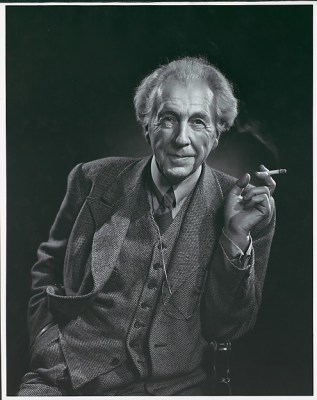
A 1945 photographic portrait of Frank Lloyd Wright by Yousef Karsh.
THE WRIGHT BROTHERS: WILBUR (1867-1912) & ORVILLE (1871-1948) US. Inventors and pioneer aviators. First to achieve sustained, powered heavier-than-air flight (although some have disputed their priority). Orville and Wilbur built printing press; Orville began printing business (1889). Launched weekly newspaper, the West Side News (1889). Opened bicycle repair and sales shop (1892). Began manufacturing their own bicycle brand (1896). Began experimenting with aeronautical mechanics (1899). Built and flew biplane kite using wing warping (1899). Began conducting manned gliding experiments at Kitty Hawk, NC (1900). Wilbur published two flight-related articles in Illustrate Aeronautische Mitteilungen (1901). Built experimental wind tunnel (1901). Wilbur gave lecture to Western Society of Engineers regarding their experiments (1901). Developed three-axis control using improved glider (1902). Applied for patent for “flying machine,” which was rejected (1903). First controlled, sustained flight of an engine-powered, heavier-than-air aircraft with the Wright Flyer at Kitty Hawk, NC (1903). Longer duration flights; first circular flight; at Huffman Prairie, Dayton, OH (Wright Flyer II) (1904). Obtained French patent (1904). First practical fixed-wing aircraft (Wright Flyer III) (1905). Obtained patent for “new and useful improvements in Flying Machines” (1906). Awarded contracts to construct aircraft by US Army Signal Corps and a French company (1908). First flight with a passenger (1908). Wilbur conducted public demonstration flights in France; Orville conducted demonstration flights in Virginia (1908). First airplane crash fatality (passenger Thomas Selfridge) (1908). Relocated to France; continued public flights (1909). Received awards from President Taft (1909). Trained Army pilots (1909). Filed lawsuit against Glenn Curtiss for patent infringement (1909). Established the Wright Company (1909). Hired and trained the Wright Exhibition Team of pilots (1910). Founded Wright Brothers Flying School (1910). Orville tested new glider; set record (1911). Death of Wilbur (1912). US Circuit Court of Appeals upheld patent verdict against Curtiss (1914). Orville won Collier Trophy for developing an automatic stabilizer (1914). Orville sold the Wright Company (1915). Orville appointed member, National Advisory Committee for Aeronautics (c. 1915?). Orville elected member, National Academy of Sciences (1936). Orville’s birthday named National Aviation Day (1939). (on 16 lists)

Wilbur Wright in 1905. Orville Wright in 1905.
NICHOLAS II (1868-1918) Russian Empire (now Russia). Monarch. Final emperor (tsar) of Russia; his reign marked the end of the Romanov dynasty. Emperor of Russia, King of Congress Poland, and Grand Duke of Finland (1894-1917). Important events during his reign included: the defeat in Russo-Japanese War (1904-1905), the failed 1905 Revolution, World War I, and the Russian Revolution. Proposed First Hague Conference (1898). Signatory, Hague Conventions of 1899 and 1907. Signatory, Anglo-Russian Convention of 1907. Forced to abdicate during the February Revolution and imprisoned by the Provisional Government (1917). Executed by Russian revolutionaries (1918). Canonized as a passion bearer by the Russian Orthodox Church (2000). (on 4 lists)

An undated photo of Tsar Nicholas II of Russia.
MOHANDAS K. GANDHI (Mahatma Gandhi) (1869-1948) British India/South Africa/India. Attorney and political activist. Leader of Indian independence movement. Advocate of non-violent civil disobedience (ahisma). Satyagraha. Brahmacharya. Swaraj (self-rule). Sarvodaya. Became attorney (1891). Practiced law in South Africa (1893-1915). Founder, Natal Indian Congress (1894). Organized Natal Indian Ambulance Corps; served in Second Boer War; received Queen’s South Africa Medal (1900). Founded Indian Opinion journal (1903). Founder, Tolstoy Farm (1910). Returned to India; joined Indian National Congress (1915). Champaran Satyagraha (1917). Kheda Satyagraha (1918). Launched non-cooperation movement (1920). Imprisoned for sedition (1922-1924). Elected president, Indian National Congress (1924). Led the Salt March protest (1930). Gandhi-Irwin Pact (1931). Resigned from Indian National Congress (1934). Launched Quit India Movement (1942). Imprisoned (1942-1944). Participated in final negotiations for independence, but opposed partition into India and Pakistan (1946-1947). Writings include: Hind Swaraj, or Indian Home Rule (1909); and The Story of My Experiments with Truth (1925-1928). Assassinated by a Hindu nationalist (1948). (on 28 lists)

Gandhi leading the Salt March in 1930.
VLADIMIR LENIN (born Vladimir Ilyich Ulyanov) (1870-1924) Russian Empire/USSR (now Russia). Political philosopher, revolutionary, and political leader. Developed theoretical basis for Marxist-Leninist Communism. Led successful Bolshevik uprising during Russian Revolution. First leader of the Soviet Union. Entered Kazan University to study law (1887). Expelled from university for participating in student protests; exiled to his family’s estate (1887-1888). Began to embrace Marxism (c. 1889-1890). Graduated with law degree; worked as a legal assistant (1890-1893). Moved to St. Petersburg, worked as barrister’s assistant; active in Marxist revolutionary cell (1893). Arrested for sedition (c. 1896). Sentenced to three years’ exile in Siberia (1897). After exile, moved to Western Europe; started a Marxist newspaper Iskra (Spark), which was smuggled into Russia (1900). Adopted pseudonym “Lenin.” (1901). Published pamphlet What Is To Be Done? (1902). Division between Bolsheviks and Mensheviks arose at Second Congress of the Russian Social Democratic Labor Party in London (1903). Bolsheviks founded Vperyod (Forward) newspaper (1905). Returned to Russia after 1905 Revolution (1905). Joined editorial board of Novaya Zhizn (New Life) (1905). Supported criminal activity to fund the party (1906-1907). Fled Russia (1907). Moved to Paris (1908). Returned to Russia following the February Revolution (1917). Announced the April Theses (1917). Bolsheviks ousted Provisional (Kerensky) Government in the October Revolution (1917). Appointed Chairman, Council of People’s Commissars (1917, held post until 1924). Issued: Declaration of the Rights of the Peoples of Russia; Decree on Land; Decree on the Press; Decree on Popular Education; Decree on Workers’ Control; Decree on Peace (1917). Established eight-hour workday (1917). Established Supreme Council of the National Economy (1917). Established Cheka political police force (1917). Civil war between the Reds and the Whites (1917-1923). Survived two assassination attempts (1918). New constitution created the Russian Soviet Federative Socialist Republic (1918). Signed Treaty of Brest-Litovsk with Germany and Austria-Hungary, resulting in large losses of territory (1918). Initiated the Red Terror (1918). Suppressed coup attempt by Left Socialist-Revolutionaries (1918). Established Gulag concentration camps (1919). First Congress, Communist International (Comintern) (1919). Polish-Soviet War (1919-1921). Tambov Rebellion (1920-1922). Peace of Riga (1921). Russian Famine of 1921. Kronstadt Rebellion (1921). Introduced New Economic Policy (1921). Dictated “Lenin’s Testament” (1922-1923). Premier of the Soviet Union (1923-1924). Other writings include: What the “Friends of the People” Are and How They Fight the Social-Democrats (tract, 1894); The Development of Capitalism in Russia (book, 1899); One Step Forward, Two Steps Back (book, 1904); Two Tactics of Social Democracy in the Democratic Revolution (pamphlet, 1905); Materialism and Empirio-criticism, (book, written 1908, published 1909); Imperialism, the Highest Stage of Capitalism (book, written 1916, published 1917); The State and Revolution (book, 1917); and “Left-Wing” Communism: An Infantile Disorder (pamphlet, 1920). (on 19 lists)

Vladimir Lenin in 1920.
MARIA MONTESSORI (1870-1952). Italy/Spain/The Netherlands. Physician and educator. Developed the Montessori education method for young children that stresses the development of a child’s own initiative and natural abilities, especially through practical play. Councilor & board member, National League for the Protection of Retarded Children (1899). Appointed co-director, Orthophrenic School for training teachers to work with learning disabled children (1900). Lectured and published articles on pedagogy and anthropology (1901-1906). Opened first Children’s House school in Rome (1907), followed by many others. Began training courses for teachers in her educational methods (1909). Published The Method of Scientific Pedagogy Applied to the Education of Children in the Children’s Houses (1909). Co-founder, Association Montessori Internationale (1929). (on 3 lists)

A 1913 photo of Maria Montessori.
ERNEST RUTHERFORD (1871-1937) New Zealand/UK. Theoretical and experimental physicist and chemist. “The father of nuclear physics.” The structure of the atom. The atomic nucleus (1911). Atomic numbering system (1913). The proton (1919). The neutron (1921). Alpha and beta radioactivity. Radioactive half-life. Piezoelectricity. Scientists who worked in his labs included: Niels Bohr, Hans Geiger, Ernest Marsden, James Chadwick, John Cockroft, Ernest Walton, Edward Appleton, and Patrick Blackett. Physics professor, McGill University (1898-1907) and Victoria University, Manchester (1907-1919). Director, Cavendish Laboratory, University of Cambridge (1919-1937). President, Royal Society (1925-1930). Writings include: Radio-activity (1904); Radioactive Transformations (1906); and Radioactive Substances and their Radiations (1913). Nobel Prize in Chemistry (1908). (on 5 lists).

Ernest Rutherford.
GUGLIELMO MARCONI (1874-1937) Italy. Engineer, inventor, entrepreneur, and politician. One of the pioneers in the development of a practical radio wave-based wireless telegraph system (radio). Marconi’s law. Began experimenting with radio waves (reaching 0.5 mile range) (1894). Developed first engineering-complete, commercially successful radio transmission system (reaching 2-mile range) (1895). Traveled to the UK; customs officials, fearing a bomb, destroyed his apparatus (1896). Applied for a patent; demonstrated system to British government (1896). Sent wireless communication over the open sea (1897). Founded the Marconi Company (UK, 1897). Made transmission across the English Channel (1899). Claimed transatlantic transmission, despite continued skepticism (1901). First radio message to cross the Atlantic from North America (1902). Established commercial service to transmit nightly news summaries to ships at sea (1904). Awarded Nobel Prize in Physics (1909). Radio transmissions from sinking Titanic brought positive publicity (1912). Appointed member, Senate of the Kingdom, Italy (1914-1937). Served as head of Italian military radio service during World War I (1914-1918). Began work with continuous-wave transmissions (1915). Joined National Fascist Party (1923). Ennobled as a marquess (1929). Appointed President, Royal Academy of Italy (1930). Set up Vatican Radio (1931). In Marconi Wireless Tel. Co. v. US (1943), the US Supreme Court invalidated Marconi’s radio patents on the grounds that he relied on the earlier patents of Oliver Lodge, John Stone, and Nikola Tesla, all co-inventors of radio. (on 8 lists)

Guglielmo Marconi in 1901, re-enacting the first wireless signal.
WINSTON CHURCHILL (Winston Leonard Spencer Churchill) (1874-1965) UK: England. Political leader, statesman, historian, and writer. British Prime Minister during World War II. Joined British Army (1895). Became journalist (1897). Published The Story of the Malakand Field Force (1897). Participated in Battle of Omdurman (1898). Left the Army (1899). In South Africa at the Battle of Chieveley as a journalist, taken as prisoner of war by the Boers; escaped (1899). Rejoined Army in South African Light Horse regiment, taking part in the Siege of Ladysmith and taking of Pretoria (1900). Member of Parliament (1900-1922, 1924-1964). Left Conservative Party; joined Liberals (1904). Under-Secretary of State, Colonial Office (c. 1907). President, Board of Trade (1908-1910). Home Secretary (1910-1911). Sponsored Coal Mines Bill and Shops Bill (1911). First Lord of the Admiralty (1911-1915). Oversaw naval attack on the Dardanelles; held responsible for Gallipoli defeat (1915). Demoted to Chancellor, Duchy of Lancaster (1915). Commander, Royal Scots Fusiliers (1915). Minister of Munitions (1917-1919). Secretary of State for War; Secretary of State for Air (1919-1921). Secretary of State for the Colonies (1921-1922). Exhibited paintings in Paris under a pseudonym (1921). Oversaw Anglo-Irish Treaty (1921). Appointed member, Order of the Companions of Honor (1922). Chancellor of the Exchequer (1924-1929). Rejoined Conservative Party (1925). Edited the British Gazette government newspaper during General Strike of 1926. Opposed appeasement of Germany (1938). First Lord of the Admiralty (1939-1940). Operation Wilfred (1940). Norway Debate (1940). UK Prime Minister (1940-1945, 1951-1955). Minister of Defense (1940-1945, 1951-1952). “Blood, toil, tears, and sweat” speech; Dunkirk evacuation; “We shall fight on the beaches” speech; “Finest hour” speech; Battle of Britain; the Blitz (1940). Leader, Conservative Party (1940-1955). Lend-Lease agreement with US; Atlantic Charter (1941). Operation Torch (1942). Bengal Famine (1943). Casablanca Conference; Washington Conference; Quebec Conference; Cairo Conference; Tehran Conference (1943). Quebec Conference; Moscow Conference (1944). Malta Conference; Yalta Conference; Potsdam Conference (1945). Bombing of Dresden (1945). Leader of the Opposition (1945-1951). “Iron Curtain” speech (1946). Received Nobel Prize in Literature (1953). Knighted (1953). Father of the House of Commons (1959-1964). Other writings include: Savrola (novel, serialized 1898, published 1900); The River War: An Historical Account of the Reconquest of the Soudan (1899); London to Ladysmith via Pretoria (1900). Ian Hamilton’s March (1900); Lord Randolph Churchill (1906); The World Crisis (5 vols. 1923-1931); My Early Life (1930); Marlborough: His Life and Times (4 vols., 1933-1938); The Second World War (6 vols., 1948-1953); A History of the English-Speaking Peoples (4 vols., 1956-1958). (on 20 lists)

Winston Churchill giving the “V for Victory” sign in 1940.
MUHAMMAD ALI JINNAH (born Mahomedali Jinnahbhai) (1876–1948) British India (now India)/Pakistan. Politician, statesman, and barrister. Founder of Pakistan. Joined Indian National Congress (1904). Elected to Imperial Legislative Council (1909). Joined All India Muslim League (1913). As president of the Muslim League, signed Lucknow Pact (1916). Founding member, All India Home Rule League (1916). Elected to Central Legislative Assembly (1923, 1934). President, All India Postal Staff Union (1925). Muslim League, under Jinnah, issued the Lahore Resolution, calling for a separate state of Pakistan (1940). First Governor-General of Pakistan (1947-1948). 1st Speaker, National Assembly (1947-1948). President, Muslim League (1947-1948). (on 4 lists)

A 1945 photo of Muhammad Ali Jinnah.
KONRAD ADENAUER (1876-1967) Germany/West Germany (now Germany). Political leader. First post-war Chancellor of West Germany. Founder and first leader, Christian Democratic Union. Mayor, Cologne (1917-1933). President, Prussian State Council (1921-1933). Founded Christian Democratic Union (1946); leader (1946-1966). President, Parliamentary Council (1948-1949). Chancellor, West Germany (1949-1963). Minister for Foreign Affairs (1951-1955). Restored West Germany’s economy and international relations after World War II. Under Adenauer, West Germany joined NATO (1955), reestablished national military forces (1955), and intelligence services (1956). Signed Treaty of Rome creating European Economic Community (1957). Oversaw return of German prisoners of war from the USSR. (on 3 lists)

Konrad Adenauer in 1955 speaking to the Bundestag.
JOSEPH STALIN (born Ioseb Besarionis dze Jughashvili; Joseph Vissarionovich Stalin) (1879-1953) Russian Empire (now Georgia)/USSR (now Russia). Political leader and authoritarian head of USSR. Led Soviet Union to victory over Germany in World War II. Conducted purge of political enemies. Collectivized farming, leading to famine. ‘Socialism in one country” policy. Center of personality cult. Enrolled in Russian Orthodox seminary (1894). Began attending socialist workers’ meetings; left seminary (1899). Worked as meteorologist, Tiflis observatory (1899). Participated in May Day strike (1900). Helped plan May Day demonstration (1901). Elected to Tiflis Committee, Russian Social Democratic Labor Party (1901). Worked at Rothschild refinery storehouse; organized strikes (1901-1902). Arrested; sentenced to exile in Siberia (1902). Escaped from exile (1904). Co-editor, Proletariatis Brdzola (“Proletarian Struggle“) newspaper (1904). Formed armed squads in Baku during Revolution of 1905. Began robberies to fund the Bolsheviks (1905). Elected delegate to Bolshevik conference in Finland; met Lenin (1905). Robbed bank stagecoach in Tiflis (1907). Arrested, imprisoned, and exiled (1908). After escape, arrested again (1910). Escaped and arrested again, exiled again (1911). Escaped to St. Petersburg; made editor of daily newspaper, Pravda (‘Truth’) (1912). Arrested and exiled again; escaped again (1912). Began using name “Stalin” (1912). Published article “Marxism and the National Question” (1913). Arrested and exiled again (1913). Returned to Petrograd after February Revolution to continue working on Pravda (1917). Appointed Bolshevik delegate to executive committee, Petrograd Soviet (1917). Helped organize July Days uprising (1917). Oversaw Sixth Bolshevik Congress (1917). Served as People’s Commissar for Nationalities, Russian SFSR (1917-1923). Traveled to Helsinki; met with Finnish Social Democrats; granted independence (1917). Sent to Tsaritsyn during civil war; commanded Red Army troops; executed suspected counter-revolutionaries (1918). Awarded Order of the Red Banner (1919). Appointed head, Workers’ and Peasants’ Inspectorate (1920). Disobeyed orders in Battle of Warsaw; criticized for “strategic mistakes” (1920). Georgian Affair (1922). General Secretary, Communist Party of the Soviet Union (1922-1952). Gave lecture series, Foundations of Leninism (1924). Factional infighting led to removal of Trotsky; Stalin became supreme leader (1924-1928). Published On Questions of Leninism (1926). Launched first five-year plan (1928). Shakhty Trial (1928); other show trials (1929-1930). Mass collectivization of agriculture, resulting in famine and armed uprisings (1929-1930). Policy of liquidation of kulak class (1930). Destroyed Moscow’s Cathedral of Christ the Savior (1931). Famine killed five to seven million (1932-1933). USSR joined the League of Nations (1934). New constitution adopted (1936). Great Purge of political enemies (1936-1938). Signed non-aggression pact with China (1937). Published History of the All-Union Communist Party (Bolsheviks) “Short Course” (1938). Molotov-Ribbentrop Pact with Germany (1939). Invaded Poland (1939). Katyn massacre (1940). Signed neutrality pact with Japan (1941). Premier, USSR (1941-1953). Germany invaded USSR (1941). Minister of the Armed Forces, USSR (1941-1947). Named Time magazine “Man of the Year” (1942). Soviet forces repelled German invasion and captured Berlin (1943-1945). Battle of Stalingrad (1943). Operation Bagration (1944). Yalta Conference (1945). Potsdam Conference (1945). Famine (1946-1947). Formation of Cominform in Eastern Europe (1947). Published Falsifiers of History (1948). USSR tested atomic bomb (1949). Sino-Soviet Treaty of Friendship, Alliance and Mutual Assistance (1950). Published article “Marxism and Problems of Linguistics” (1950). “Doctors’ Plot,” state-sponsored anti-intellectual and antisemitic campaign, including Slánský trial (1951-1953). Published Economic Problems of Socialism in the USSR (book, 1952). Eliminated Politburo and replaced it with the Presidium (1952). (on 20 lists)

Joseph Stalin in 1943.
ALBERT EINSTEIN (1879-1955) Germany/Switzerland/US. Theoretical physicist. Known for: the special and general theories of relativity; the photoelectric effect; Brownian motion; E=mc2 equation; E=hf equation; Einstein field equations; Bose–Einstein statistics; Bose–Einstein condensate; gravitational waves; cosmological constant; unified field theory; EPR paradox. Left Germany for Switzerland (1895). Graduated, Swiss Federal Polytechnic School (1900). Assistant Examiner, Swiss Patent Office (1902-1909). Earned Ph.D., University of Zurich (1905). Published four important papers (annus mirabilis) (1905). Teacher, University of Bern (1908). Professor, University of Zurich (1909-1911). Professor, Charles-Ferdinand University (1911). Professor, ETH Zurich (1912). Elected to Prussian Academy of Sciences (1913). Professor, Humboldt University of Berlin (1914). President, German Physical Society (1916-1918). Director, Kaiser Wilhelm Institute for Physics (1917). Co-founder, German Democratic Party (1918). Awarded Nobel Prize in Physics (1921). Member, International Committee on Intellectual Cooperation (1922-1932). Fled Nazi Germany (1933). Accepted position at Institute for Advanced Study, Princeton (1933-1955). Signed Einstein-Szilard letter to FDR warning of nuclear weapons (1939). Publications include: Relativity: The Special and General Theory (1916); Ideas and Opinions (1954). (on 28 lists)

Albert Einstein in Vienna in 1921. Photo by F. Schmutzer.
MARGARET SANGER (born Margaret Higgins) (1879-1966) US. Nurse, birth control advocate, sex educator, and writer. Regarded as founder and leader of the birth control movement. Popularized the term “birth control.” Arrested eight times for violating the Comstock Act, which banned dissemination of information about contraception. Graduated from nursing school (1902). Joined Socialist Party of New York (c. 1911). Columnist on love and sex for the New York Call: What Every Mother Should Know (1911-1912); What Every Girl Should Know (1912-1913). Participated in Lawrence textile strike (1912) and Paterson silk strike (1913). Published monthly newsletter, The Woman Rebel (1914). Published Family Limitation pamphlet (1914). Opened first birth control clinic in US (1916), although it closed after one month. Founder and editor, Birth Control Review periodical (1917-1929). Published book Woman and the New Race (1920). Founded and led American Birth Control League (1921-1928). (ABCL became Planned Parenthood in 1942.) Gave lecture tour in Asia (1922). Published book The Pivot of Civilization (1922), in support of eugenics. Established the Clinical Research Bureau to allow physicians to prescribe contraceptives (1923). Organized the Sixth International Neo-Malthusian and Birth-Control Conference (1925). Formed National Committee on Federal Legislation for Birth Control (1929). Published two autobiographies: Margaret Sanger: My Fight for Birth Control (1931) and Margaret Sanger An Autobiography (1938). Moving force behind court challenge leading to favorable ruling in US v. One Package of Japanese Pessaries (1936). Co-founder, the Negro Project, an attempt to increase contraception awareness among Black Americans (1939). Founded International Committee on Planned Parenthood (later the International Planned Parenthood Federation) (1948; president 1952-1959). Persuaded philanthropists to fund research into birth control pill (early 1950s). (on 6 lists)

Margaret Sanger in 1922.
HELEN KELLER (1880-1968) US. Author, political activist, disability rights advocate, and lecturer. Raised awareness about people with disabilities. Illness left her deaf and blind (1882). Attended Perkins School for the Blind (1888-1893); William Wade House and Finishing School (1894-1896); The Cambridge School for Young Ladies (1896-1900); and Radcliffe College (1900-1904.) First blind and deaf person to earn Bachelor of Arts degree (1904). Published her autobiography, The Story of My Life (1903). Joined Socialist Party of America (1909). Joined Industrial Workers of the World (1912). Founder, Helen Keller Foundation (1915). Founding member, American Civil Liberties Union (1920). Worked and raised funds for the American Foundation for the Blind (1920s-1968). Other published works include: The World I Live In (1908); Out of the Dark (essays, 1913); and My Religion (1927). Awarded Presidential Medal of Freedom (1964). Elected to National Women’s Hall of Fame (1965). (on 6 lists)

Helen Keller in 1912.
MUSTAFA KEMAL ATATÜRK (born Ali Riza oğlu Mustafa) (1881-1938) Salonica, Ottoman Empire (now Greece)/Turkey. Military and political leader. Founder and first president of Republic of Turkey. Modernized Turkey into a secular, industrializing nation. Kemalism. Graduated, Ottoman Military College (1905). Arrested and imprisoned for anti-monarchist activities (c. 1905). Assigned to Fifth Army as Staff Captain (c. 1906). Joined Vatan ve Hürriye (‘Motherland and Liberty’) (c. 1906). Joined Committee of Union and Progress (c. 1907). Appointed, Inspector of the Ottoman Railways in Eastern Rumelia (1908). Young Turk Revolution (1908). Instrumental in suppressing 31 March uprising (1909). Served in the Italo-Turkish War (1911-1912). Served in the Balkan Wars (1912-1913). Front line commander during the Battle of Gallipoli (1915-1916). Led troops during Caucasus Campaign (1916). Appointed to command of the Seventh Army (1917). Participated in Battle of Megiddo (1918). Assigned Inspector of the Ninth Army Troops Inspectorate (1919). Appointed head of the executive committee, Sivas Conference (1919). Candidates of the Association for Defense of Rights for Anatolia and Roumelia swept parliamentary elections (1919). Greco-Turkish War (1919-1922). Ethnic cleansing/genocide of Armenians and Greeks by Turkish forces (1919-1922). Misak-ı Millî (National Pact) adopted (1920). Appointed speaker, Grand National Assembly (1920). Ottoman Grand Vizier Damat Ferid Pasha signed the Treaty of Sèvres (1920) Promoted to commander-in-chief of Turkish army (1921). Defeated Greeks at the battle of the Sakarya (1921) and Battle of Dumluinar (1922). Armistice of Mudanya signed (1922). Grand National Assembly abolished the Ottoman sultanate and ended the Ottoman Empire (1922). Treaty of Lausanne signed, recognizing Turkish sovereignty (1923). Establishment of the Republic of Turkey; became first president (1923-1938). Capital established at Ankara (1923). Domestic policies included: free, compulsory primary education; equal civil and political rights for women; encouragement of Western attire; attempts to separate church and state; Turkification. Sheikh Said Rebellion (1925). Closed Islamic courts (1926). Turkish civil code passed (1926). 1927 Detentions (anti-communist) (1927). Opened State Art and Sculpture Museum (1927). Established Turkish State Railways (1927). Introduced new Turkish alphabet (1928). Menemen Incident (1930). Established Turkish Language Association and Turkish Historical Society (1931). Resettlement Law and Surname Law (1934). Balkan Pact signed (1934). Granted surname Atatürk (“Father of the Turks”) (1934). Montreux Convention (1936). Saadabad Pact (1937). (on 11 lists)

Mustafa Kemal Atatürk in 1931.
ALEXANDER FLEMING (1881-1955) UK: Scotland. Biologist, physician, pharmacologist and botanist. Discovered penicillin, the first antibiotic, and lysozyme. Bachelor of Science degree (1908). Lecturer, St. Mary’s Hospital Medical School (1908-1914, 1918-1928). Served in the Royal Army Medical Corps in World War I (lieutenant 1914; captain 1917). Published article warning of antiseptics use for war wounds (1917). Discovered lysozyme, an antimicrobial protein (1921, published results 1922). Discovered new species of bacterium (1921). Elected Professor of Bacteriology, University of London (1928). Discovered penicillin antibiotic fungus (1928, named “penicillin” 1929). Worked on trying to isolate and produce penicillin and make it more effective (1930s). Successfully treated patient suffering from streptococcal meningitis with penicillin (1942, published results 1943). Demonstrated first case of antibiotic resistance (1942). Appointed to the Penicillin Committee, in charge of production for the war effort (1943). Elected Fellow of the Royal Society (1943). Knighted (1944). Awarded Nobel Prize in Physiology/Medicine (jointly with Ernst Chain and Howard Florey) (1945). Warned about antibiotic resistance (1945). Elected Rector, University of Edinburgh (1951). (on 11 lists)

Alexander Fleming.
PABLO PICASSO (1881-1973) Spain/France. Innovative modernist painter, sculptor, printmaker, ceramicist, and theater designer. Demonstrated precocious artistic abilities from an early age. Received art training from his father (before 1890). Sent to art school in Madrid (c. 1897). Co-founded Arte Joven magazine with Francisco de Asís Soler (1901). Moved to France (1901). Blue Period (1901-1904). Rose Period (1904-1906). Leo & Gertrude Stein began collecting his work (c. 1905). First proto-Cubist painting, Les Demoiselles d’Avignon (1907). African-Influenced Period (1907-1909). Co-inventor (with Georges Braque) of Cubism (c. 1908-1911). Analytical Cubism period (c. 1910-1912). Falsely arrested and questioned regarding theft of the Mona Lisa (1911). Synthetic Cubism period (c. 1912-1914). Pioneered constructed sculpture (assemblage) and (with Braque) collage (c. 1912-1914). Designed sets and costumes for the Ballet Russes (1917-1924). Began experiments with Neoclassicism and Surrealism (1921). Began writing poetry (1935). Painted antiwar mural Guernica for Spanish Pavilion at the Paris International Exposition (1937). Wrote Desire Caught by the Tail (play, 1941). Major retrospective show at Museum of Modern Art, NY (1939-1940). Wrote The Four Little Girls (play, 1949). Participated in the film, Le Mystère Picasso (The Mystery of Picasso), directed by Henri-Georges Clouzot (1955). Wrote The Burial of the Count of Orgaz (prose, 1959). Other artworks (paintings unless noted) include: Self Portrait (1901); Blue Nude (1902); The Old Guitarist (1903); La Vie (1903); Family of Saltimbanques (1905); Portrait of Ambroise Vollard (1910); The Accordionist (1911); Woman With a Guitar (Ma Jolie) (1911-1912); Guitar (sculpture, 1912); Glass and Bottle of Suze (collage, charcoal & gouache, 1912); Three Musicians (two versions, 1921); The Lovers (1923); Girl Before A Mirror (1932); The Weeping Woman (1937); Bull’s Head (sculpture, 1942); Las Meninas (after Velázquez) (series of 58 paintings) (1957); and Untitled (Chicago Picasso) (sculpture, 1967). (on 17 lists)

Pablo Picasso in 1908 or 1909.
VIRGINIA WOOLF (1882-1941) UK: England. Modernist writer. Pioneered stream of consciousness style. Member, Bloomsbury Group. Co-founder, Hogarth Press (1917). Writings include: The Voyage Out (novel, 1915). “Kew Gardens” (short story, 1919). “A Haunted House” (short story, 1921). Mrs. Dalloway (novel, 1925). To the Lighthouse (novel, 1927). “A Room of One’s Own” (essay, 1929). Orlando: A Biography (novel, 1928). The Waves (novel, 1931). Freshwater (play, 1935). The Years (novel, 1937). Between the Acts (novel, posthumously published, 1941). Committed suicide. (on 3 lists)

Virginia Woolf in 1902.
JAMES JOYCE (1882-1941). Ireland/Austro-Hungarian Empire (now Italy)/Switzerland/France. Writer, teacher, lecturer, singer, and arts promoter. A pioneer of Modernism in literature, he is regarded one of the most influential and important writers of the 20th century. First published article: 1900; first published poem: 1904; first published short story: 1904. Opened Ireland’s first cinema, the Volta Cinematograph, in Dublin (1909). Co-founded the English Players acting company in Zurich and served as its business manager (1917-1920). Writings include: Chamber Music (poetry, 1907); Dubliners (short stories, 1914); A Portrait of the Artist as a Young Man (novel, serialized in 1914, book 1916); Exiles (play, 1918); Ulysses (novel, serialized 1918, book 1922); Pomes Penyeach (poetry, 1927); and Finnegan’s Wake (novel, 1939). (on 3 lists)

A 1928 photograph of James Joyce by Berenice Abbott.
FRANKLIN D. ROOSEVELT (1882-1945) US. Statesman and politician. Longest serving US president; led the country through the Great Depression and World War II. Considered one of the greatest US presidents. The New Deal domestic policies. Fifth Party System. Passed bar examination (1907). Took job with Carter Ledyard & Milburn law firm (1908). Became a Freemason (1910). Member, New York State Senate (1911-1913). Assistant Secretary, US Navy (1913-1920). Ran unsuccessfully for US Senate (1914). Helped establish US Naval Reserve Force (1915). Democratic Party candidate for US Vice-President (1920). Returned to law practice (c. 1920). Appointed vice-president, Fidelity and Deposit Co. (c. 1920). Suffered paralyzing illness (possibly polio) (1921). Gave presidential nominating speeches, Democratic Conventions (1924, 1928). Appointed to Taconic State Park Commission (1925). Purchased Warm Springs resort, Georgia (1927). Governor of New York (1929-1932). Established state employment commission (c. 1929-1930). Supported bill creating old-age insurance (1930). Supported reforestation bill (1931). Supported creation of the Hofstadter Committee (Seabury investigations into corruption) (1931). Elected US president (Democrat, 1932). Narrowly escaped assassination attempt (1933). 32nd US President (1933-1945). Major policies, programs, and legislation include: Good Neighbor Policy (1933); Emergency Banking Act (1933); Cullen-Harrison Act (ending Prohibition) (1933); Federal Emergency Relief Act (1933); Public Works Administration (1933); Civilian Conservation Corps (1933); Rural Electrification Administration (1933); Federal Deposit Insurance Corporation (1933); Agricultural Adjustment Administration (1933, found unconstitutional 1936); National Industrial Recovery Act (1933, found unconstitutional 1935); Tennessee Valley Authority (1933); Securities and Exchange Commission (1934); Federal Communications Commission (1934); Indian Reorganization Act (1934); National Labor Relations Act (1935); Social Security Administration (1935); Works Progress Administration (1935); Housing Act (1937); and Fair Labor Standards Act (1938). Began practice of radio broadcasts (“fireside chats”) (1933). Signed Montevideo Convention (1933). Refused to intervene in the Flint sit-down strike (1936-1937). Sought unsuccessfully to increase number of seats on the Supreme Court (“court packing plan”) (1937). Founded National Foundation for Infantile Paralysis (later became March of Dimes) (1938). Created Executive Office of the President of the US (1939). Began secret correspondence with Winston Churchill (1939). Supported creation of the first peacetime draft (1940). Reached Destroyers for Bases Agreement with UK (1940). Ran for unprecedented third term as US president (1940). Four Freedoms speech (1941). Drafted Atlantic Charter with Churchill (1941). US declared war against Japan following attack on Pearl Harbor (1941). Germany and Italy declared war on the US (1941). Selected General Leslie Groves to oversee the Manhattan Project (1942). Arcadia Conference (1941). Created Joint Chiefs of Staff (1942). Ordered incarceration of Japanese Americans in internment camps (1942). Tehran Conference (1943). Created Office of War Mobilization (1943). Bretton Woods and Dumbarton Oaks conferences (1944). Second Bill of Rights speech (1944). Selected Dwight D. Eisenhower to lead Allied invasion of France (1944). Yalta Conference (1945). Died in office prior to the end of the war, resulting in presidency of Harry S Truman (April 12, 1945). (on 15 lists)

Franklin D. Roosevelt signing the Lend-Lease Act in 1941.
BENITO MUSSOLINI (Benito Amilcare Andrea Mussolini) (1883-1945) Italy. Political leader and journalist. Fascist dictator of Italy. Joined Germany and Japan in Axis alliance during World War II. Member, National Directorate, Italian Socialist Party (1912-1914). Founder and leader: Fasci d’Azione Rivoluzionaria (1914); Fasci Italiani di Combattimento (1919); and National Fascist Party (1921). Founded Il Popolo d’Italia newspaper (1914). March on Rome (1922). Prime minister of Italy (1922-1943). Transformed Italy into a one-party totalitarian dictatorship (1922-1926). Initiated Second Italo-Senussi War in Libya (1923). Signatory, Treaty of Lausanne (1923). Signatory, Lateran Treaty creating Vatican City (1929). Signatory, Four-Power Pact (1933). Signatory, Stresa Front (1935). Initiated Second Italo-Ethiopian War (1935-1937), leading to Italian occupation of Ethiopia. Signed protocol with Germany and Anti-Comintern Pact (1936). Supported Fascists during Spanish Civil War (1936-1939). Removed Italy from the League of Nations (1937). Signed Pact of Steel with Germany (1939). Annexed Albania (1939). Signed Tripartite Pact (Axis) with Germany and Japan (1940). Following Allied invasion of Italy, removed from government by King Victor Emmanuel II, then rescued by the Germans and made leader of puppet state in German-occupied north Italy (1943). Duce, Italian Social Republic (1943-1945). In April 1945, attempted to flee to Switzerland but captured by communist partisans and summarily executed. (on 7 lists)

Benito Mussolini in Germany in 1938.
JOHN MAYNARD KEYNES (1883-1946) UK: England. Economist. Developed Keynesian economics, which emphasized government spending. His ideas fundamentally changed the theory and practice of macroeconomics and influenced the economic policies of governments. Fellow, King’s College, University of Cambridge (1909). Founder, Political Economy Club (1909). Editor, The Economic Journal (1911). Appointed Companion of the Order of the Bath (1917). Appointed to the Versailles peace conference as financial representative for the Treasury (1919). Member, Royal Commission on Indian Currency and Finance (1926). Vice-chair, Marie Stopes Society (1932). Director, British Eugenics Society (1937-1944). Appointed to Court of Directors, Bank of England (1941-1942). Granted a hereditary peerage as 1st Baron Keynes (1942). Member, House of Lords in the Liberal Party (1942-1946). Founding chair, Arts Council of Great Britain (1946). Publications include: The Economic Consequences of the Peace (1919); A Treatise on Probability (1921); A Tract on Monetary Reform (1923); Treatise on Money (1930); The Means to Prosperity (1933); The General Theory of Employment, Interest and Money (1936); and How to Pay for the War (1940). (on 4 lists)

John Maynard Keynes (right) with his partner, painter Duncan Grant.
COCO CHANEL (born Gabrielle Bonheur Chanel) (1883-1971) France. Fashion designer and businesswoman who revolutionized women’s fashion. Opened first boutiques in Deauville (1913), Biarritz (1915). Opened boutique in Paris (1921). Innovator in expanding beyond clothing into bags, jewelry, and perfumes. Known for: use of jersey fabric in high fashion; the ‘little black dress’ (1912-1913); Chanel No. 5 perfume (1921); the Chanel tweed suit (1923); mixed use of fine gem stones and costume jewelry; the Chanel handbag (1929). Designed costumes for theater, ballet, and film. Accused of collaborating with the Nazis during World War II. (on 3 lists)

An undated photo of Coco Chanel.
ELEANOR ROOSEVELT (1884-1962) US. Politician, activist and reformer. Married Franklin Delano Roosevelt (1905). Nursed her husband during his paralytic illness (1921). Worked with Women’s Trade Union League (1920s). Campaigned for Alfred E. Smith in New York governor’s race (1924). Co-founder, co-owner, and teacher, Todhunter School for Girls (1927-1933). Co-founder and co-owner, Val-Kill Industries (1927-1938). First lady of New York (1929-1932). First Lady of the United States (1933-1945). First presidential spouse to hold regular press conferences, write a daily newspaper column, write a monthly magazine column, host a weekly radio show, and speak at a national party convention. Chair and US representative, UN Commission on Human Rights (1946-1952). Co-drafter of the Universal Declaration of Human Rights (1948). Chair, Presidential Commission on the Status of Women (1961-1962). (on 7 lists)

Eleanor Roosevelt speaking at the United Nations in 1947.
HARRY S TRUMAN (1884-1972) US. Businessman and politician. US President at end of World War II; first and only leader to use atomic weapons in war. Member, Missouri National Guard (1905-1911). Captain, US Army, during World War I (1917-1918). Small business owner (1918-1921). County Court judge (elected 1922, served 1923-1925, 1926-1935). US Senator from Missouri (Democrat, 1935-1945). Chair, Truman Committee, which investigated defense spending (1940-1944). 34th US vice president (elected 1944; took office 1945). Became 33rd US president upon death of Franklin D. Roosevelt (1945); held office from 1945-1953. Elected to a second term (1948). Authorized the use of atomic bombs on two Japanese cities in August 1945. Other important events during his presidency included: end of World War II in Europe and the Pacific (1945); the onset of the Cold War with the USSR (1947); the Berlin airlift (1949); the Marshall Plan (1948); and the Korean War (1950-1953). Issued executive orders banning race discrimination in federal agencies and desegregating the US Armed Forces (1948). (on 5 lists)

Harry S. Truman after winning election in November 1948. Associated Press photo by Rollins.
NIELS BOHR (1885-1962) Denmark. Theoretical and experimental physicist and philosopher. Made discoveries regarding the structure of the atom and quantum mechanics. Quantum atomic structure. Bohr–Van Leeuwen theorem (1911). Bohr model of the atom (1913). Correspondence principle. Complementarity. Quantum mechanics. Electron complementarity. Bohr magneton. Copenhagen interpretation. Founded Institute of Theoretical Physics (1921) (now Niels Bohr Institute). Bohr–Kramers–Slater theory (1924). During World War II, assisted Allies in nuclear weapons programs (1943-1945). First chair, Nordic Institute for Theoretical Physics (1957). Publications include: The Theory of Spectra and Atomic Constitution (1922); Atomic Theory and the Description of Nature (1934); and Atomic Physics and Human Knowledge (1958). Awarded: Nobel Prize in Physics (1922); Franklin Medal (1926); Max Planck Medal (1930); and Copley Medal (1938). (on 4 lists)

Niels Bohr in 1922.
DAVID BEN-GURION (born David Grün) (1886-1973) Congress Kingdom of Poland (now Poland)/Palestine, Ottoman Empire/Israel. Political and military leader and leading Zionist. Led successful movement for independent state of Israel. Immigrated to Ottoman Palestine (1906). Chair, Executive of the Jewish Agency for Palestine (1935-1948). Acting president, World Zionist Organization (1946-1956). Co-founded State of Israel (1948) and became its first Prime Minister (1948-1953, 1955-1963). Minister of Defense, Israel (1948-1954, 1955-1963). Oversaw creation of the Israel Defense Forces (IDF). (on 3 lists)

David Ben-Gurion in 1960.
CHIANG KAI-SHEK (1887-1975) China/Taiwan. Political and military leader. Led Nationalists in civil war with Communists. Founding member, Kuomintang party (1911). Superintendent, Whampoa Military Academy (1924-1947). Commander-in-chief, National Revolutionary Army (1926-1947). Chairman, Military Affairs Commission (1931-1946). Led Chinese forces during Second Sino-Japanese War (1937-1945). Retreated to Taiwan after defeat by Communist Army (1949). Ruler and 1st President, Republic of China in Taiwan (1949-1975). Declared martial law; presided over first part of the ‘White Terror’ in Taiwan (1949-1975). (on 3 lists)

Chiang Kai-shek.
ADOLF HITLER (1889-1945) Austria/Germany. Political leader and dictator. Leader of National Socialist movement (Nazis). Chancellor, then dictator of Germany during Third Reich. Invaded Austria and Czechoslovakia. Invasion of Poland in September 1939 started World War II. Architect of Jewish genocide (the Holocaust) and mass killings of Roma, Slavs, physically and mentally disabled people, homosexuals, transsexuals, and political dissidents. Identified as German, not Austrian, from an early age. Moved to Vienna to study art; rejected twice from the Academy of Fine Arts Vienna (1907). Worked as a casual laborer, painted watercolors of Vienna, and attended the opera (1909). Moved to Munich (1913). Enlisted in Bavarian Army (1914). Awarded the Iron Cross twice (1914, 1918). Wounded at the Battle of the Somme (1916). Received the Wound Badge (1918). Appointed intelligence agent of an army reconnaissance unit (1919). Assigned to infiltrate the German Workers’ Party (which later changed its name to National Socialist German Workers’ Party “Nazi Party”); became a party member (1919). Discharged from the army; began working full-time for the Nazi Party; designed swastika banner; issued 25-point program (1920). Rose to Nazi party leadership; organized paramilitary organization, Sturmabteilung (SA) (1921). Led failed coup attempt (Beer Hall Putsch); arrested and imprisoned (1923). Tried, convicted and sentenced; pardoned (1924). Formally renounced Austrian citizenship (1925). Published Mein Kampf (1925-1926). Appointed administrator, Brunswick state delegation to Reichsrat, giving him German citizenship (1932). Ran unsuccessfully against Hindenburg for president (1932). Appointed German chancellor (1933). Reichstag fire; Reichstag Fire Decree; Nazis obtained 44% of the vote; Enabling Act passed (1933). Withdrew Germany from League of Nations (1933). Night of the Long Knives (1934). Upon death of Hindenburg, became Führer und Reichskanzler (1934). Anglo-German Naval Agreement (1935). Occupied the Rhineland (1936). Hosted 1936 Olympic Games. Nine-Point Protocol with Italy (1936). Anti-Comintern Pact (1937). Anschluss of Austria (1938). Blomberg-Fritsch Affair (1938). Kristallnacht (1938). Munich Agreement (which gave Sudetenland to Germany) (1938). Time magazine’s Man of the Year (1938). Invaded Czechoslovakia (1939). Molotov-Ribbentrop Pact with USSR (1939). Invaded Poland, beginning World War II (1939). Invaded Denmark, Norway, France, Belgium, Luxembourg, the Netherlands; Battle of Britain; signed Tripartite Pact (1940). Invaded Yugoslavia, Greece, and Soviet Union (1941). Second Battle of El Alamein (1942). Battle of Stalingrad (1942-1943). Italy surrendered to Allies (1943). D-Day invasion (1944). Survived July 20 assassination attempt (1944). Battle of the Bulge (1944-1945). Soviet Army surrounded Berlin; committed suicide (April 1945). (on 24 lists)

Adolf Hitler in 1937.
JAWAHARLAL NEHRU (1889-1964) British India/India. Statesman and independence activist. First prime minister of independent India. Architect of the modern socialist, secular democratic India. Imprisoned eight times between 1921 and 1945 during independence struggle. Became barrister (UK) (1912). Returned to India; enrolled as barrister in Allahabad High Court (1912). Joined Indian National Congress (1912). Joined Home Rule League (1916). First imprisonment (during non-cooperation movement) (1921). Elected general secretary, Indian National Congress (1923). Elected president, United Provinces Congress (1923). Elected mayor of Allahabad (1923). Elected to Executive Council, League against Imperialism (1927). President, Indian National Congress (1929-1930, 1936-1937, 1946). Drafted Indian Declaration of Independence and Fundamental Rights and Economic Policy (1929). President, All India States Peoples Conference (1939-1946). Named by Gandhi as his heir and successor (1942). After passage of the Quit India resolution, imprisoned for the duration of World War II (1942-1945). Head, Interim Government of India (1946-1947). Elected member, Constituent Assembly of India (1946-1950). Minister of External Affairs (1946-1964). Prime Minister (1947-1964). Indo-Pakistani War (in Kashmir) (1947-1948). Delivered “Tryst with Destiny” speech (1947). Integration of princely states (1947-1950). Adoption of new constitution (1950). Member of Parliament (Lok Sabha) (1952-1964). Appointed States Reorganization Commission (1953). Orchestrated the ouster and arrest of Kashmiri prime minister (1953). Signed treaty with China (Five Principles of Peaceful Coexistence) (1954). Annexed Goa using military force (1961). Founding member, Non-Aligned Movement (1961). Sino-Indian War (1962). Written works include: Letters from a Father to His Daughter (1929); Glimpses of World History (1934); An Autobiography (Toward Freedom) (1936); and The Discovery of India (1946). (on 9 lists)

Jawaharlal Nehru in 1959.
CHARLIE CHAPLIN (1889-1977) UK/US/Switzerland. Actor, comedian, filmmaker, and composer. Silent film innovator. Created “The Tramp” character. Combined slapstick comedy with pathos. Composed the scores for all his films from 1931-1967. Member, Eight Lancashire Lads dancing troupe (1899-1900). First stage acting role, in Jim, A Romance of Cockayne (1903). Member, Casey’s Circus (1906-1907). Member, Fred Karno’s acting company (1908-1912). Traveled to US with Karno (1912). Signed film acting contract with Keystone Studios (1913). Film acting debut in Making a Living (1914). Introduced the Tramp character in Kid Auto Races at Venice (1914). Film directorial debut, Caught in the Rain (1914). First role in a feature film, Tillie’s Punctured Romance (1914). Joined Essanay Film Manufacturing Co. (1914). Joined Mutual Film Corp. (1916). Joined First National Exhibitors’ Circuit (1917). Opened Charlie Chaplin Studios (1918). Formed United Artists with Douglas Fairbanks, Mary Pickford, and D.W. Griffith (1919). Directed first dramatic feature film, A Woman of Paris (1923). Directed and starred in The Gold Rush (1925). Produced two non-talking films during the sound era: City Lights (1931) and Modern Times (1936). Made his first all-talking film, The Great Dictator (1940). Prosecuted under the Mann Act; accused in paternity suit (1944). Left US for UK premiere; re-entry permit revoked (1952). Settled in Switzerland (1953). Awarded International Peace Prize by the World Peace Council (1954). Published My Autobiography (1964). Returned to US to receive Honorary Award from the Academy of Motion Picture Arts and Sciences (1972). Knighted by Queen Elizabeth II (1975). Post-Tramp films include: Monsieur Verdoux (1947); Limelight (1952); A King in New York (1957); and A Countess from Hong Kong (1967). (on 9 lists)

Charlie Chaplin in 1920.
DWIGHT D. EISENHOWER (1890-1969) US. Military and political leader. Led US forces in World War II. Served two terms as US President in the 1950s. Graduated from West Point and entered the U.S. Army (1915). Achieved rank of brigadier general (1941). Planned and supervised Operation Torch (North Africa) (1942-1943). Supreme Commander, Allied Expeditionary Force in Europe during World War II (1943-1945). Planned and supervised invasion of Normandy (1944). Military governor, American-occupied zone of Germany (1945). Chief of Staff of the Army (1945-1948). President, Columbia University (1948-1953). Supreme Allied Commander, NATO (1951-1952). Elected 34th US president for two terms (Republican, 1953-1961). Adopted New Look nuclear policy. Presided over armistice ending Korean War (1953). Supported regime-changing coups in Iran (1953) and Guatemala (1954). Supported French in First Indochina War (1953-1954). Supported South Vietnam in civil war (1954-1961). Formosa Resolution (1955). Demanded withdrawal of foreign troops from Egypt during Suez Crisis (1956). Proposed development of interstate highway system (1953-1956). Sent Army troops to enforce school integration in Little Rock, Arkansas (1957). Signed Civil Rights Act of 1957. Oversaw creation of NASA (1958). Proposed increased science education (National Defense Education Act, 1956). Deployed troops during Lebanon crisis (1958). Approved Bay of Pigs operation. In farewell address, warned of rising power of “military-industrial complex” (1961). (on 5 lists)

A phot of Dwight D. Eisenhower when he was a general in the US Army.
HO CHI MINH (born Nguyễn Sinh Cung) (1890-1969) French Indochina/Democratic Republic of Vietnam (North Vietnam) (now Vietnam). Revolutionary, military and political leader, poet, and writer. Led communist revolution for Vietnamese independence and unification. Founder and first leader of North Vietnam. Founding member, French Communist Party (1920). Founder, Vietnamese Revolutionary Youth League (1925). Helped establish Indochinese Communist Party (1930). Member, 1st Politburo (1935-1951); 2nd Politburo (1951-1960); and 3rd Politburo (1960-1969). Founder, League for Independence of Vietnam (Việt Minh) (1941). Led Việt Minh in guerilla war during Japanese occupation (1941-1945). Led August Revolution against Emperor Bảo Đại and declared independence of Democratic Republic of Vietnam (1945). Chair, National Liberation Committee of Vietnam (1945). Minister of Foreign Affairs (1945-1946). Prime minister, Democratic Republic of Vietnam (1945-1955). 1st President, Democratic Republic of Vietnam (1945-1969). Led Việt Minh against the French in First Indochina War (1946-1954). Chairman, Workers’ Party of Vietnam (1951-1969). Land reform campaign (1953-1956). Defeat of French at Battle of Điện Biên Phủ marked the end of the First Indochina War (1954). Geneva Conference led to division into North and South Vietnam (1954). General secretary, Workers’ Party of Vietnam (1956-1960). Supported Việt Cộng insurgency in South Vietnam during Vietnam War (1960-1969). Built and used the Ho Chi Minh and Sihanouk trails to supply the People’s Army of Vietnam and the Viet Cong (1960–1969). (on 6 lists)

Ho Chi Minh in 1946.
CHARLES DE GAULLE (Charles André Joseph Marie de Gaulle) (1890-1970) France. Military and political leader. Led Free French forces in World War II; led first postwar government; returned to power during Algerian War crisis. Graduated military academy and joined the 33rd Infantry Regiment of the French Army (1912). Served in World War I, wounded and taken prisoner (1914-1918). Staff member, French Military Mission to Poland (1919-1921). Studied at École de Guerre (1922-1924). Proponent of armored warfare and increased use of tanks (1930s). Led tank division during Battle of France (1940). Undersecretary of State for War and National Defense (1940). Chair, French National Committee (1940-1944). Co-leader (then sole leader), French Committee of National Liberation (1943-1944). Chair, Provisional Government of the French Republic (1944-1946). Established economic policy that was followed by 30 years of growth (Trente Glorieuses) (1944). Founder, Rally of the French People party (1947). Withdrew from active politics (1953). Returned from retirement during the May 1958 crisis/Algerian putsch. Served as Prime Minister, Minister of Defense, and Minister of Algerian Affairs (1958-1959). Founded Union for the New Republic (1958). Oversaw new constitution, creating Fifth Republic (1959). President of the French Republic (1959-1969). “Politics of grandeur.” Granted independence to Algeria. Improved relations with Germany; signed Élysée Treaty (1963). Survived May 1968 protests. Supported Quebec independence. Opposed NATO membership and European union. Made France the fourth nuclear power. Written works include: The Enemy’s House Divided (1924); The Army of the Future (1934); France and Her Army (1938); War Memoirs (3 vols. 1954, 1956, 1959); and Memoirs of Hope: Renewal, 1958-1962 (1970). (on 6 lists)

Charles de Gaulle in 1942.
HAILE SELASSIE I (formerly Lij Tafari Makonnen) (1892-1975) Ethiopia/UK. Political leader. A defining figure in modern Ethiopian history. Governor of Selale (1906). Governor of Sidamo (1907). Governor of Harar (1910 or 1911). Regent Plenipotentiary of Ethiopia (1916-1930). Defeated Ras Gugsa Welle Bitul at the Battle of Anchem (1930). Emperor of Ethiopia (1930-1936; 1941-1974). Oversaw drafting of new constitution (1931). Led empire during invasion of Italy and Second Italo-Ethiopian War (1935-1937). Lived in exile in the UK while Italy occupied Ethiopia (1936-1941). A combined Allied force (including Ethiopian partisans) defeated Italy and Selassie returned to Ethiopia (1941). Abolished slavery imposed by Italy (1942). Brought Ethiopia into United Nations as a charter member (1945). UN created Federation of Ethiopia and Eritrea (1950). Tensions between Ethiopia and Eritrea triggered Eritrean War for Independence (1961). Chair, Organization of African Unity (1963-1964, 1966-1967). Published autobiography, My Life and Ethiopia’s Progress (1973, 1974). Overthrown in military coup d’etat (1974). Murdered by the Derg Military Junta (1975). (on 4 lists)

Haile Selassie in 1923.
MAO ZEDONG (1893-1976) China. Revolutionary military and political leader, political philosopher, and writer. Led Communist revolution in China and served as first leader of Communist China. Maoism. Marxism. New Democracy. People’s War. Mass line. Three Worlds Theory. Agrarian socialism. Land redistribution. Industrialization. Began teaching history at Xiuye Primary School (c. 1919). As part of May Fourth Movement, co-founded Hunanese Student Association and produced weekly magazine (1919). Became editor of local newspaper, Ta Kung Pao (1919). Helped organize general strike in Hunan (1919). Founded Changsha branches of the Chinese Communist Party (CCP), Socialist Youth Corps, and Cultural Book Society; attended first CCP National Congress (1921). Founded Self-Study University (1921). Elected to CCP Party Committee (1923). Ran Kuomintang’s (KMT’s) Peasant Movement Training Institute (1926). Appointed to KMT Central Land Committee (1927). KMT under Chiang-Kai-Shek began anti-CCP campaign (1927). Nanchang Rebellion (1927). Appointed commander-in-chief of the newly formed Workers’ and Peasants’ Red Army of China (“Red Army”) (1927). Autumn Harvest Uprising (1927). Futian Incident (1930). The Long March (1934-1935). Elected Chairman of the Politburo and de facto leader of the CCP and the Red Army (1935). Named chairman of the Military Commission (1935). The Red Army joined with KMT Nationalists to fight Japan in World War II (1937-1945). Hundred Regiments Offensive (1940). Following end of World War II, resumed civil war with KMT (1945). Siege of Changchun (1948). After KMT fled to Taiwan, proclaimed the establishment of the People’s Republic of China (1949). First leader of People’s Republic of China (1949-1976). Sent troops to support North Korea in the Korean War (1950). Campaign to Suppress Counterrevolutionaries (1950). Three-anti Campaign (1951). Five-anti Campaign (1952). First five-year plan (1953). Hundred Flowers Campaign (1956-1957). Great Leap Forward (1958-1962). Great Chinese Famine (1959-1961). Two Bombs, One Satellite Program (1964-1970). Cultural Revolution (1966-1976). Writings include: Strategic Problems of China’s Revolutionary War (1936); On Guerilla Warfare (1937); On Practice (1937); On Contradiction (1937); On Protracted War (1938); On New Democracy (1940); Dialectical Materialism (1940); Serve the People (1944); and Quotations from Chairman Mao Tse-Tung (1964). (on 18 lists)

The large portrait of Mao Zedong by Ge Xioguang in Beijing’s Tianenmen Square is 15 feet wide and 20 feet tall.
BESSIE SMITH (1894-1937) US. Jazz and blues singer. “Empress of the Blues.” Began singing professionally in 1913; signed to Columbia Records in 1923. Hit songs included: Downhearted Blues (1923); Gulf Coast Blues (1923); St. Louis Blues (1925); Alexander’s Ragtime Band (1927); Empty Bed Blues (1928); Gimme a Pigfoot (1933). Starred in film St. Louis Blues (1929). Inducted into Rock and Roll Hall of Fame (1989). Killed in car crash at age 45. (on 3 lists)

A photograph of Bessie Smith from the 1920s.
NIKITA KHRUSHCHEV (1894-1971) Russian Empire/USSR (now Russia). Statesman and political leader. Leader of USSR during Cold War. First Secretary of Soviet Communist Party (1953-1964). Soviet Premier (1958-1964). First Secretary of the Communist Party of Ukraine (1938-1947, 1947-1949). Denounced Stalin’s purges in ‘Secret Speech’ (“On the Cult of Personality and Its Consequences”) on Feb. 25, 1956. Presided over the ‘Khrushchev Thaw.’ Suppressed Hungarian Revolution of 1956. Soviet leader during creation of Berlin Wall and Cuban Missile Crisis (1962). (on 3 lists)
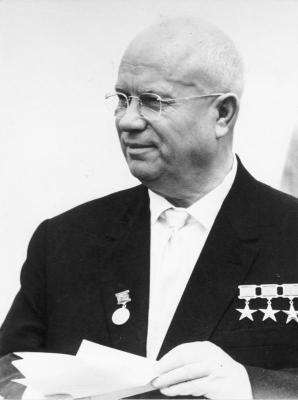
A 1963 photograph of Nikita Khrushchev.
BABE RUTH (born George Herman Ruth) (1895-1948) US. Professional baseball player (1914-1935). “The Bambino.” “The Sultan of Swat.” Considered by many to be the best baseball player of all time. Pitcher and hitter. Seven-time World Series champion; two-time All-Star; 12-time American League home run leader. At the time of his retirement, Ruth held career records for home runs (714), hitting percentage (0.690), runs batted in (2,213), bases on balls (2.062), and on-base percentage (0.474). He was one of the first five players elected to the Baseball Hall of Fame (1936). (on 3 lists)

A 1927 photo of Babe Ruth.
AMELIA EARHART (1897-1937) US. Aviation pioneer, author, and women’s rights advocate. Set world altitude record for a female pilot (1922). First female passenger to cross the Atlantic by airplane (1928). First woman to fly solo across the North American continent and back (1928). Aviation editor, Cosmopolitan (1928-1930). Vice President, National Airways. Appointed an official of the National Aeronautic Association (1930). Charter member, the Ninety-Nines: International Organization of Women Pilots (1929); first president (1931-1933). First woman to make a nonstop solo transatlantic flight (1932). First woman recipient, Distinguished Flying Cross (1932). First person to fly solo from Hawaii to Oakland, California (1935). Faculty member, Purdue University (1935). Lost during attempt to fly around the world (1937). Published works include two memoirs: 20 Hrs. 40 Min (1928) and The Fun of It (1932). Inducted, National Aviation Hall of Fame (1968). Inducted, National Women’s Hall of Fame (1973). (on 4 lists)

Amelia Earhart in 1935.
ERNEST HEMINGWAY (1899–1961) US. Writer and sportsman. Known for his spare writing style. Reporter, The Kansas City Star (1917). Volunteer ambulance driver, American Red Cross Motor Corps, during World War I in Italy; seriously wounded (1918). Became staff writer, Toronto Star Weekly (1920). Associate editor, Cooperative Commonwealth (1920). Foreign correspondent, Toronto Daily Star (1921-1924). Guest editor, The Transatlantic Review (1924). Correspondent for the North American Newspaper Alliance; covered the Spanish Civil War (1937-1938). Correspondent for PM newspaper; covered Sino-Japanese War (1941). European correspondent, Collier’s magazine (1944-1945). Writings include: In Our Time (short story collection, 1925); The Sun Also Rises (novel 1926); Men Without Women (short story collection, 1927); “Hills Like White Elephants” (story, 1927); “The Killers” (story, 1927); A Farewell to Arms (novel, 1929); Death in the Afternoon (nonfiction, 1932); “A Clean, Well-Lighted Place” (story, 1933); “A Day’s Wait” (story, 1933); Green Hills of Africa (travel/memoir, 1935); “The Snows of Kilimanjaro” (story, 1936); “The Short Happy Life of Francis Macomber” (story, 1936); For Whom The Bell Tolls (novel, 1940); The Old Man and the Sea (novella, 1952); and A Moveable Feast (memoir, published posthumously, 1964). Pulitzer Prize, Fiction (for The Old Man and the Sea) (1953). Nobel Prize in Literature (1954). After years of struggle with mental illness, committed suicide (1961). (on 6 lists)

Ernest Hemingway in 1958.
RUHOLLAH KHOMEINI (Ayatollah Khomeini) (1900-1989) Iran. Muslim cleric, educator, politician, political theorist, poet, and revolutionary. Inspired Iranian Revolution and became first leader of Islamic Republic of Iran. Began teaching at Islamic seminaries (1927). Became ayatollah/marja’ in Twelver Shi’ism (1963). Arrested and expelled from Iran for opposition to White Revolution (1964). Lived in exile in Turkey and Iraq (1964-1978). Speeches on theocratic rule published in Islamic Government (1970). Expelled from Iraq by Saddam Hussein (1978). Leader, Iranian Revolution. Founder, Islamic Republic of Iran (1979). Supreme Leader, Iran (1979-1989). Islamicized life in Iran. Introduced Sharia law. Suppressed opposition and minority religions. Curtailed rights of women and LGBTQ people; executed homosexuals. Adopted anti-Western foreign policy. Supported hostage takers during Iran hostage crisis (1979-1981). Led Iran during Iran-Iraq War (1980-1988). Issued fatwa calling for the murder of Salman Rushdie for The Satanic Verses (1989). Writings include: The Confidant (poetry); The Decanter of Love and Turning Point (poetry); Divan (poetry); Commentary on the Du’a al-Baha) (religion, 1928); The Mystery of Prayer; Uncovering of Secrets (politics, 1942); and Islamic Government: Governance of the Jurist (1970). (on 5 lists)

Official portrait of Ayatollah Khomeini in 1981.
ENRICO FERMI (1901-1954) Italy/US. Theoretical and experimental physicist. Created the first nuclear reactor. “Architect of the nuclear age.” Made important contributions to the development of statistical mechanics, quantum theory, and nuclear and particle physics. Nuclear fission. Fermi age equation. Fermi-Dirac statistics. Fermi’s interaction (now the ‘weak interaction’). Fermi paradox. Published first scientific papers as a university physics student (1921). Studied in Germany (1923-1925). Professor, University of Florence (1925-1926). Became professor, Sapienza University (1926). Published Introduction to Atomic Physics (1928). Awarded Nobel Prize in Physics (1938). Left Italy; joined faculty at Columbia University (1938). Member, the Manhattan Project. Led the team that designed Chicago Pile-1, the first functioning nuclear reactor (1942). Headed F Division, at Los Alamos Laboratory (1944-1945). Became US citizen (1944). Professor, University of Chicago (1945-1954?). Elected, US National Academy of Sciences (1945). Worked at Argonne National Laboratory (1946-1954?). Helped establish Institute for Nuclear Studies (1945). Appointed member, General Advisory Committee, Atomic Energy Commission (1947). Owned 14 patents.

Enrico Fermi in the 1940s.
WALT DISNEY (born Walter Elias Disney) (1901-1966) US. Businessman, animator, producer, director and screenwriter. As movie producer, received record 59 Academy Award nominations and record 22 Academy Awards. Opened animation company with Fred Harman; produced Newman’s Laugh-O-Grams (1920?). Established Laugh-O-Gram Studio (1921). Produced mixed live action/amination series Alice’s Wonderland (1923-1927). Co-founder, Disney Brothers Cartoon Studio (1923); became Walt Disney Studio in 1926; Walt Disney Productions in 1929, and The Walt Disney Company in 1986. Created Oswald the Lucky Rabbit character (1927). Introduced Mickey Mouse character in Plane Crazy (1928). Created first Mickey Mouse cartoon with synchronized sound, Steamboat Willie (1928). Began Silly Symphonies series with The Skeleton Dance (1929). Introduced characters Pluto (1930), Goofy (1932), and Donald Duck (1934). Produced full-color three-strip Technicolor short Flowers and Trees (1932). Produced short animation film The Three Little Pigs (1933). Released first feature-length animated film, Snow White and the Seven Dwarfs (1937). Released animated features Pinocchio and Fantasia (1940). Released Dumbo (1941). Released Bambi (1942). During World War II, produced various animated shorts, including Der Fuehrer’s Face (1942), and feature film Victory Through Air Power (1943). Produced True-Life Adventures film series (1948-1960). Produced first live-action feature, Treasure Island (1950). Produced anthology TV series under various titles (currently The Wonderful World of Disney) (1954-Present). Opened Disneyland theme park in Anaheim, CA (1955). Produced The Mickey Mouse Club (TV show, 1955-1959). Produced feature film Mary Poppins (1964). Provided four exhibits for the New York World’s Fair (1964). Announced plans for Disney World theme park in Florida (1965). (on 8 lists)

Walt Disney in 1954.
LOUIS ARMSTRONG (1901-1971) US. Jazz cornet player, trumpeter, and vocalist. Developed instrumental solo improvisation technique and artistry. Pioneered scat singing; possessed unique vocal style. “Satchmo.” “Pops.” “The World’s Greatest Trumpet Player.” Began playing cornet (c. 1911). Became professional musician, playing with Fate Marable, the Tuxedo Brass Band, and others (c. 1918?-1922). Member, King Oliver’s Creole Jazz Band (1922-1924). Made first recordings (1923). Joined the Fletcher Henderson Orchestra and switched to trumpet (1924). Formed Louis Armstrong and His Hot Five (1925). Formed Louis Armstrong and His Hot Seven (1927). Formed sextet including Earl Hines on piano (1928). Performed in the musical Hot Chocolates (1929). Performed with his own big band (1929-1947). Formed small group, Louis Armstrong and His All-Stars (1947). Toured the world with the US State Department as a “jazz ambassador” (1955-1968?). Collaborated with Ella Fitzgerald on three albums (1956, 1957, 1959). Refused to perform on jazz ambassador tour due to Little Rock school desegregation crisis (1957). Important songs include: “Heebie Jeebies” (1926); “Potato Head Blues” (1927); “West End Blues” (1928); “Weather Bird” (1928); “St. Louis Blues” (1929); “When You’re Smiling” (1929); “Stardust” (1931); “Lazy River” (1931); “On the Sunny Side of the Street” (1934); “When the Saints Go Marching In” (1938); “Dream a Little Dream of Me” (with Ella Fitzgerald, 1950); “La Vie en Rose” (1950); “Hello, Dolly!” (1963); and “What a Wonderful World” (1967). He appeared in films, including: A Rhapsody in Black and Blue (1932); Cabin in the Sky (1943); High Society (1956); Paris Blues (1961); A Man Called Adam (1966); and Hello, Dolly! (1969). (on 6 lists)

Louis Armstrong in the 1940s.
WERNER HEISENBERG (1901-1976) Germany/West Germany (now Germany). Theoretical physicist. Pioneer in development of quantum mechanics. Known for the uncertainty principle. Hydrodynamics of turbulent flows. Atomic nucleus. Ferromagnetism. Cosmic rays. Subatomic particles. Superconductivity. Published breakthrough article, “On the quantum-theoretical reinterpretation of kinematical and mechanical relationships” (1925). Appointed lecturer, University of Copenhagen (1926). Appointed professor, University of Leipzig (1927). Articulated the uncertainty principle (1927). Introduced concept of wave function collapse (1927). Awarded Nobel Prize in Physics (1932). Received Max Planck Medal (1933). Worked on Nazi Germany’s nuclear program (1939-1945). Appointed professor, University of Berlin (1941). Director, Kaiser Wilhelm Institute for Physics (renamed Max Planck Institute for Physics) (1942-1970). Taken to UK by Alsos Mission (1945). Founding president, German Research Council (1949). Represented West Germany at UNESCO conference (1951). Elected president, Alexander von Humboldt Foundation (1953). Elected fellow, Royal Society (1955). Signatory, Göttinger Manifest (1957). Appointed professor, University of Munich (1958). Director, Max Planck Institute for Physics and Astrophysics (1960-1970). Published books include: Physics and Philosophy (1958); and Physics and Beyond: Encounters and Conversations (1971). (on 4 lists)

Werner Heisenberg in 1933.
MARGARET MEAD (1901-1978) US. Cultural anthropologist and author. “Anthropology’s most significant public voice during the 20th century.” Founding figure in public anthropology and visual anthropology. Innovator in use of film and photography in anthropology. Curator of ethnology, American Museum of Natural History (1946-1969). Studied Russian culture for the RAND Corporation (1948-1950). President, Society for Applied Anthropology (1950). President, American Anthropological Association (1960). President, American Association for the Advancement of Science (1975). Inducted, National Women’s Hall of Fame (1976). Co-author, American Episcopal Book of Common Prayer (1979). Written works include: Coming of Age in Samoa (1928); Omaha: The changing culture of an Indian tribe (1931); Sex and Temperament in Three Primitive Societies (1935); and (on 3 lists)

An undated photo of Margaret Mead.
HIROHITO (1901-1989) Japan. Monarch. Emperor of Japan (1929-1986). Longest-reigning monarch in Japanese history. As emperor during the Shōwa era, he presided over the rise of Japanese militarism (1929-1945), the Japanese invasion of Manchuria (1931-1937), the Second Sino-Japanese War (1937-1945), the Asia-Pacific theater of World War II (1941-1945), and the nation’s postwar economic miracle (1955-1973). Renounced his divinity, under US pressure (1946). Role redefined by new US-drafted constitution as “the symbol of the State and of the unity of the People” (1947). (on 4 lists)

Portrait of Emperor Hirohito.
GEORGE ORWELL (pen name of Eric Arthur Blair) (1903-1950) UK. Novelist, essayist, journalist, and critic. Best known for his dystopian novel Nineteen Eighty-Four. Police officer, Indian Imperial Police (Burma) (1922-1928). Freelance and investigative journalist, France and England (1928-1932). Teacher, The Hawthorns High School (1932-1933; Teacher, Frays College (1933-1934). Employee, Booklovers’ Corner (1934-1936). Fought on Loyalist side and received serious gunshot wound in Spanish Civil War (1936-1937). After being declared unfit for military service in World War II, joined the Home Guard (1940). Obtained position with BBC’s Eastern Service (1941). Appointed literary editor, Tribune magazine (1943). War correspondent, The Observer (1945). Published books include: Down and Out in Paris and London (nonfiction, 1933); Burmese Days (novel, 1934); The Road of Wigan Pier (nonfiction, 1937); Homage to Catalonia (memoir, 1938); Inside the Whale (essays, 1940); Animal Farm (novel, 1945); Nineteen Eighty-Four (novel, 1949). His essays include: “A Hanging” (1931): “Shooting an Elephant” (1936); “Notes on Nationalism” (1945); “Why I Write” (1946); “Politics and the English Language” (1946). Coined words and phrases, including: “Big Brother,” “Thought Police,” “Newspeak,” “doublethink,” and “thoughtcrime.” (on 5 lists)

George Orwell in 1933.
J. ROBERT OPPENHEIMER (Julius Robert Oppenheimer) (1904-1967) US. Theoretical physicist. Led secret Manhattan Project to build uranium and plutonium fission bombs (atomic bombs) during World War II. After the war, opposed development of hydrogen bomb. Also known for: Born–Oppenheimer approximation for molecular wave functions; positrons; quantum electrodynamics, quantum field theory; the Oppenheimer-Phillips process in nuclear fusion; cosmic ray showers; neutron stars; black holes; the Tolman–Oppenheimer–Volkoff limit. Fellowships at Harvard and Caltech (1927-1928). Professor, Caltech (1928-1936). Professor, University of California, Berkeley (1928-1941?) Research scientist, the Manhattan Project (1941-1943). Director, Los Alamos Laboratory, Manhattan Project (1943-1946). Director, Institute for Advanced Study (1947-1966). Chairman, General Advisory Committee, US Atomic Energy Commission (1947-1952). Chair, Long-Range Objectives Panel (Department of Defense) (1948). Wrote draft report on Project GABRIEL (1952). Member, scientific advisory committee, Office of Defense Mobilization (1950-1953). Senior scientist, Project Lincoln (1952). Chair, State Department Panel of Consultants on Disarmament (1952). Security clearance revoked after hearing (1954, decision vacated posthumously, 2022). Enrico Fermi Award (1963). Published works include: Science and the Common Understanding (1954); The Open Mind (1955); and The Flying Trapeze: Three Crises for Physicists (1964). (on 6 lists)

Robert Oppenheimer in 1946.
JEAN-PAUL SARTRE (1905-1980) France. Philosopher and author. A leading figure in in 20th-century philosophy, particularly existentialism, phenomenology, and Marxism. Hermeneutics. Humanism. Bad faith. “Existence precedes essence.” Transcendence of the ego. Hired as French tutor by Japanese philosopher Kuki Shūzō (c. 1928). Taught at lycées in Le Havre, Laon, and Paris (1931-1945). Studied Husserl at Institut français d’Allemagne, Berlin (1933-1934). Published article on Husserl in La Nouvelle Revue Français (1939). Drafted into French Army, served as meteorologist (1939). Captured; spent nine months in German prisoner-of-war camp (1940). Co-founder, Socialisme et Liberté underground writers’ group (1941). Contributor, Combat underground newspaper (1941-1944). Member, Commission d’épuration de la librairie et de l’édition (Commission for the Purification of Bookstores and Publishing) (1944). Became editor, Les Temps modernes (1945). Signatory, Manifeste des 121 supporting Algerian independence (1960). Sponsor, Fair Play for Cuba Committee (1960). Awarded Nobel Prize in Literature, but declined to accept it (1964). Arrested for civil disobedience during the May 1968 strikes; pardoned by de Gaulle (1968). Writings include: The Transcendence of the Ego (philosophy, 1936); Nausea (novel, 1938); Sketch for a Theory of the Emotions (philosophy, 1939); The Wall (short story collection, 1939); The Imaginary (philosophy, 1940); Being and Nothingness (philosophy, 1943): The Flies (play, 1943); No Exit (play, 1944); The Roads to Freedom (trilogy of novels, 1945-1949); Anti-Semite and Jew (sociology, 1946). Existentialism Is a Humanism (philosophy, 1946); Search for a Method (philosophy, 1957); Critique of Dialectical Reason (philosophy, 1960); The Words (memoir, 1964). Awarded Nobel Prize in Literature, but declined it (1964). (on 3 lists)

An undated photo of Jean-Paul Sartre.
RACHEL CARSON (1907-1964) US. Marine biologist, conservationist and writer. Popular science writer. Highlighted the devastating ecological effect of pesticides, esp. DDT in her book Silent Spring. Wrote radio copy for Romance Under the Waters radio program for the US Bureau of Fisheries (1935?). Lectured at University of Maryland and Johns Hopkins University (1935?). Hired as full-time junior aquatic biologist, US Bureau of Fisheries (1936). Published articles in magazines and newspapers (1936-1945). Published Under the Sea Wind (1941, republished 1952). Appointed chief editor of publications, US. Fish and Wildlife Service (1949). Awarded George Westinghouse Science Writing Prize by the American Association for the Advancement of Science (1950). Published The Sea Around Us (1951). Winner of the 1952 National Book Award for nonfiction. Left government service to write full time (1952). Published The Edge of the Sea (1955). Published Silent Spring (1962). Testified before President Kennedy’s Science Advisory Committee (1963). Wrote The Sense of Wonder (published posthumously, 1965). (on 6 lists)

Rachel Carson in 1951.
LYNDON B. JOHNSON (1908-1973) US. Political leader. 36th US president (1963-1968). Sponsored Great Society social programs, including creating Medicare and Medicaid programs, and civil rights legislation, including the Civil Rights Acts of 1964 and 1968, and the Voting Rights Act. Increased US involvement in Vietnam War. Served in the US Navy during World War II. Member, U.S. House of Representatives (D-Texas) (1937-1949). U.S. Senator (D-Texas) (1949-1961). Vice-president of the US (1961-1963); ascended to presidency upon the assassination of John F. Kennedy on Nov. 22, 1963. Won election to a full term in a landslide (1964). Declined to run for reelection in face of antiwar sentiment (1968). (on 3 lists)

Lyndon Johnson taking the oath of office on Air Force One, shortly after the assassination of President Kennedy, November 1963.
SIMONE DE BEAUVOIR (1908-1986) France. Author, philosopher, political activist, feminist, educator, and social theorist. Existentialism. Existential phenomenology. Marxism. “Ethics of ambiguity.” Feminism. Co-founder, Les Temps Modernes political journal (1945). Drafted and co-signed, Manifesto of the 343 (1971). Published writings include: She Came to Stay (novel, 1943); Pyrrhus et Cinéas (nonfiction, 1944); The Ethics of Ambiguity (1947); The Second Sex (nonfiction, 1949); The Mandarins (novel, 1954); Memories of a Dutiful Daughter (memoir, 1958); The Prime of Life (memoir, 1960); Force of Circumstance (memoir, 1963); A Very Easy Death (memoir, 1964); The Coming of Age (nonfiction, 1970). Awards include: Prix Goncourt (1954); Jerusalem Prize (1975); and Austrian State Prize for European Literature (1978). (on 4 lists)

Simon de Beauvoir in 1946. Photo by Henri Cartier-Bresson.
MOTHER TERESA (born Anjezë Gonxhe Bojaxhiu) (1910-1997) Kosovo vilayet, Ottoman Empire (now North Macedonia)/British India/India. Roman Catholic nun. Founded Missionaries of Charity. Served the poor. Moved to Ireland; joined the Sisters of Loreto (1928). Arrived in India; began her novitiate in Darjeeling; taught at St. Teresa’s School (1929). Took her first vows; adopted the name “Teresa” (1931). Taught at Loreto convent school in Engally, Kolkata (c. 1935?-1944). Took her solemn vows (1937). Appointed headmistress, Engally convent school (1944). Received permission to leave the school to serve the poor while living among them (c. 1946). Began missionary work with the poor; adopted Indian citizenship; obtained basic medical training (1948). Founded a school in Motijhil, Kolkata (c. 1948). Founded the Missionaries of Charity (1950). Opened her first hospice in Kolkata, the Kalighat Home for the Dying (1952). Opened hospice for patients with leprosy (Shanti Nagar) (c. 1953?). Opened Nirmala Shishu Bhavan (Children’s Home of the Immaculate Heart) (1955). Opened hospices, orphanages, and houses for people with leprosy throughout India (1960s). Founded the Missionaries of Charity Brothers (1963). Opened house in Venezuela (1965). Opened houses in Rome, Tanzania, and Austria (1968). Opened houses and foundations in the US, Asia, Africa, and Europe (1970s). Received Pope John XXIII Peace Prize (1971). Founded contemplative branch of Catholic nuns (1976). Received Pacem in Terris Award (1976). Awarded Nobel Peace Prize (1979). Received the Bharat Ratna award from India (1980). Founded the Corpus Christi Movement for Priests (1981). Rescued 37 children trapped in a front-line hospital during the Siege of Beirut (1982). Co-founded the Missionaries of Charity Fathers (1984). Received US Presidential Medal of Freedom (1985). Opened a Missionaries of Charity Brothers home in Tirana, Albania (1991). Resigned as head of the Missionaries of Charity due to health problems (1997). Canonized as Saint Teresa of Calcutta by the Roman Catholic Church (2016). (on 15 lists)

Mother Teresa in 1986.
RONALD REAGAN (1911-2004) US. Actor and political leader. Served as 40th US president for two terms (1981-1989). Leader of conservative movement. Promoted conservative policies, including Reaganomics in domestic policy and the Reagan Doctrine in foreign policy. “Government is not the solution to our problem, government is the problem.” Often credited as playing a role in the ending of the Cold War. Sports broadcaster, Iowa (1932-1937). Film actor, California (1937-1964). Appeared in 53 films, including: Knute Rockne, All American (1940); and Kings Row (1942). Served in the US Army (reserves 1937-1942, active 1942-1945). Joined American Veterans Committee (1943). Joined Hollywood Independent Citizens Committee of the Arts, Sciences and Professions (1945). President, Screen Actors Guild (1947-1952, 1959-1960). Host, General Electric Theater (TV & radio, 1953-1962). Registered as a Republican (1962). Gave “A Time for Choosing” speech for Republican presidential nominee Barry Goldwater (1964). Elected Governor of California (1966; served 1967-1975). Declared state of emergency and sent in the National Guard due to student protests at UC Berkeley (1969) and UC Santa Barbara (1970). Failed to win Republican presidential nomination, losing to Gerald Ford (1976). Won election to US Presidency over Democrat Jimmy Carter (1980). Won election to a second term in a landslide over Democrat Walter Mondale (1984). Highlights of his presidency include: removed government economic regulations; cut taxes and government spending; escalated arms race; increased military spending; supported anti-communist guerillas and resistance movements; expanded the war on drugs; survived assassination attempt (1981); fired striking air traffic controllers (1981); responded slowly to AIDS epidemic; ordered invasion of Grenada (1983); bombed Libya (1986); secretly and illegally sold arms to Iran to fund the anti-Sandinista Contra rebels in Nicaragua (1981-1986, leading to Iran-Contra Affair); signed Intermediate-Range Nuclear Forces Treaty with USSR (1987). Diagnosed with Alzheimer’s disease (1994). (on 8 lists)

Official Presidential portrait of Ronald Reagan in 1981.
ALAN TURING (1912-1954) UK: England. Mathematician, pioneer of computer science. “Father of theoretical computer science.” Fellow and lecturer, King’s College (1935?). Published “On Computable Numbers, with an Application to the Entscheidungsproblem” (1936). Ph.D. candidate (mathematics), Princeton University (1936-1938). Ph.D. dissertation, “Systems of Logic Based on Ordinals” (1938). Government Code and Cypher School (1938-1944?). Played crucial role in breaking German codes, including the Enigma cipher. Worked on cryptography and secure speech in the US (including at Bell Labs) (1942-1943). During World War II, wrote “The Applications of Probability to Cryptography” and “Paper on Statistics of Repetitions.” Served in Radio Security Service (1944-1945?). Worked on the Automatic Computing Machine at National Physical Laboratory (1945-1947). Published first detailed design of a stored-program computer (1946). Appointed reader in mathematics, University of Manchester (1948). Deputy director, Computing Machine Laboratory (1949). Published “Computing Machinery and Intelligence,” which proposed what became known as the Turing test (1950). Wrote computer chess program (1950). Turned to mathematical biology (1951). Published “The Chemical Basis of Morphogenesis” (1952). Convicted of engaging in “gross indecency.” In lieu of prison, agreed to undergo hormone treatments (chemical castration) (1952). Died of cyanide poisoning, most likely intentional (1954). Retroactively pardoned (2013). (on 6 lists)

A 1946 photo of Alan Turing.
WILLY BRANDT (born Herbert Ernst Karl Frahm) (1913-1992) Germany/West Germany (now Germany). Initiated Ostpolitik, a policy of reconciliation with Eastern Europe that eased Cold War tensions. Mayor, West Berlin (1957–1966). Chancellor of West Germany (1969-1974). The “Warsaw Genuflection” at site of Warsaw ghetto uprising (1970). Leader of Social Democratic Party (1964-1987). President, Socialist International (1976-1992). Chair, Independent Commission on International Developmental Issues (1977-1980); co-author, Brandt Report (1980). Nobel Peace Prize (1971). (on 3 lists)

Willy Brandt in 1980.
RICHARD NIXON (1913-1994) US. Political leader. 37th US president (1969-1974). Improved US relations with Communist China and USSR. Implemented new environmental legislation. Resigned amid Watergate scandal. Practiced law (1937-1941). Worked at Office of Price Administration (1942). Served in the US Navy (active, 1942-1946; reserves, 1946-1966). Member, US House of Representatives (Republican-California, 1947-1950). US Senator (1950-1953). US Vice President (1953-1961). Republican presidential candidate; lost to John F. Kennedy (1960). Lost race for California governor (1962). Announced retirement from politics (1962). Elected US President (1968). Ordered the secret bombing of Cambodia (1970). Established the Environmental Protection Agency (1970). Signed amendments to the Clean Air Act (1970). Signed the Controlled Substances Act (1970). Implemented the Twenty-Sixth Amendment to the US Constitution (1971). Issued an executive order imposing 90-day wage and price controls and making the dollar inconvertible to gold directly, except on the open market (1971). Opened diplomatic relations with China (1972). Finalized Anti-Ballistic Missile Treaty with USSR (1972). Reelected by a landslide (1972). Ended military involvement in Vietnam (1973). Signed the Endangered Species Act (1973). Plagued by scandal arising from break-in at Democratic National Committee office, and cover-up (1972-1974). Facing impeachment, resigned from office (1974). Pardoned by President Gerald Ford (1974). Books include: Six Crises (1960); and RN: The Memoirs of Richard Nixon (1978). (on 6 lists)

Richard Nixon announcing the release of edited White House transcripts in 1974.
ROSA PARKS (1913–2005) US. Civil rights activist. Her refusal to move to the back of a public bus sparked the Montgomery Bus Boycott. Joined Montgomery, Alabama chapter of the NAACP; elected chapter secretary (1943). Tested voter registration policies (1943-1945). Arrested for refusing to move to the back of a bus; convicted at trial (1955). Agreed to be test case against the Jim Crow bus law (1955). Founding member, Montgomery Improvement Association (1955). Fired from her seamstress job (1956). Moved to Detroit, Michigan (1957). Continued to advocate for civil rights. Attended Southern Christian Leadership Council convention (1962). Took part in the March on Washington (1963). Worked for Congressman John Conyers’ election campaign (1964). Secretary and receptionist, Congressman Conyers’ Detroit office. Attended ‘Selma to Montgomery’ marches (1965). Attended Philadelphia Black Power conference (1968). Attended National Black Political Convention (1972). Received Spingarn Medal from the NAACP (1979). Co-founded Rosa and Raymond Parks Institute for Self-Development (1987). Attended meeting of National Coalition of Blacks for Reparations in America (1994). Participated in the Million Man March (1995). Received Presidential Medal of Freedom (1996). Received Congressional Gold Medal (1999). After her death, her remains lay in state in the US Capitol rotunda; 40,000 mourners paid their respects (2005). Writings include: Rosa Parks: My Story (1992); Quiet Strength (1994); and Dear Mrs. Parks (1997). (on 10 lists)

Rosa Parks with Martin Luther King, Jr., in 1955.
JONAS SALK (1914-1995) US. Virologist and medical researcher. Discovered and developed first successful vaccine against polio. Promoted concept of biophilosophy. Professor, University of Pittsburgh School of Medicine (1947-1963?). Worked on developing a vaccine against polio (1948-1955). Working with the National Foundation for Infantile Paralysis, tested the vaccine on 1,000,000 children (1954). Announced success of the vaccine (1955). Received the Lasker Award (1956). Founded Salk Institute for Biological Studies (1963). During the 1960s, Salk’s injectable killed-virus vaccine was mostly replaced by Albert Sabin’s orally-administered live-virus vaccine. Received Presidential Medal of Freedom (1977). Worked on developing an AIDS vaccine (c. 1985-1995). Co-founded Immune Response Corporation (1986 or 1987). Written works include: Man Unfolding (1972); Survival of the Wisest (1973); World Population and Human Values: A New Reality (1981); and Anatomy of Reality: Merging of Intuition and Reason (1983). (on 7 lists)

Jonas Salk. Photo by Yousef Karsh.
BILLIE HOLIDAY (1915–1959) US. Innovative jazz singer and songwriter. “Lady Day.” Known for her distinctive, improvisational singing style. Many of her best known recordings feature saxophonist Lester Young. Performed as a duo with saxophonist Kenneth Hollan (1929-1931). Became featured singer at Covan’s (1932). Heard by John Hammond, who arranged recording debut with Benny Goodman (1933). Played small role in Duke Ellington’s short film, Symphony in Black: A Rhapsody of Negro Life (1935). Signed recording contract with Brunswick Records (1935). Early songs released as by “Teddy Wilson & His Orchestra.” Began recording songs under her own name (1936). Sang briefly with Count Basie’s Orchestra (1937-1938). Sang with Artie Shaw’s Orchestra (1938). Signed with Columbia Records (c. 1937-1938?). Performed “Strange Fruit” for the first time at Café Society, NYC (1939). Recorded with Commodore Records (1944). Signed with Decca Records (1944). Ranked second in the DownBeat poll (1946, 1947). Appeared in the film New Orleans (1947). Arrested and convicted for possession of narcotics; lost her New York City Cabaret Card (1947). Sold-out comeback concert at Carnegie Hall (1948). Performed in Broadway show, Holiday on Broadway (1948). Arrested again for drug possession (1949). Toured Europe (1954). Published her autobiography, Lady Sings the Blues (ghostwritten by William Duffy) (1956). Performed two concerts at Carnegie Hall (1956). Recorded final album, Lady in Satin (1958). Compositions include: “Billie’s Blues” (1936); “Fine and Mellow” (1939); “God Bless the Child” (1941); “Don’t Explain” (1944); and “Lady Sings the Blues” (1956). Other songs include: “Riffin’ the Scotch” (1933); “What A Little Moonlight Can Do” (1935); “Summertime” (1936); “Easy Living” (1937); “Strange Fruit” (1939); “Them There Eyes” (1939); “(In My) Solitude” (1941); “Trav’lin Light” (1942); “I’ll Be Seeing You” (1944); “Lover Man” (1945); “Blue Moon” (1952); and “I’m a Fool to Want You” (1958). Inductee, Grammy Hall of Fame (for several songs); National Rhythm & Blues Hall of Fame; Rock and Roll Hall of Fame. Grammy Lifetime Achievement Award (1987). (on 3 lists).

A 1947 portrait of Billie Holiday.
FRANCIS CRICK (1916-2004) UK: England. Molecular biologist, biophysicist and neuroscientist. Played a crucial role in the discovery of the double helical structure of the DNA molecule (1953). Nobel Prize in Physiology/Medicine (with James Watson and Maurice Wilkins) (1962). Researcher, Admiralty Research Laboratory (1939-1945). Strangeways Research Laboratory (1947-1949). Cavendish Laboratory (1949-1954). Won Carey Foster Research Prize as a Ph.D student (early 1950s). Brooklyn Polytechnic Institute (1954). Salk Institute for Biological Studies (1976-2004). Writings include: Of Molecules and Men (1967); Life Itself: Its Origin and Nature (1981); and What Mad Pursuit: A Personal View of Scientific Discovery (1988). (on 4 lists) 
Francis Crick (right) and James Watson with DNA model.
JOHN F. KENNEDY (1917-1963) US. Political leader. 35th US president. Engaged in Cold War with USSR, including Cuban missile crisis (1962). Set goal for man to walk on the Moon. Started Peace Corps. New Frontier domestic policies. Graduated from Harvard (1940). Published Why England Slept (1940). Commanded PT boats for the Navy during World War II; severely injured (1942-1945). Special correspondent, Hearst Newspapers (1945-1947). Elected member, House of Representatives (Democrat, Massachusetts) (1947-1953). US Senator (D-MA) (1953-1960). Published Profiles in Courage (written with Ted Sorenson and Jules Davids) (1956, won Pulitzer Prize 1957). Member, Senate Select Committee on Labor Rackets (McClellan Committee) (1957). US President (1961-1963). Escalated US involvement in Vietnam (1961-1963). Vienna Summit (1961). Responded to building of Berlin Wall (1961). Authorized Bay of Pigs invasion of Cuba and Operation Mongoose (1961) Established the Peace Corps (1961). Launched the Alliance for Progress (1961). Signed Executive Order 10925 (prohibiting discrimination for employment by government contractors) (1961). Initiated food stamp pilot programs (1961). Set goal of putting a man on the Moon (1961). Supported Strategic Hamlet Program (1962). Signed Executive Order 11063 (prohibiting race discrimination in federally-subsidized housing) (1962). Cuban Missile Crisis (1962). Ended arms embargo on Israel and began military alliance with Israel (1962). Signed Manpower Development and Training Act (1962). Gave “Ich bin ein Berliner” speech (1963). Signed first nuclear weapons test ban treaty (1963). Gave “Report to the American People on Civil Rights” speech (1963). US-supported coup in South Vietnam resulted in assassinations of president Ngo Dinh Diem and his brother (1963). Supported Community Mental Health Act (1963). Signed Equal Pay Act (1963). Assassinated in Dallas, Texas (1963). (on 13 lists)

John F. Kennedy speaking to Congress in 1961.
INDIRA GANDHI (born Indira Nehru) (1917–1984) British India/India. Political leader. Third Prime Minister of India. Strengthened Indian economy and military, and secured India’s status as a regional power. Arrested and jailed for role in Quit India movement (1942-1943). Unofficial personal assistant to her father, Prime Minister Jawaharlal Nehru (1947-1964). President, Indian National Congress (1959). Member of Parliament (Rajya Sabha) (1964-1967). Minister of Information and Broadcasting (1964-1966). Minister of Home Affairs (1966, 1970-1973). Prime Minister (1966-1977, 1980-1984). Member of Parliament (Lok Sabha) (1967-1977, 1978-1980, 1980-1984). Minister of External Affairs (1967-1969, 1984). Nathu La and Cho La clashes with China (1967). Began Green Revolution (1968). Founder and president, Indian National Congress (Requisitionists) (1969-1978). Minister of Finance (1969-1970). Third Indo-Pakistani War (1971). Indo–Soviet Treaty (1971). Successful nuclear weapon test (1974). Instituted state of emergency; ruled by decree; suspended civil liberties (1975-1977). Minister of Defense (1975, 1980-1982). Founder and president, Indian National Congress (Indira) (1978-1984). Operation Meghdoot (control of Siachen Glacier) (1984). Operation Blue Star against Sikhs at Golden Temple (1984). Assassinated by Sikh nationalists (1984). (on 9 lists)

Indira Gandhi.
SAM WALTON (1918-1992) US. Businessman and entrepreneur. At the time of his death, he owned and operated 1,735 Walmart stores, 212 Sam’s Clubs, and 13 Supercenters. Began career at J.C. Penney, Des Moines (1940). Bought a Ben Franklin franchise store, Newport, AR (1945). Opened Walton’s Five and Dime, Bentonville, AR (1950). Opened first Walmart, Rogers, AR (1962). Founded Sam’s Wholesale Club (1983). Published autobiography (co-written with John Huey), Sam Walton: Made in America (1992). Presidential Medal of Freedom (1992). (on 3 lists)

An undated photo of Sam Walton.
NELSON MANDELA (born Rolihlahla Mandela) (1918-2013) South Africa. Political leader and activist. Anti-apartheid activist jailed by South African government. First democratically-elected president of post-apartheid South Africa. “Father of the Nation.” Obtained his bachelor’s degree; began studying law; joined the African National Congress (ANC) (1943). Co-founded ANC Youth League (1944). Elected to executive committee of ANC Transvaal Province branch (1947). Following 1948 election, government imposed strict apartheid policies. Appointed to ANC national executive; elected national president of the ANC Youth League (1950). Began work at H.M Basner law firm (1952). Participated in Defiance Campaign; gave speech at Durban rally; arrested (1952). Elected ANC Transvaal Province regional president (1952). Arrested, tried and convicted under Suppression of Communism Act; banned from public appearances (1952). After passing his qualifying exams, opened (with Oliver Tambo) the law firm Mandela and Tambo, the only African-run law firm in the country (1953). Organized Congress of the People, which adopted the Freedom Charter (1955). Second ban on public appearances (1955). Third ban; restricted to Johannesburg for five years (1956). Arrested with other ANC officials for “high treason” (1956). Treason Trial began (1958; found not guilty 1961). Probably joined Communist Party (late 1950s or early 1960s). Participated in anti-pass campaign; arrested and imprisoned (1960). Organized All-In Africa Conference (1961). Recognized the need for violence; co-founded Umkhonto we Sizwe (MK), the ANC’s armed wing, which set off 57 bombs in December (1961). Traveled through Africa; attended Pan-African Freedom Movement for East, Central and Southern Africa in Ethiopia (1962). Arrested, tried and convicted of inciting workers’ strikes and leaving the country without permission (1962). After raid revealed MK activities, charged (with several others) with sabotage and conspiracy to overthrow the government; new trial (Rivonia Trial); gave “I Am Prepared to Die” speech; found guilty; sentenced to life imprisonment (1963-1964). Sent to Robben Island prison (1964-1982). International pressure to release him increased (1978-1980). Transferred to Pollsmoor Prison, Tokai, Cape Town (1982-1988). Appointed patron, United Democratic Front. Ongoing negotiations for his release (1985-1988). Moved to Victor Verster Prison, near Paarl (1988). New National Party leader F.W. de Klerk met with him; agreed to legalize ANC and grant his unconditional release, which took place in February 1990. Embarked on international tour; encouraged sanctions against apartheid government (1990). Groot Schuur Minute; Pretoria Minute (1990). Elected ANC president (1991). Participated in national peace conference; signed peace accord (1991). Convention for a Democratic South Africa (1991). ANC activists killed in Boipatong massacre and Bisho massacre (1992). Negotiations result in five-year coalition government of national unity; interim constitution (1992). Jointly (with de Klerk) awarded Nobel Peace Prize (1993). Elected president of South Africa (1994). Published autobiography Long Walk to Freedom (1994). Founded Nelson Mandela Children’s Fund (1995). New constitution took effect; began Growth, Employment and Redistribution economic policy (1996). Appointed chair, Southern African Development Community (1996). Oversaw formation of Truth and Reconciliation Commission to investigate crimes during apartheid era (1996-1998). Stepped down as ANC president (1997). Appointed secretary-general, Non-Aligned Movement (1998). Declined to run for a second term as president; retired (1999). Founded Nelson Mandela Foundation, focused on rural development, school construction and HIV/AIDS (1999). Inaugurated Nelson Mandela Annual Lecture (2002). Created Mandela Rhodes Foundation (2003). Founded Nelson Mandela Legacy Trust (2005). Founded The Elders group (2007). (on 24 lists)

Nelson Mandela casting his ballot in 1994.
EVA PERÓN (born María Eva Duarte) (1919–1952) Argentina. Actress, first lady, politician and advocate for labor and women’s rights. “Evita.” Radio, stage, and film actress (1935-1945). Founder and president, Argentine Radio Syndicate (1944). Married Juan Perón (1945); Juan Perón elected President of Argentina (1946). First lady of Argentina (1946-1952). Campaigned for women’s suffrage (1946-1947). “Rainbow Tour” of Europe (1947). Founder and president, Eva Perón Foundation (1948-1952). President, Female Peronist Party (1949-1952). Chosen as candidate for Vice President of Argentina, an invitation she declined (1951). Named “Spiritual Leader of the Nation of Argentina” by Argentine Congress (1952). Died of cervical cancer at age 33 (1952). (on 6 lists)

Eva and Juan Perón in 1950.
ROSALIND FRANKLIN (1920-1958) UK: England. Chemist and X-ray crystallographer. Member of scientific team that discovered the structure of the DNA molecule; X-ray diffraction images made by Franklin and her graduate student revealed the double helical structure of DNA (1951-1953). Studied chemical properties of coal and carbon (1942-1950). Worked at the Laboratoire Central des Services Chimiques de l’État, Paris (1947-1950). Joined King’s College, London (1951-1953). Studied the structure of RNA and the tobacco mosaic virus at Birkbeck College, University of London (1954-1958). Died at age 38 of ovarian cancer. (on 3 lists)

An undated photo of Rosalind Franklin.
POPE JOHN PAUL II (born Karol Józef Wojtyła) (1920-2005) Poland/Vatican City. Roman Catholic cleric. As Roman Catholic pontiff, he opposed Communism in Europe, traveled extensively, supported ecumenical activity, and maintained the Church’s positions on abortion, contraception, ordination of women, and clergy celibacy. As pope, wrote 14 papal encyclicals, visited 129 countries, beatified 1,344 people, and canonized 483 saints. Ordination as priest (1946). Consecration as bishop (1958). Titular Bishop of Ombi and Auxiliary Bishop of Kraków (1958-1964). Took part in Second Vatican Council (1962-1965). Archbishop of Kraków (1964-1978). Created cardinal (1967). Cardinal Priest of San Cesareo in Palatio (1967-1978). Elected pope (1978). Wrote and delivered 129 lectures on the Theology of the Body (1979-1984). Shot during assassination attempt (1981). Oversaw the updating of the Code of Canon Law (1983). Initiated World Youth Day (1985). Issued the apostolic constitution, Pastor bonus (1988). Oversaw the publication of the Catechism of the Catholic Church (1992). Written works include: Love and Responsibility (1960); and Memory and Identity (2005). Canonized as a Roman Catholic saint (2014). (on 7 lists)

Pope John Paul II in 1980.
BETTY FRIEDAN (1921-2006) US. Writer, activist and feminist. Co-founder and first president, National Organization for Women (NOW) (1966). Co-founder, National Association for the Repeal of Abortion Laws (1969). Organizer, Women’s Strike for Equality (1970). Co-founder, National Women’s Political Caucus (1971). Campaigned for passage of the Equal Rights Amendment in the 1970s. Co-founder, WoMen Against Gun Violence (1994). Writings include: The Feminine Mystique (1963); and The Second Stage (1981). (on 3 lists)

Betty Friedan in 1960.
MALCOLM X (born Malcolm Little; later el-Hajj Malik el-Shabazz) (1925-1965) US. Islamic minister and human rights activist. Leader in civil rights and Black nationalist movements. Vocal advocate of Black empowerment and Islam. Arrested and imprisoned (1946-1952). In prison, joined Nation of Islam and adopted name “Malcolm X” (1948). Spokesman and minister, Nation of Islam (1952-1964). During this period, opposed the civil rights movement and voting by Blacks and supported Black separatism; rejected nonviolence as a tactic. Hinton Johnson incident (1957). Adopted name “el-Hajj Malik el-Shabazz” (c. 1959). Left Nation of Islam (1964). Founder, Muslim Mosque, Inc. (1964). Founder, Organization of Afro-American Unity (1964). Gave “The Ballot or the Bullet” speech (1964). Converted to Sunni Islam (1964). Made pilgrimage to Mecca (1964). Published The Autobiography of Malcolm X (written with Alex Haley) (1965). Assassinated by members of the Nation of Islam (1965). (on 6 lists)

Malcolm X in 1964.
MARGARET THATCHER (born Margaret Hilda Roberts) (1925-2013) UK: England. Stateswoman, political leader, and barrister. Implemented conservative reforms (Thatcherism) that included greater individual liberty, privatization of state-owned companies, and reducing the power and influence of trade unions. “The Iron Lady.” Elected, Member of Parliament (Finchley) (1959). Participated in International Visitor Leadership Program (1967). Secretary of State for education and science (1970-1974). Leader, Conservative Party (1975-1990). Leader of the Opposition (1975-1979). UK Prime Minister (1979-1990). Established (with Garret FitzGerald) Anglo-Irish Governmental Council (1981). UK victory in the Falklands War (1982). Landslide reelection victory (1983). Survived assassination attempt by the IRA (1984). Defeated striking mine union (1985). Signed Hillsborough Anglo-Irish Agreement (1985). Oversaw deregulation of UK financial markets (Big Bang) (1986). Instituted Community Charge (1989-1990). Supported Environmental Protection Act (1990). Retired from House of Commons (1992). Granted a peerage, entitling her to a seat in the House of Lords (1992). Writings include: The Downing Street Years (1993); The Path to Power (1995); and Statecraft (2002). (on 10 lists)

Margaret Thatcher in 1983.
MARILYN MONROE (born Norma Jeane Mortenson)(1926-1962) US. Actress, singer and model. Signed contract, Blue Book Modeling Agency (1945). Signed contract with 20th Century-Fox; adopted stage name “Marilyn Monroe” (1946). Signed contract with Columbia Pictures (1948). Landed small roles in All About Eve (1950) and The Asphalt Jungle (1950). Signed long-term contract with 20th Century-Fox (1950). Named “Most Popular Female Star” by Photoplay magazine (1954). Co-founder, Marilyn Monroe Productions (1954). Won Golden Globe Award (1960). Films include: Niagara (1953); Gentlemen Prefer Blondes (1953); How to Marry a Millionaire (1953); The Seven Year Itch (1955). Bus Stop (1956); The Prince and the Showgirl (1957); Some Like It Hot (1959); and The Misfits (1961). Committed suicide. (on 7 lists)

Marilyn Monroe in The Prince and the Showgirl (1957).
FIDEL CASTRO (Fidel Alejandro Castro Ruz) (1926-2016) Cuba. Military and political leader. Led communist revolution in Cuba. Established one-party communist state; nationalized industry and business; and implemented socialist reforms. Participated in Liberal protests in Colombia (1948). Co-founder and leader (with Raúl Castro, and Ernesto “Che” Guevara), The Movement (later, the 26 July Movement) (1952-1962). Led failed attack on Moncada Barracks (1953). Arrested, convicted and imprisoned; gave “History Will Absolve Me” speech (1953). Released from prison (1955). Fled to Mexico (1955). Returned to Cuba to lead guerilla war against Batista regime (1956-1959). Ouster of Batista; becomes leader of Cuba (1959). Prime Minister (1959-1976). “Brain drain”: emigration of many professionals to US (1959-1960). Suppressed and executed opponents; curtailed civil rights and dissent; promoted education, health care, and insfrastructure development. Failed US-backed Bay of Pigs invasion (1961). Cuban Missile Crisis (1962). First Secretary, Communist Party Central Committee (1965-2011). Established Tri-Continental Conference of Africa, Asia, and Latin American (1966). Great Revolutionary Offensive (1968). Sent troops to Angola in civil war (1975-1988?). Adoption of new constitution (1976). President, Council of State (1976-2008). President, Council of Ministers (1976-2008). Intervened in Ogaden War (1977). Hosted the Pan American Games (1991). Signed Cuba–Venezuela Agreement (2004). Co-founder, Bolivarian Alliance for the Peoples of Our America (ALBA) (2004). Delegated presidential duties to his brother Raúl Castro (2006). Resigned from government posts due to health (2008). (on 6 lists)

Fidel Castro (right) and Che Guevara in 1961.
ELIZABETH II (1926-2022) UK. Monarch. Constitutional monarch of 16 Commonwealth realms, including the United Kingdom of Great Britain and Northern Ireland (1952-2022). Coronation (1953). Became longest reigning British monarch in 2015 (total reign: 70 years, 214 days). Events during her reign included: the Troubles in Northern Ireland, devolution of power to the individual countries in the United Kingdom, the decolonization of Africa, the UK’s entry into and withdrawal from the European Union. Important state visits included China in 1986, Russia in 1994, and the Republic of Ireland in 2011. (on 4 lists)

Elizabeth II after her coronation in 1953.
ROBERT NOYCE (1927-1990) US. Physicist, computer scientist and entrepreneur. Co-inventor (with Jack Kilby) of the integrated circuit (microchip) (1958-1959). Oversaw invention of the microprocessor (1971). Co-founder of Fairchild Semiconductor (1957) and Intel Corporation (1968). Research engineer, Philco Corp. (1953-1956); Shockley Semiconductor Laboratory (1956-1957). (on 3 lists)

An undated photo of Robert Noyce with a schematic diagram of the integrated circuit.
CHE GUEVARA (born Ernesto Guevara de la Serna) (1928-1967) Argentina/Cuba. Revolutionary, physician, guerilla leader, diplomat, politician, and military theorist. Leading figure in Cuban Revolution. Proponent of Marxism-Leninism. Kept diaries during his travels in Latin America, posthumously published as The Motorcycle Diaries (1952). In Guatemala to support left-wing Árbenz government, which was overthrown by US-backed right-wing coup (1953-1954). In Mexico lectured at National Autonomous University of Mexico and photographed for Latina News Agency (1954-1955). Joined the Cuban 26th of July Movement (1955). Joined the Movement in assault on Cuba via the Granma (1956). Waged guerilla war against Batista regime in Cuba (1956-1959). Created “Rebel Radio” station (1958). Played key role in Battle of Las Mercedes (1958). Commanded rebel troops in successful Battle of Santa Clara (1958). Commander, La Cabaña Fortress prison; oversaw military tribunals and executions (1959). Sent overseas on diplomatic missions (1959, 1960). President, National Bank of Cuba (1959-1961). Finance Minister (1959-1961). Published Guerilla Warfare (1961). Spearheaded “Year of Education” literacy campaign (1961). Minister of Industries (1961-1965). Played key role in bringing Soviet missiles to Cuba (1962). Spoke at the United Nations (1964). Undertook world tour (1964). Disappeared from public view (1965). Went to Africa to aid in Congo Crisis; participated in Simba movement (1965). Traveled to Bolivia to participate in left-wing guerilla war (1967). While supporting insurgents in Bolivia, captured by government forces and executed (1967). Other writings include: Episodes of the Cuban Revolutionary War (1963); and Socialism and Man in Cuba (1965). (on 9 lists)

A 1960 photo of Che Guevara by Alberto Korda.
JAMES WATSON (1928-2025) US. Biologist. Co-discoverer of structure of DNA with Francis Crick, Maurice Wilkins, and Rosalind Franklin (1953). Member, Phage Group, Indiana University (1948-1950). Researcher, Cavendish Laboratory, University of Cambridge (1950?-1956?). Professor of Biology, Harvard University (1956-1976). Awarded Nobel Prize in Physiology/Medicine (1962), shared with Crick and Wilkins. Director, Cold Spring Harbor Laboratory (1968-2007). Published The Double Helix (1968). Head, Human Genome Project, National Institutes of Health (1990-1992). Signed Humanism and Its Aspirations (Humanist Manifesto III) (2003). Published fully sequenced genome online (2007). Published a memoir, Avoid Boring People: Lessons from a Life in Science (2007). In later life, made controversial remarks about genetics, race, sexuality, and intelligence. (on 5 lists)

James Watson.
ANNE FRANK (1929-1945) Germany/The Netherlands/Germany. Diarist; aspiring journalist and author. Kept diary of experience hiding from the Nazis, which was published posthumously to great acclaim. One of the most well-known victims of the Holocaust. Born in Frankfurt, Germany (1929). Moved with her family to Amsterdam, the Netherlands (1934). German forces occupied the Netherlands (1940). Lost her German citizenship because she was Jewish (1941). Received autograph book and decided to use it as a diary (June 1942). Went into hiding in Amsterdam (July 1942). Discovered and arrested by the Gestapo (August 1944). Returned to Germany and died in Bergen-Belsen concentration camp (February or March 1945). Anne’s diary was preserved by her father’s secretaries (1944-1947). Anne’s father, Otto Frank, the only family member who survived the camps, published her diary as Het Achterhuis (The Secret Annex) (1947). Anne’s diary was translated into English and published as The Diary of a Young Girl (1952). (on 8 lists)

Anne Frank.
MARTIN LUTHER KING, JR. (1929-1968) US. Religious leader and civil rights activist. Baptist minister and leader of US civil rights movement. Espoused nonviolence. Arrested 29-30 times during civil rights activism. Graduated Morehouse College; enrolled in Crozer Theological Seminary (1948). Engaged in sit-in at New Jersey tavern (1950). Graduated with a Bachelor of Divinity (1951). Enrolled in doctoral program at Boston University (1951; received doctorate in 1955). Worked as assistant minister, Twelfth Baptist Church, Boston (c. 1951-1954). Pastor, Dexter Avenue Baptist Church, Montgomery, AL (1954-1960). After activism by Claudette Colvin and Rosa Parks, led Montgomery bus boycott; during boycott, his house was bombed and he was arrested and jailed for speeding (1955-1956). Co-founded Southern Christian Leadership Conference; elected president (1957, held position of president until 1968). Gave first national speech at Prayer Pilgrimage for Freedom, Washington, D.C. (1957). Survived assassination attempt, New York City (1958). Traveled to Europe, India, and the Middle East (1959). Moved to Atlanta; became co-pastor (with his father) at Ebenezer Baptist Church (1960). Arrested in sit-in at Rich’s in Atlanta; sentenced to four months’ hard labor; intervention by John F. Kennedy led to his early release (1960). Participated in Albany Movement; arrested, jailed and released (1961-1962). Drafted Second Emancipation Proclamation (“On Behalf of the Negro Citizenry of the United States of America in Commemoration of the Centennial of the Proclamation of Emancipation“) and presented to President Kennedy (1962). Participated in Birmingham, AL civil rights campaign; arrested; while in jail, wrote, “Letter from Birmingham Jail” (1963). Participated in March on Washington for Jobs and Freedom; gave “I Have a Dream” speech (1963). FBI began tapping his phone (1963). Passage of Civil Rights Act of 1964. Awarded Nobel Peace Prize (1964). Led Selma to Montgomery March; gave “How Long, Not Long” speech (1965). Participated in Chicago Freedom Movement (1966). Publicly opposed US involvement in Vietnam War (1967). Led Poor People’s Campaign for economic justice (1968). Assassinated in Memphis, TN (1968). Other writings include: Stride Toward Freedom: The Montgomery Story (1958); Strength to Love (1963); Why We Can’t Wait (1964); and Where Do We Go From Here: Chaos or Community? (1967). (on 24 lists)

Martin Luther King in 1964.
NEIL ARMSTRONG (1930-2012) US. Astronaut, aviator, aeronautical engineer, and educator. First man to walk on Earth’s moon (1969). “That’s one small step for man, one giant leap for mankind.” Midshipman, US Navy (1949). Naval aviator, including service in the Korean War (1950-1952). Naval reservist (1953-1960). Test pilot, National Advisory Committee for Aeronautics, Edwards Air Force Base (1955-1962). Selected to participate in the US Air Force’s Man in Space Soonest (1958) and X-20 Dyna-Soar (1960) programs. Selected for NASA Astronaut Corps (1962). First spaceflight as command pilot, Gemini 8 (1966). As crew member of Apollo 11, landed and walked on the Moon (1969). Professor of aerospace engineering, University of Cincinnati (1971-1979). Member of the commissions that investigated the Apollo 13 accident and the Space Shuttle Challenger disaster. Presidential Medal of Freedom (1969); Collier Trophy (1969); Congressional Space Medal of Honor (1978); Congressional Gold Medal (2009). Inducted into National Aviation Hall of Fame (1979). (on 6 lists)

Neil Armstrong in 1969.
BORIS YELTSIN (1931-2007) USSR/Russia. Political leader. Instrumental in the formal dissolution of the Soviet Union. First president of the post-Soviet Russian Federation. First popularly-elected head of state in Russian history. Joined Communist Party (1961). Became party official in charge of construction, Sverdlovsk Oblast (1969). Served as first secretary, Sverdlovsk Oblast (1976-1985). Brought to Moscow by Mikhail Gorbachev; became Moscow party leader (1985). Made member of the Politburo (1986). Removed from Politburo due to his complaints about slow pace of reform (1987). Won election to Soviet parliament (1989). Elected chair, Congress of People’s Deputies (1990). Resigned from the Communist Party (1990). Won Russia’s first popular presidential election (1991). Played key role in putting down coup by hardliners against Gorbachev (1991). Announced plans for radical reforms; signed agreement ending Soviet Union; resignation of Gorbachev (1991). Signed START II treaty with US (1993). Dissolved Russian parliament, impeached, and used armed forces to prevent Parliament uprising (1993). Voters approved a new constitution giving him increased powers (1993). Sent troops to quell separatist uprising in Chechnya (1994). Won second term, despite health problems (1996). Chechnyan war ended (1996). Fired cabinet members; named Sergei Kiriyenko as prime minister; fired Kiriyenko, names Yevgeny Primakov as prime minister (1998). Government actions triggered economic crisis (1998). Fired Primakov, named Sergei Stepashin as prime minister; survived impeachment vote; fired Stepashin, named Vladimir Putin prime minister (1999). Resigned before end of his term, named Putin acting president (1999). (on 3 lists)

An undated photo of Boris Yeltsin.
DESMOND TUTU (Archbishop Tutu) (1931-2021) South Africa. Anglican cleric and theologian. Leader in anti-apartheid movement. General-Secretary, South African Council of Churches (1978-1985). Bishop of Johannesburg (1985). Archbishop of Cape Town (1986). Chair, Truth and Reconciliation Commission (1996-1998). Nobel Peace Prize (1984). (on 3 lists)

An undated photo of Desmond Tutu.
MIKHAIL GORBACHEV (Mikhail Sergeyevich Gorbachev) (1931-2022) USSR/Russia. Political leader. Instituted reform policies of perestroika and glasnost. Final leader of the Soviet Union. Joined Komsomol (1946). Order of the Red Banner of Labor (1948). Full member of the Communist Party (1952). Deputy director, agitation and propaganda department, Komosol (1955). First Secretary, Stavropol Komosol (1956). Deputy Head, regional Komosol (1958). First Secretary, regional Komosol (1961). Personnel Chief, regional Communist Party agricultural committee (1963). First Secretary, Stavropol City Party Organization (1966). Second Secretary, Stavropol Kraikom (1968). Elected deputy, Supreme Soviet (1969). First Secretary, Stavropol Kraicom (1970). Made five trips to Western Europe (1970-1977). Member, Central Committee of the Community Party (1971). Oversaw construction of the Great Stavropol Canal (1970s). Awarded Order of the October Revolution (1972). Secretary, Central Committee (1978). Member, Secretariat for Agriculture (1978). Full member, Politburo (1980). Chair, Foreign Affairs Committee, Supreme Soviet (1984). General Secretary, Communist Party (1985-1991). Reykjavik Summit with US President Ronald Reagan (1986). Began withdrawal of troops from Afghanistan (1988). Chair, Presidium of the Supreme Soviet (1988-1989). Declined to intervene when Warsaw Pact countries abandoned Communist governance (1989). Chair, Supreme Soviet (1989-1990). Elected president of the Soviet Union (1990-1991). Endorsed UN resolution permitting force to be used to expel Iraqi troops from Kuwait (1990). Nobel Peace Prize (1990). 500 Days Program (1990). Sent troops to Lithuania (1991). Withstood failed coup attempt (1991). Resigned as General Secretary (1991). Dissolution of Soviet Union and creation of Commonwealth of Independent States took place without Gorbachev’s involvement or consent (1991). Resigned as Soviet President and Commander-in-Chief (1991). Launched the Gorbachev Foundation (1992). Launched Green Cross International (1993). Launched World Summit of Nobel Peace Laureates (1995). Ran unsuccessfully for Russian president (1996). Helped form Russian United Social Democratic Party (2000). Formed Union of Social Democrats (2007). Co-founder, Independent Democratic Party of Russia (2008). (on 13 lists)

Mikhail Gorbachev in 1987.
RUPERT MURDOCH (1931- ) Australia/US. Entrepreneur and businessman. Owner of numerous newspapers and media outlets in the UK, US, and Australia. Chairman and CEO, News Corporation (1980-2013). Executive Chairman, News Corp. (2013-2023). Co-founder, Fox Broadcasting Company (1986). (on 3 lists)

A 2012 photograph of Rupert Murdoch.
RUTH BADER GINSBURG (1933-2020). US. Lawyer and jurist. Associate justice, US. Supreme Court (1993-2020). Second woman and first Jewish woman to serve on the Supreme Court. Judge, U.S. Court of Appeals for the D.C. Circuit (1980-1993). Law professor (1968-1980). Co-founder, Women’s Rights Law Reporter (1970). Co-founder and general counsel, ACLU’s Women’s Rights Project (1972, 1973). (on 3 lists)

A 2016 photograph of Ruth Bader Ginsburg.
YURI GAGARIN (1934-1968) USSR. Astronaut/Cosmonaut. First man in space. Orbited Earth in Vostok I on April 12, 1961. Pilot, Soviet Air Force. Deputy, Soviet of the Union (1962-1964). Deputy, Soviet of Nationalities (1964-1966). Died in training flight crash (1968). (on 3 lists)

A photo of Yuri Gagarin on April 12, 1961.
GLORIA STEINEM (1934- ) US. Feminist, journalist and political activist. Co-founded Ms. magazine in 1969. Co-founder, National Women’s Political Caucus (1971) and Women’s Action Alliance (1971). Helped establish Take Our Daughters to Work Day (1993). Co-founded Women’s Media Center (2005). (on 3 lists).

Gloria Steinem in 1972.
JANE GOODALL (1934-2025) US. Biologist, primatologist, and anthropologist. Pioneer in primate ethology. “The world’s preeminent chimpanzee expert.” Founder, Jane Goodall Institute (1977) and Roots & Shoots (1991). Appointed United Nations Messenger of Peace (2002). Author of many articles and books, including: In the Shadow of Man (1971); My Life with the Chimpanzees (1988); Through a Window: My Thirty Years with the Chimpanzees of Gombe (1990); Reason for Hope: A Spiritual Journey (with Phillip Berman) (1999); The Book of Hope: A Survival Guide for Trying Times (with Douglas Abrams) (2021). Subject of numerous documentary films. US Presidential Medal of Freedom (2025). (on 3 lists)

A undated photo of Jane Goodall by Karen Robinson/Camera Press/Redux.
ELVIS PRESLEY (Elvis Aaron Presley) (1935-1977) US. Musician, performer and actor. One of the best-selling musical artists in history. Popularized rock and roll music. Known for his energetic and sexually provocative performances and blend of diverse musical sources, including country, gospel, and rhythm & blues. Pioneer of ‘rockabilly’ music. “King of Rock and Roll.” Made first recordings for Sam Philips at Memphis Recording Service (later Sun Records) (1953-1954). Recorded “That’s All Right” and “Blue Moon of Kentucky” with Scotty Moore and Bill Black; released as single; received radio airplay (1954). Performed live, including appearance at the Grand Ole Opry (1954). Performed weekly on Louisiana Hayride radio program (1954-1955). Signed contracts with Bob Neal and Colonel Tom Parker (1955). Left Sun Records; signed with RCA Victor (1955). Released first RCA single, “Heartbreak Hotel”; first #1 song (1956). First national TV appearances, including the Milton Berle Show, the Steve Allen Show, and the Ed Sullivan Show (1956). First album released, Elvis Presley, became first rock and roll album to reach #1 (1956). First film appearance, Love Me Tender (1956). Drafted into the US Army (1958). Honorably discharged from US Army (1960). Television comeback special, “Elvis” (1968). Began regular performances at the International Hotel, Las Vegas (1969). Met President Richard Nixon at the White House (1970). Received Grammy Lifetime Achievement Award (1971). Other songs include: “Mystery Train” (1955); “Hound Dog” (1956); “Love Me Tender” (1956); “Don’t Be Cruel” (1956); “Jailhouse Rock” (1957); “Can’t Help Falling in Love” (1961); “Suspicious Minds” (1969); “In the Ghetto” (1969); “Kentucky Rain” (1970); and “Burning Love” (1972). Other films include: Jailhouse Rock (1957); Loving You (1957); King Creole (1958); Flaming Star (1960); G.I. Blues (1960); Blue Hawaii (1961); Wild in the Country (1961); Follow That Dream (1962); and Viva Las Vegas (1964). Died of a heart attack at age 42 following years of bad health and drug use. (on 17 lists)

Elvis Presley at his 1968 “comeback” concert.
KOFI ANNAN (1938-2018) Ghana. Diplomat. U.N. Secretary General (1997-2006). Proposed significant reforms to UN management. Initiated United Nations Global Compact (1999-2000). Issued report, We the Peoples: the Role of the United Nations in the 21st Century (2000). Proposed establishment of the Global AIDS and Health Fund (2001). UN Under-Secretary-General for Peacekeeping Operations (1993-1996). Founder, Kofi Annan Foundation (2007). Chancellor, University of Ghana (2008-2018). UN-Arab League Joint Special Representative for Syria (2012). Chair, The Elders (2013-2018). Leader, UN commission to investigate the Rohingya crisis. Nobel Peace Prize (2001). (on 3 lists)

Kofi Annan in 2003.
14TH DALAI LAMA (born Lhamo Thondup; full spiritual name: Jetsun Jamphel Ngawang Lobsang Yeshe Tenzin Gyatso, shortened to Tenzin Gyatso) (1935- ) Tibet/India. Spiritual and political leader of Tibetans and Tibetan Buddhism. Advocate for Tibetan independence. In Tibetan Buddhist belief, the Dalai Lama is held to be the reincarnation of the Bodhisattva, Avalokiteśvara. Enthroned as spiritual leader (1940). Head of State of Tibet (1950-1959). Seventeen Point Agreement with China signed (1951). Vice Chair, Standing Committee, National People’s Congress (1954-1965). Director, Preparatory Committee for the Tibet Autonomous Region (1956-1959). Fled to India (1959). Head of Tibetan government-in-exile, Dharamshala, India (1959-2011). Founded Tibetan Institute of Performing Arts (1959). Founded Central Institute of Higher Tibetan Studies (1967). Founded Library of Tibetan Works and Archives (1970). Written works include: My Land and My People (autobiography, 1962); Freedom in Exile (autobiography, 1990); The Path to Enlightenment (1994); The World of Tibetan Buddhism (1995); The Art of Happiness (with Howard C. Cutler) (1998); Ancient Wisdom, Modern World (2000); The Universe in a Single Atom (2005); How To See Yourself as You Really Are (2007); Beyond Religion (2012); and Voice for the Voiceless (2025). Nobel Peace Prize (1989). (on 8 lists)

The Dalai Lama in 2012.
JOHN LENNON (1940–1980) UK/US. Musician, songwriter, performer, political activist and writer. Member of The Beatles. Member, Lennon-McCartney songwriting partnership. Formed The Quarrymen skiffle group (1956). Formation of The Beatles (1960). Musical residencies in Hamburg (1960, 1961, 1962). Married Cynthia Powell (1962). Achieved mainstream success in the UK (1963). Traveled to US (1964). Appointed Member of the Order of the British Empire (1965). Formed Apple Corps (with the Beatles) (1968). Divorced from Cynthia (1968). Art exhibit, You Are Here (1968). Married Yoko Ono (1969). Left the Beatles (1969). Formed the Plastic Ono Band (with Yoko Ono) (1969). Bed-in for peace (with Yoko Ono) (1969). GRAPEFRUIT FLUXBANQUET events (1970). Moved to New York City (1971). Battle with American immigration officials (1972-1976). Househusband; raised son Sean (1975-1980). Released Double Fantasy album (1980). Murdered (1980). Songs with the Beatles include: “In My Life” (1965); “Help!” (1965); “Strawberry Fields Forever” (1967); “Lucy in the Sky with Diamonds” (1967); “I Am the Walrus” (1967); “All You Need Is Love” (1967); “Revolution” (1968); and “The Ballad of John and Yoko” (1969). Songs with Plastic Ono Band or as solo artist include: “Cold Turkey” (1969); “Give Peace a Chance” (1969); “Instant Karma!” (1970); “Mother” (1970); “Power to the People” (1971); “Imagine” (1971); “Jealous Guy” (1971); “Happy Xmas (War Is Over)” (1971); “Whatever Gets You Thru the Night” (with Elton John) (1974); “#9 Dream” (1974); and “(Just Like) Starting Over” (1980). Films include: A Hard Day’s Night (1964); Help! (1965); How I Won the War (1967); Self-Portrait (1969); and Erection (1971). Books include: In His Own Write (1964) and A Spaniard in the Works (1965). Inducted into the Rock and Roll Hall of Fame (with the Beatles 1988; as solo artist 1994) and Songwriters Hall of Fame (1997). (on 10 lists)

John Lennon and Yoko Ono in 1980. Photo by Jack Mitchell.
MUHAMMAD ALI (born Cassius Marcellus Clay, Jr.) (1942-2016) US. Professional heavyweight boxer, activist, actor, and philanthropist. Regarded by many as the greatest heavyweight boxer of all time. “The Greatest.” Activist for religious and racial freedom. Won gold medal in boxing, 1960 Summer Olympics. Joined Nation of Islam (early 1960s). Released spoken word album, “I Am the Greatest!” (1963). Defeated Sonny Liston (1964). Changed name to Muhammad Ali (1964). Ring magazine heavyweight title (1964-1970). Main Bout, Inc. founded to promote Ali (1965, incorporated 1966). A conscientious objector, he refused to be drafted during the Vietnam War, was found guilty of draft evasion, and stripped of his boxing titles (1967, conviction overturned in 1971). Unable to box professionally (1967-1970). Fight of the Century against Joe Frazier (lost, 1971). World boxing champion (1974-1978). Rumble in the Jungle against George Foreman (won, 1974). Thrilla in Manilla against Joe Frazier (won, 1975). Converted to Sunni Islam (1975). Published autobiography (written with Richard Durham), The Greatest: My Own Story (1975). Played himself in the movie The Greatest (1977). Starred in Freedom Road (film, 1978). WBA and Ring heavyweight champion (1978-1979). Sent to Africa on diplomatic mission (1980). Fought final bout (1981). Announced Parkinson’s diagnosis (1984). Inducted into the International Boxing Hall of Fame (1989). Named Sportsman of the Century by Sports Illustrated (1999). Served as UN Messenger of Peace to Afghanistan (2002). Published The Soul of a Butterfly (written with Hana Yasmeen Ali) (2003). Received Presidential Medal of Freedom (2005). (on 9 lists)

Muhammad Ali in 1967.
STEPHEN HAWKING (1942-2018) UK: England. Theoretical physicist, cosmologist, and author. Developed theories regarding gravitational singularities and black hole radiation. Quantum gravity. The nature of black holes. Micro black holes. The origin of galaxies. Hawking radiation. Many-Worlds Interpretation. Top-down cosmology. Hartle–Hawking state (1983). Diagnosed with motor neuron disease (ALS) (1963). Researcher, then reader, Gonville and Caius College, University of Cambridge (1966-1974, 1975-1977). Visiting professor, Caltech (1974-1975). Appointed professor of gravitational physics, Cambridge (1977). Appointed professor of mathematics, Cambridge (1979). Helped to launch Breakthrough Initiatives (2015). Writings include: The Large Scale Structure of Space-Time (with George Ellis, 1973); A Brief History of Time (1988); The Nature of Space and Time (with Roger Penrose, 1996); The Universe in a Nutshell (2001); A Briefer History of Time (with Leonard Mlodinow, 2005); God Created the Integers (2006); The Dreams That Stuff Is Made Of (2011); My Brief History (memoir, 2013); and Brief Answers to Big Questions (2018). He and his daughter Lucy published a series of children’s books, starting with George’s Secret Key to the Universe (2007). Elected Fellow of the Royal Society (1974). Awarded Eddington Medal and Pius XI Gold Medal (1975). Awarded numerous prizes, medals, and honorary degrees. Featured in the documentary film, A Brief History of Time (1991, directed by Errol Morris), and Stephen Hawking’s Universe (TV series, 1997). He created Stephen Hawking: Expedition New Earth, an episode of Tomorrow’s World (2017). (on 6 lists)

Stephen Hawking during a visit to NASA in the 1980s.
PAUL MCCARTNEY (1942- ) UK. Musician, songwriter, actor, and performer. Multi-instrumentalist and vocalist. One of the best-selling music artists of all time (estimated 100 million records sold). Member of: The Quarrymen (1957-1960); The Beatles (1960-1970) and Paul McCartney and Wings (1971-1982). Solo artist (1970-1971, 1982-Present). Songs written with The Beatles include: “And I Love Her” (1964); “Yesterday” (1965); “Eleanor Rigby” (1966); “Here, There and Everywhere” (1966); “Penny Lane” (1967); “Blackbird” (1968); “Hey Jude” (1968); “Oh! Darling” (1969); “The Long and Winding Road” (1970); and “Let It Be” (1970). Songs with Wings or as a solo artist include: “Maybe I’m Amazed” (1970) “Uncle Albert/Admiral Halsey” (with Linda McCartney, 1971), “My Love” (with Wings, 1973), “Band on the Run” (with Wings, 1973); “Live and Let Die” (1973); “Listen to What the Man Said” (with Wings, 1975), “Silly Love Songs” (with Wings, 1976); “Mull of Kintyre” (with Wings, 1977); “With a Little Luck” (1978); “Coming Up” (1980), “Ebony and Ivory” (with Stevie Wonder, 1982) and “Say Say Say” (with Michael Jackson, 1983). Scored (with George Martin) the film The Family Way (1967). Wrote, produced, and starred in the film Give My Regards to Broad Street (1984). Composed (with Carl Davis) the Liverpool Oratorio (1991). Rock and Roll Hall of Fame inductee (Beatles 1988; solo 1999). Won 19 Grammy Awards, an Academy Award; and a Primetime Emmy Award. Member, Order of the British Empire (1965). Published 1964: Eyes of the Storm, a book of photographs (2023). (on 6 lists)

Paul and Linda McCartney performing with Wings in 1976.
LECH WAŁĘSA (1943- ) Poland. Politician, union organizer, human rights activist, and electrician. First president of a post-Cold War Poland. Helped organize protests over food prices at Gdańsk Shipyard (1970). Worked with Workers’ Defense Committee (1976). Became activist with Free Trade Unions of the Coast (1978). Led strike over food prices at Gdańsk Shipyard; headed Inter-Enterprise Strike Committee (1980). Lead negotiator and signatory, August Agreements (1980). Leader, National Coordinating Committee of the Solidarity Free Trade Union (1980). Leader of independent trade union Solidarity (1981-1990). Arrested and imprisoned for 11 months (1981-1982). Awarded Nobel Peace Prize (1983). Co-founded the Provisional Council of NSZZ Solidarity (1986). Founded and led the Provisional Executive Committee of the Solidarity Trade Union (1987-1990). Published A Way of Hope (1987). Co-founded Solidarity Citizens’ Committee political party (1988). Signatory, Round Table Agreement (1989). President of Poland (1990-1995). As president, presided over Poland’s transition from Marxist–Leninist state socialism into a free-market capitalist liberal democracy. Negotiated the withdrawal of Soviet troops and a reduction in foreign debts. Published The Struggle and the Triumph: An Autobiography (1992). Founded the Nonpartisan Bloc for Support of Reforms, a political party (1993). Established Lech Wałęsa Institute (1995). Founded Christian Democracy of the Third Polish Republic (1997). Ran and lost election for presidency; resigned from politics (2000). Quit Solidarity in protest over support of right wing policies and publication of secret police files. Has been accused of acting as informant for the secret police during the 1970s, but denies the allegations and was cleared of the charges in 2000 and 2018 court rulings. (on 5 lists)

Lech Wałęsa in 1980.
BILLIE JEAN KING (1943- ) US. Sports figure and social activist. World women’s tennis champion. Won 39 Grand Slam titles (1959-1983). Ranked No. 1 (1967). Member, winning US team, Federation Cup (now Billie Jean King Cup) (1963, 1966, 1967, 1976-1979). Won the “Battle of the Sexes” tennis match against Bobby Riggs (1973). Founder of the Women’s Tennis Association (1973) and the Women’s Sports Foundation (1974). Advocate for pay equity and sexual equality in sports and elsewhere. Inducted into International Tennis Hall of Fame (1987). Coach, Federation Cup (1995-1996, 1998-2003). Coach, US Women’s Olympic tennis team (1996, 2000). Published Pressure is a Privilege: Lessons I’ve Learned from Life and the Battle of the Sexes (2008). (on 4 lists)

Billie Jean King in 2011.
AUNG SAN SUU KYI (1945- ) Burma (Myanmar). Politician. Leader of opposition party, National League for Democracy (1988-2011). Under house arrest for nearly 15 years between 1989 and 2010. Awarded Nobel Peace Prize (1991). Survived assassination attempt (2003). Member, House of Representatives (2012-2016). First State Counsellor and Minister of Foreign Affairs (2016-2021). Received criticism for government’s treatment of ethnic and religious minorities, including the Rohingya genocide in 2016-2017. Defended Myanmar military from genocide charges before International Court of Justice (2019). After her party won the 2020 election, she was removed from office and arrested during 2021 coup d’état. Tried, convicted, and imprisoned for corruption, despite protests from UN, US, and most of Europe (2021-Present). (on 4 lists)

Aung San Suu Kyi in 2011.
BILL CLINTON (1946- ) US. Political leader. Attorney General of Arkansas (1977-1979). Governor of Arkansas (1979-1981, 1983-1992). Elected to two terms as 42nd president of US (Democrat, 1993-2001). Legislation passed during his presidency included: NAFTA (1994), Crime Bill (1994), Defense of Marriage Act (1996); and welfare reform (1996). Presided over US military interventions in Somalia (1993); Bosnia (1995); and Kosovo (1999). Instituted “Don’t Ask, Don’t Tell” policy for gays in the military. During his presidency, the budget deficit became a budget surplus. Impeached by the House of Representatives on charges that he committed perjury and obstructed justice to conceal an affair with an intern (1998); acquitted by the Senate (1999). (on 3 lists)

Official Presidential potrait of Bill Clinton in 1993.
GEORGE W. BUSH (1946- ) US. Political leader and businessman. Son of former US President George H.W. Bush. Co-owner, Texas Rangers baseball team. Governor of Texas (1995-2000). Served two terms as 43rd president of US (Republican, 2001-2009). Following September 11, 2001 al-Qaeda attacks on US, he initiated “War on Terror.” Presided over US-led military invasions of Afghanistan against the Taliban (2001-2021) and Iraq against Saddam Hussein (2003-2011) after terrorist attacks of September 11, 2001. Legislation passed during his presidency included: the Patriot Act, the No Child Left Behind Act, and the Partial-Birth Abortion Ban Act. Criticized for handling of Hurricane Katrina (2005). (on 6 lists)

George W. Bush shortly after the terrorist attacks of 2001.
CHARLES III (1948- ) UK. Monarch. King of the United Kingdom and the British Commonwealth (2022- Present). House of Windsor. Married to Camilla Parker Bowles, Queen of the United Kingdom. Formerly married to Diana Spencer (Diana, Princess of Wales) (1981-1996). Veteran, Royal Air Force and Royal Navy. (on 3 lists)

A 2023 photo of King Charles III.
BENAZIR BHUTTO (1953–2007) Pakistan/United Arab Emirates/UK. Politician, economist, and stateswoman. Daughter of Pakistani political leader Zulfikar Bhutto, who was overthrown by a military coup (1977) and later executed (1979). Became co-chair of the Pakistan People’s Party (1979); served as chair or co-chair until her death. Persecuted during military dictatorship of General Muhammad Zia-ul-Haq (1979-1984). Imprisoned for six months (1979-1980). Established the anti-government coalition Movement for the Restoration of Democracy (1981). Imprisoned again (1981-1984). Lived in exile (1984-1986). Returned to Pakistan (1986). Published Daughter of Destiny: An Autobiography (1988). Elected to two terms as prime minister of Pakistan (1988-1990; 1993-1996), becoming the first woman to lead Pakistan or any other Muslim state. During her terms as prime minister, she served as minister of finance. Leader of the opposition (1990-1993). Accused of corruption by Pakistani and European law enforcement agencies during her second term. Transparency International ranked Pakistan as the second most corrupt country in the world (1996). Founding member, Council of Women World Leaders (1996). Convicted in absentia of corruption and disqualified from public office (1999). Relocated to Dubai (1999). Nawaz Sharif of the Pakistan Muslim League and Bhutto – both in exile in London – sign the Charter of Democracy calling for the end of military rule in Pakistan (2006). Pakistan agreed to drop corruption charges against her (2007). Returned to Pakistan to run for office (October 2007). Assassinated (December 2007). (on 5 lists)

Benazir Bhutto in 2004.
OPRAH WINFREY (1954- ) US. Actress, producer, talk show host and publisher. “Queen of All Media.” News anchor, WLAC-TV, Nashville (1975?). Co-anchor, WJZ-TV news, Baltimore (1976-1977). Co-host, People Are Talking (Baltimore) (1978). Host, Dialing for Dollars (Baltimore) (1978?). Became host, AM Chicago (talk show, 1984). Co-star, The Color Purple (film, 1985). Host, The Oprah Winfrey Show (talk show, 1986-2011). Chair & CEO, Harpo Productions (1986-Present). Producer and co-star, The Women of Brewster Place (TV miniseries, 1989). Moderator, ABC Afterschool Specials (TV, 1992-1994). Host, Michael Jackson Talks … to Oprah (TV special, 1993). Producer and star, Beloved (film, 1998). Co-founder, Oxygen TV network (founded 1998, launched 2000). Created Oprah’s Angel Network (1998-2010). Publisher, Oprah Daily (formerly O: The Oprah Magazine (monthly print edition, 2000-2020; quarterly and online version, 2021-Present). Recipient, Bob Hope Humanitarian Award (2002). Host, Oprah After the Show (TV show, 2002-2006). Publisher, O At Home magazine (2004-2008). Producer, Their Eyes Were Watching God (made-for-TV film, 2005). Founder & CEO, the Oprah Winfrey Network (2011-Present). Operated Oprah Radio (2006-2014). Established Oprah Winfrey Leadership Academy for Girls, South Africa (2007). Co-star, The Butler (film, 2013). Published The Life You Want (memoir, 2015). Special Contributor, 60 Minutes (TV, 2017-2018). Host, Oprah’s Book Club (TV, 2019-2021). Established OWN Your Vote (2022). Written works include: The Uncommon Wisdom of Oprah Winfrey (1996); Journey to Beloved (1998); Make the Connection (1998); What I Know for Sure (2014); Food, Health and Happiness (2017); The Wisdom of Sundays (2017); The Path Made Clear (2019); and What Happened to You? (2021). Winner of 19 Daytime Emmy Awards; 2 Primetime Emmy Awards; a Tony Award, and a Peabody Award. Inducted into the NAACP Image Award Hall of Fame (1989). Inducted into the National Women’s Hall of Fame (1994). Received the Jean Hersholt Humanitarian Award from the Academy of Motion Picture Arts and Sciences (2011). Awarded Presidential Medal of Freedom (2013). Elected member, American Academy of Arts and Sciences (2021). (on 8 lists)

Oprah Winfrey in 2004.
STEVE JOBS (1955-2011) US. Computer technology entrepreneur. Inventor. Best known for his work with Apple and its products, the Macintosh personal computer, the iPod, the iPhone, and the iPad. Computer technician, Atari, Inc. (1974, 1975). Co-founder of Apple, Inc. (1976). Chairman and CEO of Apple, Inc. (1976-1985, 1997-2011). Resigned from Apple to start NeXT (1985). Chairman and CEO of NeXT (1985-1997). Major investor in Pixar (1986); owner and chairman of the board (1991-2006). Helped negotiate partnership between Pixar and Disney (leading to numerous box office and critical hit animated films) and eventual purchase of Pixar by Disney in 2006. Joined Disney board of directors (2006). Board member, Gap Inc. (1999-2002). Resigned as Apple CEO for health reasons (2011). NeXT developed: the NeXT workstation (1988); NeXTcube (1990). Apple developed: the Apple I personal computer (1976): the Apple II (1977); the Lisa (1983); the Macintosh (1984); the iMac G3 (1998); iTunes and the iPod (2001); the iPhone (2007); and the iPad (2010). Held over 450 patents. Awarded Presidential Medal of Freedom posthumously (2022). (on 5 lists)

A photograph of Steve Jobs with an iPhone.
BILL GATES (1955- ) US. Business owner, inventor, computer programmer, and philanthropist. Pioneer of the personal computer revolution. Co-founder, Microsoft Corporation and Gates Foundation. Dropped out of Harvard to co-found Microsoft Corp. (1975). CEO, Microsoft Corp., (1975-2000). Sold PC DOS operating system to IBM for inclusion in its personal computers (1981). President and board chair, Microsoft (1981-2014). Released Microsoft Windows (1985). Became world’s then-youngest billionaire at 31 years old (1987). Founder, Benlabs (originally Interactive Home Systems, then Corbis) (1989). Windows 95 released (1995). Co-founder, Gates Foundation (originally Bill & Melinda Gates Foundation) (2000). Chief software architect, Microsoft (2000-2008). Windows XP released (2001). Founder, TerraPower nuclear reactor design company (2006). Founded Gates Ventures (formerly bgC3) think tank and research company (2008). Co-founder (with Warren Buffet), the Giving Pledge (2010). Technology advisor, Microsoft (2014-Present). Founded Breakthrough Energy (2015). Presidential Medal of Freedom (2016). Became Advisory Board Member, Bloomberg New Economy Forum (2019). Left board positions at Berkshire Hathaway and Microsoft during investigation into alleged inappropriate sexual relationship (2020). Published memoir, Source Code: My Beginnings (2025). Other writings include: The Road Ahead (with Nathan Myhrvold & Peter Rinearson) (1995, revised 1996); Business @ the Speed of Thought (with Collins Hemingway) (1999); How to Avoid a Climate Disaster (2021); and How to Prevent the Next Pandemic (2022). (on 9 lists)

Bill Gates in 2012.
TIM BERNERS-LEE (Sir Timothy John Berners-Lee) (1955- ) UK. Computer scientist. Inventor of the World Wide Web (including HTML, URL system, and HTTP). Independent contractor, CERN (1980). Image Computer Systems (1980-1984). Fellow, CERN (1984-?). Created the World Wide Web, first web browser, first Web server, and published the first website (1989-1990). Founder and director, World Wide Web Consortium (W3C) (1994). Appointed Professor of Engineering, MIT (1999). Author (with Mark Fischetti), Weaving the Web (1999). Patron, East Dorset Heritage Trust (2001). Professor of computer science, University of Southampton (2004). Founding director, Web Science Research Initiative (now Web Science Trust) (2006). Co-founder, World Wide Web Foundation (2009). Elected Foreign Associate, National Academy of Sciences (2009). Co-creator, data.gov.uk (2010). Appointed to the Board of Trustees, Ford Foundation (2011). Co-founder, Open Data Institute (2012). Leader, Solid web decentralization project (2016). Received Turing Award (2016). Became a member of the advisory board, Proton Foundation (2021). (on 7 lists)

Tim Berners-Lee in 2008.
OSAMA BIN LADEN (1957-2011) Saudi Arabia/Sudan/Afghanistan/Pakistan. Terrorist and mass murderer. Member of wealthy Saudi family who became the leader of al-Qaeda, a deadly terrorist organization. Supported Mujahideen resistance in the Soviet–Afghan War (1979-1989). Founded Islamic Fundamentalist terrorist organization Al Qaeda to carry out worldwide jihad (1988). Banished from Saudia Arabia due to his views of pan-Islamism and anti-Americanism (1991). Relocated to Sudan (1992-1996). Relocated to Afghanistan, where he was supported by the Taliban (1996). Declared holy war on the US (1996, 1998). Organized terror campaign against US targets including US embassies in Kenya and Tanzania (1998) and use of hijacked planes to assault the World Trade Center in New York and the Pentagon in Washington D.C. (September 11, 2001). Responsible for the murder of many civilians in US and elsewhere. Killed in US Navy Seal ambush at his compound in Pakistan (2011). (on 5 lists)

Osama bin Laden in 1998.
MICHAEL JACKSON (1958–2009) US. Pop singer, performer, songwriter, and philanthropist. “King of Pop.” Member, The Jackson Five (later The Jacksons) (1964-1984). One of the best-selling music artists of all time. Won 15 Grammy Awards and 26 American Music Awards. Had 13 number-one US singles. Albums include: Off the Wall (1979); Thriller (1982); Bad (1987); and Dangerous (1991). Songs include: I Want You Back (1969) (with The Jackson Five); Don’t Stop ‘Til You Get Enough (1979); Rock With You (1980); Thriller (1982); Beat It (1982); Billie Jean (1982); The Way You Make Me Feel (1987); Man in the Mirror (1988); and Black or White (1991). His music videos for the Thriller album redefined the medium as an art form. Donated an estimated $500 million to charity. Accused of sexual abuse of children; acquitted of one charge at trial (2005). Died from an overdose of propofol and benzodiazepine given to him by his personal physician (2009). Inducted into the Rock and Roll Hall of Fame (for The Jackson 5, 1997; for his solo career, 2001). (on 5 lists)

Michael Jackson in 1984.
MADONNA (1958- ) US. Pop singer, performer, songwriter, and actress. “Queen of Pop.” Best-selling female music artist of all time. Has 44 #1 singles worldwide (12 in the US); 18 multi-platinum albums; seven Grammy Awards; two Golden Globe Awards; 20 MTV Video Music awards. Highest-paid female musician for 11 years between 1987 and 2013 (Forbes magazine). Known for her continual reinvention and versatility in music production, songwriting, and visual presentation. Moved to New York City (1978). Released her debut single, “Everybody” (1982). Released first solo album, Madonna (1983). Performed “Like a Virgin” at MTV Video Music Awards (1984). Made Broadway debut in Speed-the-Plow (1988). Named Pop Artist of the Decade, Billboard magazine (1989). Appeared in documentary film, Madonna: Truth or Dare (1991). Co-founder (with Time Warner), Maverick entertainment company (1992). Published book Sex (writing by Madonna; photos by Steven Meisel & Fabien Baron) (1992). Founded Ray of Light Foundation (1998). Published her first children’s book, The English Roses (2003). Founded Raising Malawi charity (2006). Directed her first feature film, Filth and Wisdom (2008). Headlined the Superbowl XLVI halftime show (2012). Launched her skincare brand, MDNA Skin (2017). Other albums include: Like a Virgin (1984); True Blue (1986); Like a Prayer (1989); The Immaculate Collection (compilation, rec. 1983-1990); Ray of Light (1998); Music (2000); and Confessions on a Dance Floor (2005). Other songs include: “Like a Virgin” (1984); “Material Girl” (1984); “Crazy For You” (1985); “Live To Tell” (1986); “Papa Don’t Preach” (1986); “Open Your Heart” (1987); “Who’s That Girl” (1987); “Like A Prayer” (1989); “Vogue” (1990); “Justify My Love” (1991); “This Used to Be My Playground” (1992); “Take a Bow” (1994); and “Music” (2000). Films include: Desperately Seeking Susan (1985); Dick Tracy (1990); A League of Their Own (1992); and Evita (1996). Inducted, Rock and Roll Hall of Fame (2008). (on 3 lists)

The cover of Madonna’s self-titled debut album, released in 1983.
DIANA, PRINCESS OF WALES (Princess Diana) (born Diana Spencer) (1961–1997) UK. Member of the British royal family and humanitarian. First wife of Charles, Prince of Wales (married 1981; separated 1992; divorced 1996). Mother of Prince William, Prince of Wales (1982), and Prince Harry, Duke of Sussex (1984). Prominent supporter of the HALO Trust and the International Campaign to Ban Landmines. Supported organizations working to prevent and cure HIV/AIDS, cancer, and leprosy. Her physical contact with HIV/AIDS patients helped to destigmatize the illness. President, Barnardo’s charity (1984-1996). Awarded Honorary Freedom of the City of London (1987). Attended official opening, Landmark Aids Centre (1989). President, Royal Academy of Music and Royal Academy of Dramatic Art (1989-1996). President, Great Ormond Street Hospital for Children (1989-1997). Publication of controversial book Diana: Her True Story, by Andrew Morton (later revealed to be based on secret conversations with Diana) (1992). Partnered with the British Red Cross to campaign against anti-personnel land mines (1997). Killed in car crash in Paris at age 36 (1997). Her death was determined to be an “unlawful killing” due to the gross negligence of her driver and the paparazzi pursuing her (criminal investigation report 2006; inquest verdict 2008). (on 6 lists)

Princess Diana.
BARACK OBAMA (1961- ) US. Political leader. 44th US president (Democrat, two terms; 2009-2016). First African-American president of US. Law professor, University of Chicago Law School (1992-2004). State senator, Illinois (1997-2004). US Senator, Illinois (2005-2009). Events of his presidency included: recovery from Great Recession of 2007-2009; American Recovery and Reinvestment Act (2009); Dodd–Frank Wall Street Reform and Consumer Protection Act (2010); Affordable Care Act (2010); end of Iraq War (2011); Operation Neptune Spear (killing of Osama bin Laden in Pakistan) (2011); military intervention in Libya during civil war (2011); won reelection over John McCain (2012); military intervention in Iraq against ISIL/ISIS (2014); sanctions against Russia for invasion of Ukraine (2014); Joint Comprehensive Plan of Action (Iran nuclear agreement) (2015); normalized relations with Cuba (2015); signed Paris climate agreement (2016); imposed sanctions against Russia for election interference (2016). Nobel Peace Prize (2009). Published three memoirs: Dreams from My Father (1995), The Audacity of Hope (2006), and A Promised Land (2020). Construction began on his presidential library in Chicago (2021). (on 6 lists)

Official Presidential portrait of Barack Obama in 2009.
LARRY PAGE (1973- ) US. Computer scientist and Internet entrepreneur. Co-founded Google search engine and website (1998). CEO, Google, LLC (1998-2001, 2011-2015). CEO, Alphabet, Inc. (2015-2019). (on 3 lists)
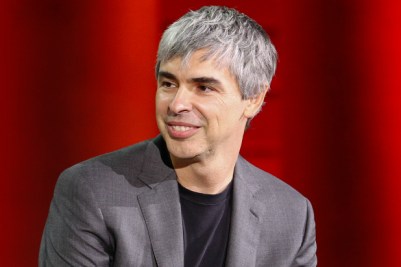
An undated photo of Larry Page.
SERGEY BRIN (1973- ) USSR/US. Computer scientist and Internet entrepreneur. Co-founded Google search engine and website (1998). President of Technology, Google, LLC (2001-?). Director of Special Projects, Google, LLC. President, Alphabet, Inc. (2015-2019). (on 3 lists)

A 2015 photo of Sergey Brin by James Martin/CNET.
Pingback: People, People Who List People… | Make Lists, Not War
Very entertaining – you like lists as much as I do – and you have made some of the same lists! I also have a most influential of all time list – actually, two – one good and one bad.
Thanks for the feedback. Interesting idea about two lists – I’ll have to check it out. Can you send me a link?
Pingback: 今日はサイバーエージェントの日 | rkernel
Love this list!! Started to copy of this info down and then realized that was a daunting task. Do you by any chance have this in printed form that i could purchase?
Dear Ms. Sarns: Do you not have access to a printer? I will look into printing out the document and the cost, and let you know.
John B.
Where is Lebron????
Pingback: The Ultimate Influencers: Updating the Meta-Lists of Most Important People in History | Make Lists, Not War